
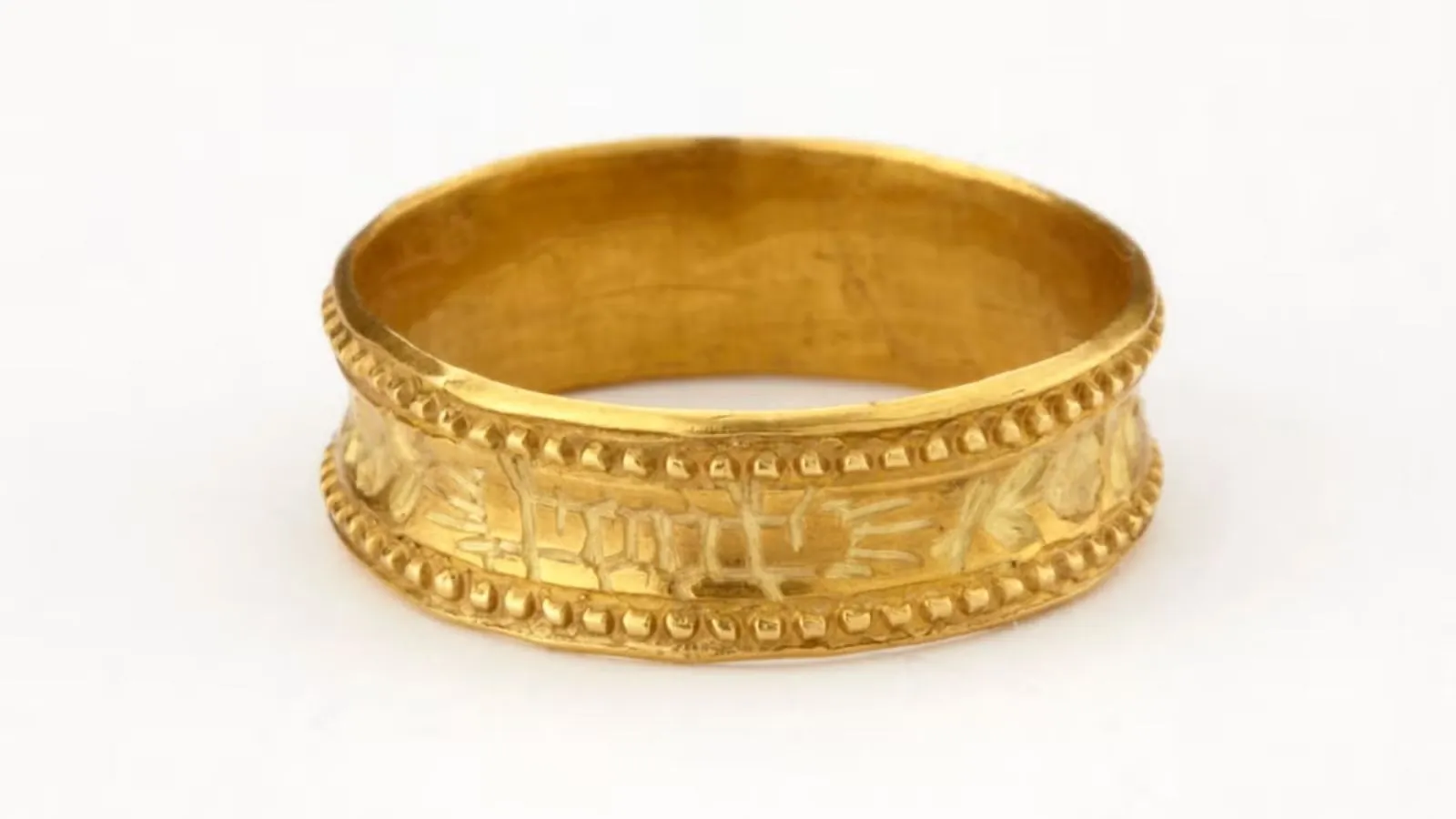

Archaeologists have uncovered more than 3,000 artefacts in a stream valley in the Netherlands, including a rare gold ring, ancient tools and medieval jewellery, offering fresh insights into how humans have relied on water sources for thousands of years. The discovery spans from the Stone Age to the Second World War, making it one of the country’s most significant archaeological finds in recent years, according to a research article published in Academia.
The discoveries were made in the Nieuwe Drostendiep stream valley in the Dutch province of Drenthe, where environmental restoration work is currently underway.
Over 600 historically significant objects found
As part of the restoration project, archaeologists carefully examined the valley’s upper soil layers and recovered more than 3,000 objects, including around 600 artefacts considered to be of particular historical significance.
The collection includes: Stone Age and Bronze Age tools, jewellery dating from around 200 BC to the early Middle Ages, a gold finger ring from the 3rd or 4th century CE, a medieval fibula clothing pin dating to the 10th or 11th century CE, artefacts from the Eighty Years’ War (1568–1648), and military objects from the Second World War
Researchers say the diversity of the discoveries provides an unusually complete record of human activity across several millennia, the report stated.
Water attracted people for thousands of years
Experts believe the finds demonstrate how rivers and streams have consistently attracted human settlement throughout history.
The valley likely served multiple purposes, including providing fresh water, food resources, transport routes and locations for trade and religious activity.
Story continues below this ad
Professor David Bridgland of Durham University, who studies the relationship between ancient environments and human evolution, said water sources would have attracted both wildlife and later domesticated animals, making them ideal locations for long-term human occupation.
Exceptional preservation
Researchers say one reason the discovery is so significant is the excellent condition of many artefacts. The objects remained well preserved because they were buried within a relatively undisturbed soil layer that protected them from damage over centuries.
Also Read: How was the Great Pyramid built? New research points to 4 internal ramps
Officials from Provincie Drenthe, which oversaw the project, described the discoveries as a testament to the region’s rich cultural heritage.
Story continues below this ad
Artefacts still being studied
The recovered objects are currently undergoing cleaning, cataloguing and scientific analysis before being made available to the public.
Authorities are considering creating a public exhibition and are also exploring ways to digitally showcase parts of the collection, allowing people to examine the discoveries online while researchers continue studying one of the Netherlands’ most remarkable archaeological finds.

Comments are closed.