
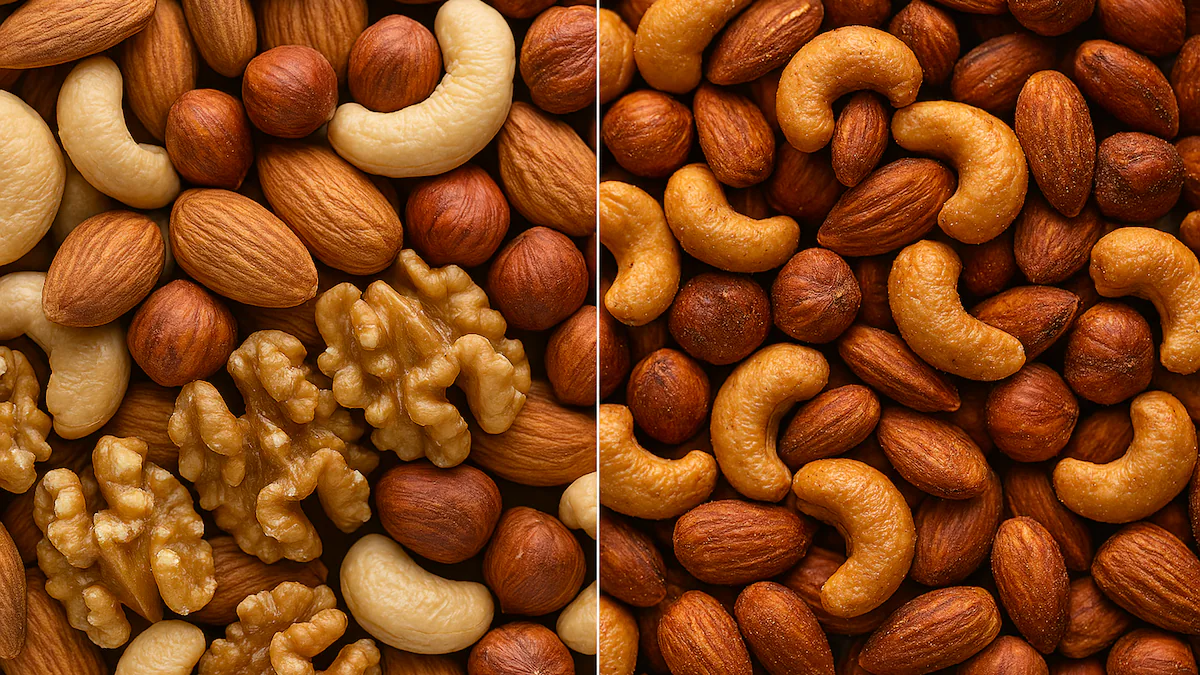

Nuts have become a popular choice for those looking for a quick and nutritious snack during the day. Whether it is almonds in the morning, peanuts with tea or cashews to curb evening cravings, nuts often find their way into our routine. As more people shift toward mindful eating, the question of what form of nuts is healthier has gained attention. Some believe raw nuts are the purest version packed with natural nutrients, while others feel roasted nuts taste better and are easier to digest. This has created a long running debate among health conscious snackers. But which one actually deserves a spot in your daily diet? Let us find out.
Also Read: 5 Nuts That Are A Must For Healthy And Glowing Skin
Health Benefits Of Raw Nuts vs Roasted Nuts For Everyday Snacking
1. Nutrient Retention
Raw nuts preserve more heat-sensitive nutrients such as vitamin E and antioxidants because they are not exposed to high temperatures. Healthline reports that roasting can lead to slight nutrient loss and increased oxidation of polyunsaturated fats, although the changes are not large enough to significantly reduce their health value. This means raw nuts may be marginally better for those prioritizing antioxidant intake in their daily snacks.
2. Digestibility and taste
Roasting enhances the flavour, aroma and crunch of nuts, making them more satisfying as a daily snack. A comparative analysis by NutriFood Science notes that roasting reduces antinutrients like phytic acid, which can improve mineral absorption and make nuts easier to digest for some people. For many snackers, this improved taste and digestibility encourages more consistent nut consumption, which is beneficial overall.
3. Oil And Fat Content
Dry roasted nuts contain almost the same natural fats as raw nuts, but commercially roasted nuts may include added oils and salt. Verywell Health highlights that while raw and dry roasted nuts have nearly identical macronutrient profiles, added oils in packaged versions can increase calorie density and make them less suitable for everyday snacking.
4. Safety Concerns
Raw nuts have a slightly higher chance of harboring bacterial contamination since they are not exposed to heat. Medical News Today explains that roasting reduces moisture and destroys harmful bacteria such as Salmonella, making roasted nuts safer for storage and travel. This gives roasted nuts a small advantage for long-term pantry storage in warm or humid climates.
Also Read: 7 Incredible Cashew Nut Benefits: From Heart Health To Gorgeous Hair
Which One Should You Pick? Raw Nuts Or Roasted Nuts?
Raw nuts are the better choice if your goal is to maximize nutrient intake and avoid unnecessary salt or oil. They are wholesome and suitable for people who prefer natural foods. Roasted nuts are a good option if you enjoy crunchy textures and stronger flavors or if you find raw nuts difficult to digest. The key is to choose dry roasted nuts without added salt, sugar or oil.
Both raw and roasted nuts can be part of a healthy diet when consumed in moderation. Raw nuts offer slightly higher nutrient levels, while roasted nuts provide better taste and may be easier on the stomach. You do not need to completely avoid one for the other.

Comments are closed.