
RBI’s Cautious Hold: Can India Sustain Great-Power Economic Ambitions Amid Structural Headwinds and Geopolitical Shocks?

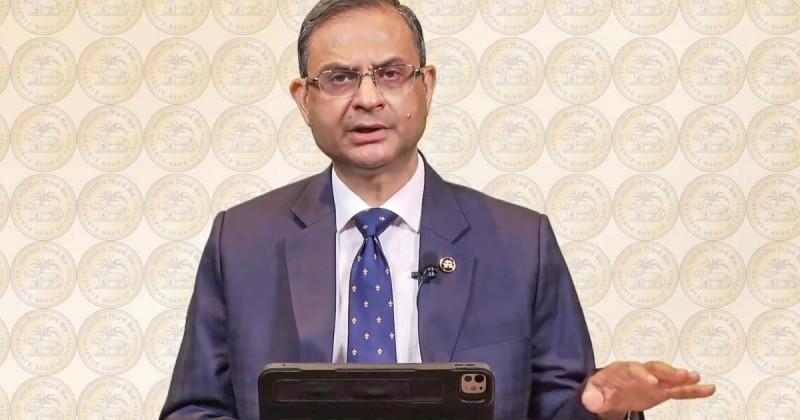
As Governor Sanjay Malhotra announced on June 5, 2026, the Reserve Bank of India’s Monetary Policy Committee (MPC) unanimously decided to keep the policy repo rate unchanged at 5.25%, with the Standing Deposit Facility (SDF) at 5% and the Marginal Standing Facility (MSF) and Bank Rate at 5.5%. The neutral stance was retained. This second bi-monthly review of FY27 comes against a backdrop of escalating West Asia tensions, volatile crude oil prices, a weakening rupee hovering near ₹95-97 per USD, and persistent domestic structural challenges.
The decision itself was neither surprising nor controversial. Yet behind this seemingly routine monetary policy announcement lies a far larger story about India’s economic trajectory in an increasingly volatile world. Governor Sanjay Malhotra and the MPC confronted a challenging combination of external and domestic pressures: escalating instability across West Asia, crude oil volatility, persistent pressure on the rupee, slowing global trade, and mounting questions regarding India’s investment climate. The decision to retain a neutral stance reflects the reality that while inflation remains manageable, growth is no longer accelerating at the pace required to achieve India’s aspiration of becoming a developed economy by 2047.
The MPC’s projections reflect heightened caution. FY27 real GDP growth was revised downward to 6.6% (from an earlier 6.9%), while inflation forecasts were adjusted upward to 5.1% (from 4.6%). These revisions signal the central bank’s recognition of intertwined risks: imported inflation from energy prices, supply chain disruptions arising from the West Asia conflict, and domestic vulnerabilities that predate the current geopolitical flare-up. Such simultaneous revisions are often early indicators of an economy confronting the uncomfortable possibility of slower growth alongside rising price pressures.
As former Federal Reserve Chairman Paul Volcker famously observed, “The standard of living of the average American has to decline.” Volcker’s larger point was that economic realities cannot be wished away through optimism alone. Nations ultimately prosper through productivity, investment and competitiveness rather than sentiment. India now faces a similar test of economic realism.
This policy continuity offers short-term stability but underscores deeper questions about India’s economic resilience. While buffers like forex reserves (around US$681 billion as of late May 2026, providing roughly 11 months of import cover) and gold holdings as a diversification tool provide a cushion, analysts warn that without addressing structural drags, particularly collapsing net FDI, anaemic private investment, and regulatory concerns, India risks settling into a sub-7% growth trajectory that fails to harness its demographic potential.
India’s macroeconomic buffers remain substantial. Foreign exchange reserves stand at approximately US$681 billion, making India one of the world’s largest reserve holders. The banking system remains adequately capitalised, with gross non-performing assets near decade lows. Digital public infrastructure, including UPI, processes billions of transactions every month, reflecting an unprecedented level of financial digitisation and formalisation.
Yet strong buffers should not be confused with strong momentum.
As former RBI Governor Raghuram Rajan has repeatedly cautioned, “Growth without broad-based job creation cannot be considered sustainable development.” The challenge before policymakers is therefore not crisis management, but growth acceleration.
Structural Malaise: The FDI and Investment Drought
Prominent economist Surjit Bhalla has been vocal in arguing that the real crisis is not solely the Iran-related oil shock but long-brewing structural issues. In recent commentary, Bhalla stated: “The problem with the Indian economy before any of this (West Asia crisis)… was that foreign direct investment (FDI) in India had pretty much collapsed… net FDI gone down… foreigners are not investing in India as much… and Indians are investing abroad.” He describes private investment as stagnant and FDI as having “declined into negative territory.”
Bhalla attributes this to restrictive post-2017 FDI policies, the abolition of Bilateral Investment Treaties (BITs), and a preference for settling disputes domestically. He notes: “We’ve got strange rules, which no other country has in terms of FDI. So the investment climate in India has really gone negative.” For Bhalla, fundamentals (low CAD, controlled inflation pre-shock) should support a stronger rupee, not depreciation. He urges tax cuts for foreign investors, ending retrospective taxation, and policy clarity to target 8% growth.
Arvind Panagariya offers a counterpoint, emphasizing robustness. He highlights strong gross FDI inflows (around US$94 billion in recent periods) and argues net figures are distorted by higher repatriations and outbound investments. “Indian economy is quite robust… gross foreign direct investment… has stayed actually quite robust,” viewing gross numbers as better signals of confidence in future productivity.
Former Chief Economic Adviser Arvind Subramanian adds a sharper critique of the investment climate. In comments reported by Hindustan Times (referencing a Washington Post article), Subramanian noted: “If you’re not the two A’s, Adani or Ambani, it can be treacherous to navigate India’s regulatory byways. Domestic investors feel a little bit vulnerable.” He described a “Modi phenomenon” involving “a lot of hype and bluster and manipulation,” while acknowledging it is “built on a core of achievement.”
Subramanian highlighted that investment by Indian companies “is not keeping pace. The money that companies put into the future of their businesses, for things like new machines and factories, is stagnant. As a fraction of India’s economy, it is shrinking. And while money is flying into India’s stock markets, long-term investment from overseas has been declining.” He stressed that 6% growth is insufficient for India’s ambitions of becoming a developed nation by 2047, which requires sustained 8-9% growth. This regulatory favoritism perception, echoed by opposition voices, contributes to broader investor caution despite visible infrastructure gains.
The real debate is no longer whether India is growing. It is whether India is growing fast enough to transform itself into a high-income economy within a generation.
Historically, economies that successfully escaped the middle-income trap, including South Korea, Taiwan and Singapore, sustained investment rates exceeding 30-35% of GDP for prolonged periods. India’s gross capital formation currently remains below the levels achieved during the high-growth years of 2003-2011.
According to estimates from the World Bank and the International Monetary Fund, India will require sustained growth of approximately 8-9% annually over the next two decades to achieve developed-economy aspirations by 2047. At 6-7% growth, India may become larger, but not necessarily prosperous enough on a per-capita basis to fulfil those ambitions.
As Nobel laureate Robert Solow’s growth framework effectively demonstrated, investment is the bridge between aspiration and productivity. This is why the concerns raised by Bhalla, Subramanian and others deserve serious attention even when headline macroeconomic indicators remain stable.
Private corporate investment remains well below early-2000s peaks as a share of GDP. Public capex has filled important gaps through investments in highways, airports, logistics corridors, and digital public goods such as UPI. However, without a corresponding private-sector multiplier, job creation continues to lag, particularly in labour-intensive manufacturing. High youth unemployment, skills mismatches, and nearly 90% informal employment amplify social and economic risks.
The Productivity Challenge: India’s Next Economic Frontier
Beyond FDI and private capital expenditure lies a deeper structural issue: productivity. The celebrated economist Paul Krugman once remarked, “Productivity isn’t everything, but in the long run it is almost everything.”
India’s future growth will increasingly depend not on labour abundance alone but on productivity gains generated through technology adoption, artificial intelligence, advanced manufacturing, logistics efficiency, workforce skills and innovation ecosystems.
India’s manufacturing sector continues to account for roughly 15-17% of GDP, significantly below East Asian growth models where manufacturing often exceeded 25%. Simultaneously, India’s services sector contributes more than half of national output but remains unevenly distributed geographically.
This imbalance explains why headline GDP growth frequently coexists with concerns about employment quality, wage growth and income inequality.
The next stage of economic transformation will require far greater integration of AI, robotics, Industry 4.0 technologies, digital manufacturing, advanced electronics, semiconductor ecosystems, aerospace, defence production and high-value export industries. Productivity growth, rather than factor accumulation alone, must become the principal driver of India’s economic expansion.
The Rupee, Forex, and External Vulnerabilities
The rupee’s slide reflects both external pressures (oil imports, dollar strength) and domestic sentiment. RBI interventions moderated volatility but contributed to reserve drawdowns from earlier peaks. Bhalla argues the rupee is weak primarily due to weak foreign investment demand, despite supportive fundamentals. Panagariya advocates letting it adjust: “Let the rupee depreciate… 100 is just a number,” suggesting market-driven correction over heavy reserve use, paired with fuel price passthrough.
Recent MPC announcements liberalizing FPI norms in government securities and raising NRI/OCI limits aim to bolster inflows, welcome but incremental measures. Gold holdings remain stable, supporting diversification. Subhash Chandra Garg, former Finance Secretary, has described India as the “Vulnerable One” among major economies, most exposed due to energy dependence, investment weakness, and geopolitics. He criticizes over-reliance on short-term measures versus deep energy transition and openness reforms.
Inflation Dynamics and Growth Trade-offs
Headline CPI stayed benign recently (around 3.4-3.5% in early 2026 months), but risks are tilted upward. Food uncertainties (monsoon prospects potentially below-normal), fuel passthrough (commercial LPG and global crude), base effects, and supply chain issues from West Asia complicate the picture. The RBI’s upward revision to approximately 5.1% for FY27 reflects these concerns, with quarterly pressures expected to peak in the second half of the fiscal year. Core inflation remains steadier but vulnerable to second-round effects.
Governor Malhotra emphasized India’s stronger fundamentals compared to past crises, including digital infrastructure, services resilience, healthier banking balance sheets and substantial reserves, but stressed vigilance on spillovers. The neutral stance with a rate hold balances growth support against inflation vigilance, yet the downgraded growth outlook signals awareness that external shocks amplify domestic frailties.
Economic Security is National Security
The West Asia crisis highlights another uncomfortable reality. India imports nearly 85% of its crude oil requirements and over half of its natural gas needs. Every US$10 increase in crude prices can materially affect inflation, the current account deficit, fiscal balances and household purchasing power.
The lesson is clear: economic resilience has become inseparable from national security.
In the 21st century, strategic petroleum reserves, semiconductor manufacturing, rare-earth processing, energy diversification, cyber resilience, sovereign AI capabilities, digital infrastructure, critical minerals and resilient supply chains are no longer merely economic assets. They are instruments of national power.
As Henry Kissinger famously observed, “Control energy and you control nations.” The modern equivalent may well be: control energy, data and technology, and you shape the future.
India’s economic strategy therefore cannot be viewed separately from its geopolitical positioning. The nation’s long-term resilience will increasingly depend on reducing strategic dependencies while enhancing domestic technological and industrial capabilities.
Policy Indecisions and the Reform Imperative
Critics, including Subramanian, highlight delays in deeper labour, land, judicial and agricultural reforms, policy uncertainty, and perceived uneven playing fields. The “treacherous regulatory byways” for non-elite players foster vulnerability among domestic investors. Supporters point to PLI schemes, infrastructure expansion, GST stabilisation, insolvency reforms and digital transformation as foundational achievements.
The June MPC’s forex measures demonstrate responsiveness, but their ultimate impact will depend upon the speed and breadth of execution, particularly in restoring broad investor confidence.
Bhalla’s call for the government to “course correct” on investment sentiment resonates. Panagariya remains optimistic about avoiding the middle-income trap through sustained reforms. Subramanian, while acknowledging a “core of achievement,” urges policymakers to keep their minds open to reforms that reassure a wider set of investors beyond a few large conglomerates.
The central policy challenge is no longer creating growth impulses through public expenditure alone. It is restoring confidence among domestic entrepreneurs, global investors, MSMEs, technology innovators and manufacturing enterprises so that private investment once again becomes the principal engine of growth.
Likely Implications: Short, Medium, and Long Term
Short-Term (2026-27)
Growth moderation to 6.5-6.7% remains plausible if oil prices stay elevated and monsoons disappoint. Inflation near or above 5% could squeeze real incomes, particularly among lower- and middle-income households, tempering consumption demand. Wider current account deficit pressures are likely, though reserves, rupee flexibility and recent liberalisation measures provide buffers. Exporters and tourism may gain from depreciation, while import-dependent sectors such as oil refining, aviation, electronics and chemicals could face margin pressures. Financial markets initially welcomed the RBI’s policy continuity.
Medium-Term
Without a revival of private capex, the risk of “jobless growth” may intensify. China+1 opportunities in manufacturing could materialise if India strengthens tax predictability, labour flexibility, contract enforcement, dispute resolution mechanisms and ease of doing business. Energy diversification through renewables, nuclear power, strategic reserves and alternative suppliers will become increasingly critical in reducing vulnerability to geopolitical disruptions.
Long-Term
India’s demographics remain among the strongest structural advantages available to any major economy. However, demographic dividends are not automatic; they must be converted into productive human capital through education, skilling, healthcare, innovation and employment generation.
Sustained 7-8% plus growth will require bridging the investment gap highlighted by Bhalla, Panagariya and Subramanian. Failure risks entrapment in a prolonged middle-income transition and delayed achievement of Vision 2047 goals. Success, by contrast, would position India as one of the defining growth poles of the global economy.
Inclusive prosperity will require addressing the gap between headline achievements and broad-based participation. Growth must become more geographically dispersed, sectorally diversified and socially inclusive.
The Next Phase of India’s Economic Journey
The RBI has fulfilled its mandate with measured policy. Governor Sanjay Malhotra’s approach reflects prudence rather than passivity. Monetary policy alone, however, cannot generate the investment surge, productivity revolution and institutional confidence necessary to propel India toward developed-nation status.
The larger challenge now belongs to broader architecture of economic governance
India possesses extraordinary advantages: a young population, entrepreneurial energy, world-leading digital public infrastructure, expanding physical infrastructure, deep domestic markets, increasing geopolitical relevance and growing technological capabilities. Few major economies enter this decade with comparable long-term potential.
Yet potential is not destiny
The next phase of India’s rise will depend less on building roads and more on building confidence; less on announcing reforms and more on executing them; less on protecting incumbents and more on empowering innovators; less on managing crises and more on creating enduring competitiveness.
The true test is whether India can transform today’s resilience into tomorrow’s productivity and global leadership.
As the global order fragments, supply chains realign, energy security becomes increasingly strategic, and technological revolutions accelerate, the countries that attract capital, reward innovation, uphold institutional trust and foster competitive markets will shape the twenty-first century.
India has already demonstrated that it can withstand storms.
The question now is whether it can create the conditions necessary to sail faster than its competitors.
That answer will determine not merely the success of a monetary policy cycle, but the success of India’s economic century.
Governor Malhotra’s emphasis on resilience is well-placed. Yet, as Bhalla warns, complacency on structural reforms could transform temporary shocks into prolonged underperformance. Panagariya’s robustness narrative will ultimately be validated only if strong gross inflows translate into sustained private investment, employment generation and productivity gains. Garg’s vulnerability caution and Subramanian’s regulatory observations serve as important reminders of the costs of uneven reform and incomplete confidence-building.
The RBI has done its part. The ball now lies firmly with the wider machinery of economic governance: reviving entrepreneurial animal spirits, restoring investor confidence, accelerating structural reforms, strengthening energy and technological security, and creating an environment where growth becomes both faster and more inclusive.
India possesses the fundamentals, the scale, the demographic strength and, as Subramanian acknowledges, a genuine “core of achievement.”
The coming decade will reveal whether it also possesses the policy courage and institutional agility required to convert that achievement into enduring national prosperity.
(Major General Dr. Dilawar Singh, IAV, is a distinguished strategist having held senior positions in technology, defence, and corporate governance. He serves on global boards and advises on leadership, emerging technologies, and strategic affairs, with a focus on aligning India’s interests in the evolving global technological order.)

Comments are closed.