

There’s no denying that kids these days have it tough. They’re growing up in an entirely different world than generations before them, one that started shifting even before the pandemic changed everything.
Clinical child psychologist and author Ross W. Greene, PhD, recognizes that 2000s kids are struggling in the modern world. In his new book, “The Kids Who Aren’t Okay,” he points out a few specific factors that make things harder than they used to be that older generations never had to deal with.
Here are five reasons why life is more difficult for kids born in the 2000s that older generations don’t understand:
1. They’ve experienced the threat and trauma of school shootings
nimito | Shutterstock
Violence in schools has heavily shaped the experiences of 2000s kids, even for those who weren’t involved directly. It’s a requirement now to be prepared and aware, as many schools implement mandatory lockdown drills and increase security measures such as metal detectors and armed resource officers.
Greene claims, “There have been more than 400 since Columbine, creating a persistent backdrop of fear and anxiety for students, educators, and parents alike.” Studies have shown that repeated exposure to school violence can emotionally affect students, making it harder for them to focus on their education and adapt to the world around them.
2. They are forced to handle high-stakes testing in school
Testing approaches in schools have been highly debated for years. While standardized tests can assure educators that all students are reaching certain benchmarks across subjects, others argue that these tests don’t account for differences in learning styles and socioeconomic backgrounds.
“For years, educators have warned that forcing every student to clear the same academic bar, while tying teacher evaluations and job security to those outcomes, ignores developmental differences among children,” says Greene. “A more effective approach measures progress relative to each student’s starting point and meets kids where they are.”
3. They are constantly exposed to social media and smartphones
 MAYA LAB | Shutterstock
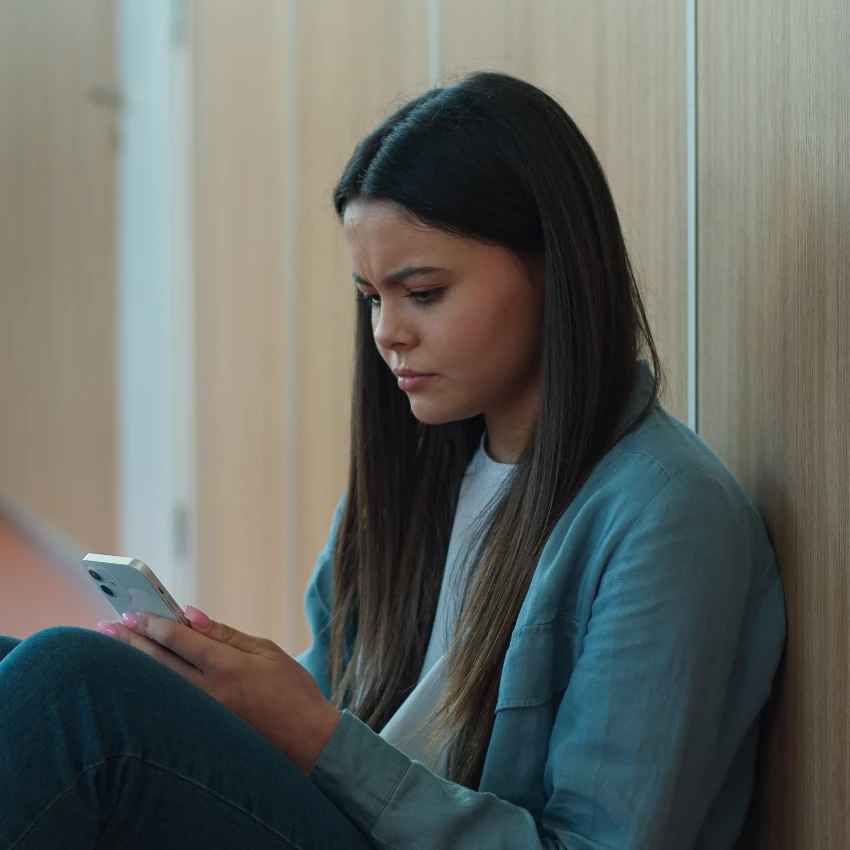
Social media never stops. The unending content can easily become overwhelming, and constantly seeing highlights of other people’s lives can be extremely harmful for teens and young adults with still-developing identities. It can lead to body image issues, low self-esteem, and cyberbullying.
According to Greene, “At best, they’re a distraction in school. At worst, excessive use can harm mental health. Today’s kids are exposed to the world’s darkest content at far younger ages than previous generations.” The scale and speed with which content can be spread online is far more intense than anything older generations experienced.
4. They have only really understood political polarization
Greene believes that we are in the “most divided political climate since the Civil War,” and it’s not just adults who are affected by it. It’s an extra layer of stress for a generation of kids already navigating an uncertain world.
Growing up with divided periods of U.S. politics is normal for 2000s kids. With politics becoming more visible and prominent in everyday life, it begins to affect safe spaces like school and home. Families get caught up in disagreements and conflict, while students find themselves picking sides in classroom debates – then deciding whether to speak up or stay silent.
5. They are suffering due to a shortage of mental health providers
 New Africa | Shutterstock
The World Health Organization estimates that one in seven 10-19-year-olds around the world is dealing with at least one mental disorder. With the massive pressure they’re facing to form their identity, decide their future aspirations, and learn basic life skills, all while going to school and holding down a job, it’s no wonder their mental well-being suffers.
Greene explains, “In many parts of the U.S., children can’t access care. Long waiting lists are common, and kids in crisis may remain stuck in emergency rooms for days, weeks, or even months.” Mental health is far more openly discussed now than it used to be, but that also means more people are seeking professional help. There simply aren’t enough qualified mental health providers to support all of the kids and young adults who need help.
Kayla Asbach is a writer currently working on her bachelor’s degree at the University of Central Florida. She covers relationships, psychology, self-help, pop culture, and human interest topics.

Comments are closed.