
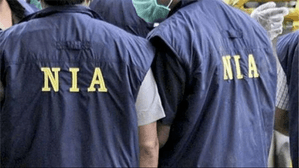
Red Fort blast probe widens: NIA raids across J&K in connection with ‘white coat’ terror module of doctors

In connection with the sensational Red Fort bomb blast, sleuths of the National Investigation Agency (NIA) conducted raids at several locations in the Union Territory of Jammu and Kashmir to further expand the ongoing investigation.
A spokesperson of the NIA said that, as part of its continuing probe into the Red Fort area bomb blast case in Delhi, raids were carried out at multiple locations across Jammu and Kashmir.
The NIA stated that the counter-terror agency, which is pursuing various leads in case RC-21/2025/NIA/DLI, searched nine locations across the districts of Srinagar, Baramulla, Jammu, Kulgam, Ganderbal, and Handwara. Several digital devices were seized during the searches and have been sent for forensic analysis.
A total of 11 accused have been arrested so far for their roles in the deadly blast that shook the national capital on November 10, 2025, killing several people and injuring many others. The prime accused, Umer Un Nabi, was also killed in the explosion. The NIA, during the course of its investigation, found that Umer had masterminded the conspiracy in coordination with the arrested co-accused and others.
The agency is continuing its efforts to unravel the larger conspiracy behind the terror attack and to identify others involved in the plot to spread mayhem and destabilise the country, the statement said.
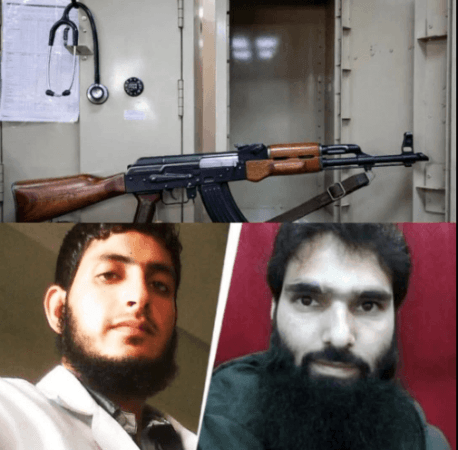
Many doctors arrested in connection with Red Fort blast case
The NIA has already arrested multiple doctors in connection with the November 10, 2025, Red Fort car explosion, in which fourteen innocent people lost their lives.
In this “White Coat” terror module of the proscribed outfit Jaish-e-Mohammad, several medical professionals, particularly doctors, were involved.
The “White Coat” terror module, allegedly led by the deceased Dr. Umar-un-Nabi—who later turned into a suicide bomber—included several doctors who worked at or were linked to Al-Falah University, Faridabad.
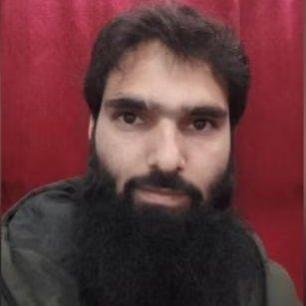
Importantly, Dr. Umar Mohammad, alias Umar-un-Nabi, a doctor from Pulwama in south Kashmir, emerged as the most radicalised and a key operative in the network spanning Kashmir, Haryana, and Uttar Pradesh.
Four other doctors—Dr. Muzammil Shakeel Ganai of Pulwama (J&K), Dr. Adeel Ahmed Rather of Anantnag (J&K), Dr. Umar Farooq of Srinagar, and Dr. Shaheen Saeed of Lucknow (U.P.)—along with Mufti Irfan Ahmad Wagay of Shopian (J&K), were arrested by the NIA after the “White Coat” terror module was busted.
The NIA had also arrested two other accused—Amir Rashid Ali, in whose name the car used in the blast was registered, and Jasir Bilal Wani alias Danish, who allegedly provided technical assistance to the terrorist involved in the attack. Their interrogation is underway as part of the agency’s ongoing efforts to uncover the full conspiracy registered under case RC-21/2025/NIA/DLI.
The anti-terror agency, which was handed over the investigation by the Home Ministry soon after the attack, is working closely with various state police forces to track and arrest every member of the terrorist module involved in the carnage.
How the “White Coat” terror module was busted
The investigation began on October 19, 2025, after posters bearing the insignia of Jaish-e-Mohammad surfaced across Bunpora, Nowgam (Srinagar), threatening police and security forces.
Acting swiftly, police registered FIR No. 162/2025 under the Unlawful Activities (Prevention) Act (UAPA), Bharatiya Nyaya Sanhita (BNS), Explosive Substances Act, and the Arms Act.
CCTV footage from the area proved crucial, leading investigators to Saharanpur in Uttar Pradesh, where they arrested Dr. Adeel, a Kashmiri-origin doctor. His interrogation opened a Pandora’s box, revealing a chilling nexus of radicalised professionals, encrypted communications, and terror financing.
Based on Dr. Adeel’s disclosures, the Jammu and Kashmir Police and Haryana Police jointly raided a rented accommodation in Faridabad linked to Dr. Muzammil Ahmad Ganaie, another doctor from Pulwama. The search yielded 360 kg of explosive material, the first of several shocking recoveries.
Sustained questioning of an imam associated with the group led investigators to a second location, where a staggering 2,583 kg of explosive substances were recovered, taking the total haul to nearly 2.9 tonnes of IED-making material.
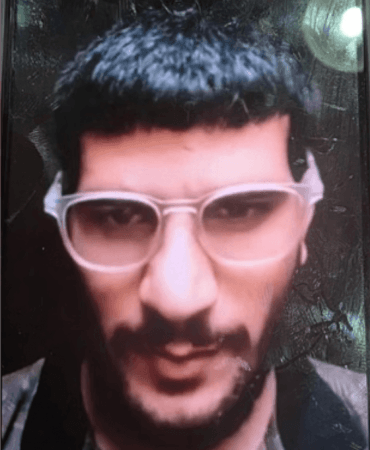
Police sources said the seized material included explosives, electronic circuits, batteries, wires, remote controls, timers, and metal sheets—enough to facilitate multiple large-scale terror strikes.
Searches continued across Dhaouj village and adjoining areas near Delhi, which investigators believe were used as safe houses and storage hubs due to their proximity to the national capital and relative seclusion.
According to investigators, the busted network comprised highly educated professionals, students, and religious figures who had been radicalised through online channels. Their handlers, police said, were based in Pakistan and other foreign countries.
The accused allegedly used encrypted applications to coordinate logistics, transfer funds, and receive operational instructions. Funds were raised under the guise of charitable and educational causes before being diverted for terror-related activities.
The network reportedly began taking shape around 2021–22, initially led by a handler named Hashim and later reorganised under Dr. Omar, who operated from the Valley. The group’s long-term objective was to manufacture IEDs, carry out terror attacks, and eventually form its own militant outfit aligned with Lashkar-e-Taiba and Jaish-e-Mohammad.

Comments are closed.