
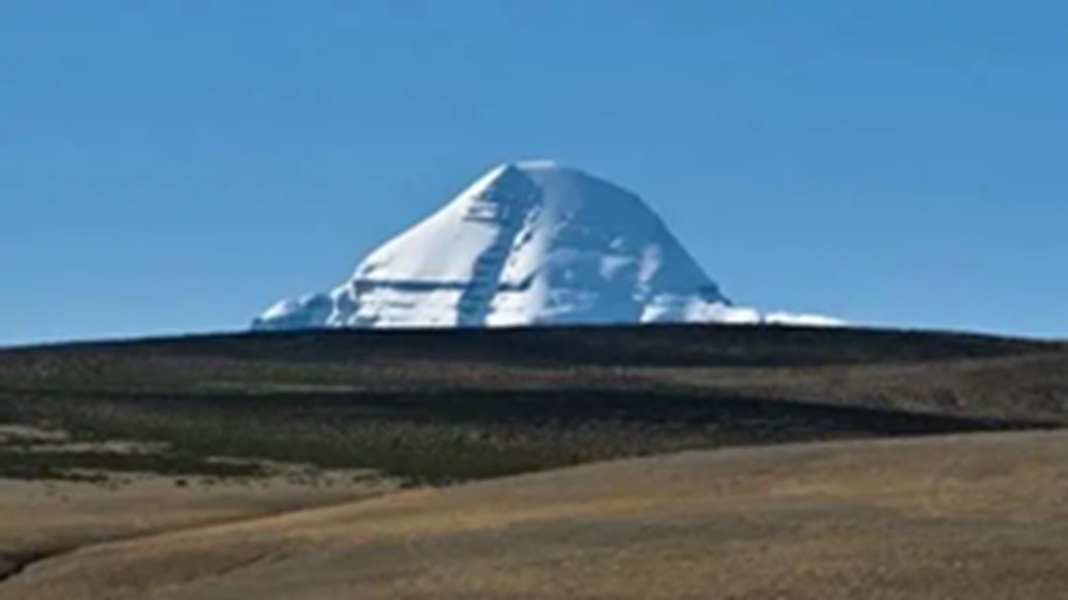
Relations again burnt in the fire of border dispute: Nepal expressed strong objection on Lipulekh to Kailash Yatra, surrounded India-China

Kathmandu/New Delhi, 4 May. A diplomatic tussle has once again erupted over ‘Lipulekh’, a strategic area situated at the confluence of the borders of India, Nepal and China. The Government of Nepal has officially lodged a strong objection to the Kailash Mansarovar Yatra passing through the Lipulekh Pass. Nepal’s Foreign Ministry has clarified that it considers any activity by India or China in the region as against its sovereignty.
“Stop interference on our land.”
Nepal’s Foreign Ministry clearly clarified its position on the social media platform ‘X’ and said that Lipulekh is a part of Nepali land. According to the ministry, the Government of India has been repeatedly requested to stop any activity like road construction, expansion, border trade or traffic in this area. Nepal claimed that it has conveyed its “permanent position” to both India and China through diplomatic channels.
Reference to historical treaties and increasing tension
This tough stance of Nepal is based on the Sugauli Treaty of 1816. Nepal claims that Limpiyadhura, Kalapani and Lipulekh on the eastern side of the Mahakali river are its integral parts. The roots of the dispute deepened in 2019 when India released its new political map, which Nepal rejected outright. After this, in 2020, Nepal amended its constitution and included these three disputed areas in its official map.
Demand for diplomatic solution
The Nepal government has reiterated its policy that it wants a solution to the border dispute with India on the basis of historical facts, maps and evidence. However, India has been considering these areas as an integral part of Uttarakhand. Kailash Mansarovar Yatra, which is the center of faith of thousands of devotees, now once again seems to be entangled in this war of maps and sovereignty between two neighboring countries.

Comments are closed.