
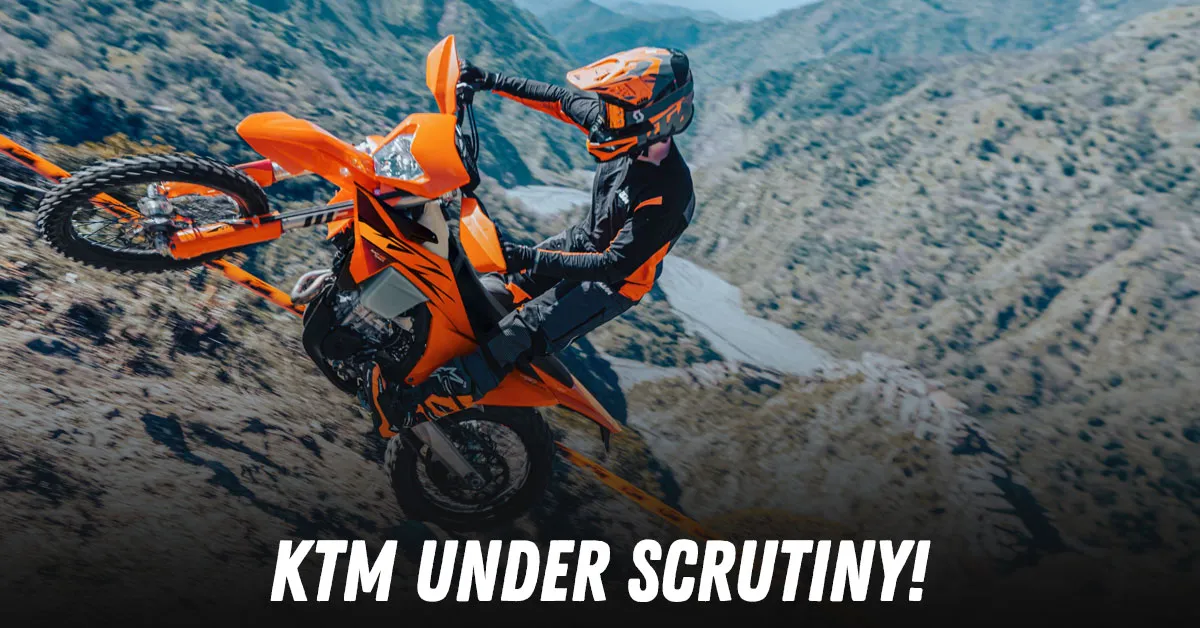

KTM, the Austrian brand known for making high-performance, off-road and street motorcycles has now landed in trouble for alleged emission-related malpractices. A media investigation in Europe claims to have exposed the practice of KTM dealers removing emission-restricting equipment from enduro bikes before commencing their deliveries. The company has strongly denied any such wrongdoing from the factory level, although the controversy has now gone viral. Clearly, the blame here is on the dealers and not on the brand itself.
This development comes after the French newspaper The World and its partner media outlets in Europe conducted a thorough investigation. They put out reports alleging some KTM dealers to have sold road-homologated enduro motorcycles in de-restricted states. This means removing homologation-related hardware from the motorcycles prior to delivering them. Without these equipment, the vehicle will fail to meet Europe’s strict emission and noise norms.
The reports state that teams of investigators visited dealerships across France, Germany, Austria, Spain, Italy, and the United Kingdom, posing as potential buyers. During these, the dealer-staff allegedly described a consistent process where homologation-related restrictions were removed before delivery. Doing this will unlock extra performance. The reports further state that this practice is not isolated, but widespread across regions.
They also allege that these modifications were not always independent dealer actions, and were done using factory-supported tools, software and original components. Now, that is alarming. It almost points to a widespread misuse of KTM’s equipment and software by its own authorised dealer partners. In other words, KTM could be silently facilitating illegal conversions.
According to the Le Monde report, the manager of a KTM dealership in Paris shared an ‘explosive secret’. He allegedly told the media reprsentative “All our motorcycles come restricted as standard, but we have to remove the restriction for the engine to work. KTM delivers them with a different exhaust system: We immediately change the entire configuration. The restricted mode is just to pass European tests and anti-pollution standards.”
These words would suffice to write off KTM’s involvement in the issue. It clarifies that the conversion happens at the dealer-level.
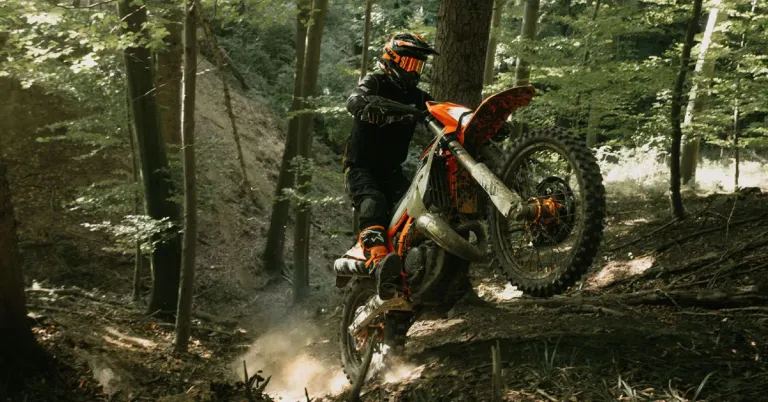
Responding to these allegations, KTM authorities stated that all KTM, Husqvarna and GasGas enduro bikes leave the factory in fully homologated and compliant forms. It further maintains that any competition-related modification or conversion may have been done by the owners after purchase.
This would, obviously lend the motorcycle non-road-legal. KTM says that such modifications were only done by the dealers upon specific customer request and also adds that the buyers were always informed of their motorcycle losing its road-legality posty conversion. The allegation of it placing ‘illegal’ (read non-compliant) motorcycles in the market, KTM says, is completely baseless.
The company further argues that the practice of ‘derestricting’ isn’t unusual within enduro motorcycles. The reason here, is the duality in their nature. Enduro motorcycles are supposed to be competition-ready and road-legal. In Europe, homologation is needed for a product to comply with the set noise and emission levels. Some norms set by Fédération Internationale de Motocyclisme (FIM) mandate competition models to be delivered in road-legal form.

Enduro bikes, as you know, are designed for both road and off road conditions. KTM is a major in this space. Its enduro models offer competition-oriented configurations, in a toned-down (and homologated) form, so that the end product remains road-legal. Enduros account for approximately 3% of its global sales. People buying these clock much lesser miles annually than those buying conventional motorcycles.
It needs to be noted that while reports allege the manufacturer of regulation-related malpractices, no regulatory authority has publicly concluded the same or confirmed a wrongdoing.
This development comes at a time when KTM is navigating a tricky recovery phase- through financial restructuring and association with Bajaj Auto. If the allegations turn out to be true after further investigation, it is going to upset the company’s global reputation. More definitive answers and key details are expected to surface in the coming months.
Comments are closed.