
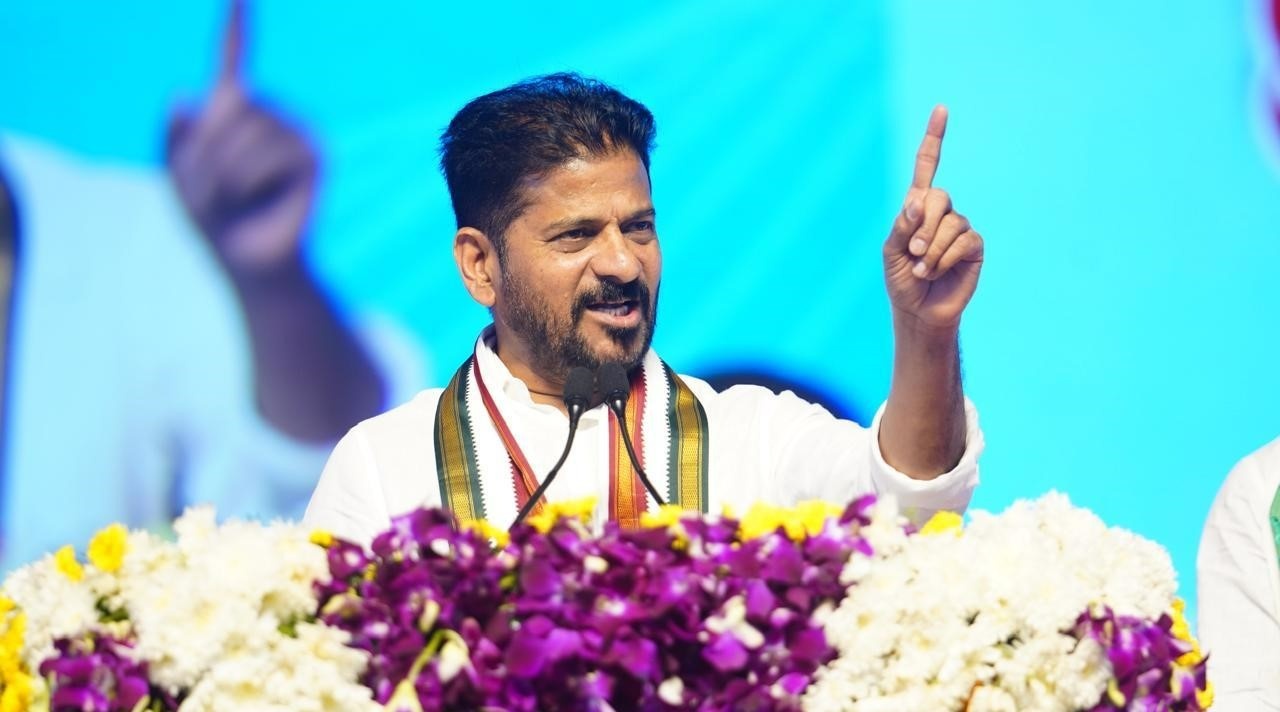

Telangana Chief Minister A Revanth Reddy has slammed the Central government’s proposed delimitation exercise, arguing that a population-based increase in seats, planned alongside the implementation of women’s reservations, unfairly penalises southern states.
Reddy warned that increasing parliamentary seats solely based on population metrics could severely disadvantage southern states. During a recent informal discussion with the media at the legislative council premises in Hyderabad, the Chief Minister argued that such a shift would disrupt the country’s political equilibrium and allow specific regions to exert undue influence over others.
Unchecked dominance
Reddy cautioned that “unchecked dominance in governance may lead to dictatorship,” suggesting that the BJP is attempting to secure a “brutal majority” through these changes.
Also read: ‘Delimitation by stealth’: Opposition sees Centre’s ploy in early women reservation rollout
Expressing strong reservations against the proposal to uniformly increase the share of seats for all states by 50 per cent, he claimed that this would marginalise southern states while disproportionately benefitting states in the north.
BJP bastions benefit
Reddy explained that while the ‘uniform increase’ formula would see the collective strength of Telangana, Andhra Pradesh, Karnataka, Kerala and Tamil Nadu go up from the current 129 seats to 195 seats – an increase of 66 seats, while the seat share of just Uttar Pradesh and Bihar, both NDA strongholds, could increase by 60 seats (from their current collective strength of 120 seats to 180 seats).
If the prospective increase in seats across Delhi, Chhattisgarh, Madhya Pradesh, Rajasthan, Maharashtra, Haryana, Uttarakhand, Himachal Pradesh, Gujarat, Punjab and Jharkhand – most of which are currently seen as BJP bastions – is added to the tally of UP and Bihar, it would form a block of 471 seats, well above the majority mark of 408 seats in an 816-member Lok Sabha. In contrast, the five southern states will together account for a mere 195 seats.
Also read: Centre’s plan to increase Lok Sabha size by 50 pc will disadvantage southern states: Cong
In the case of Telangana, the state currently has 17 Lok Sabha seats while UP has 80 seats, which pegs the current gap between the two states at 63 seats. With a uniform 5 per cent increase, Telangana would get an additional nine seats while UP will get a bounty of 40 seats, widening the gap between the two states to 94 seats.
No difference
Reddy said that if the Centre is adamant about delimitation, it should ensure that “the current difference in representation between States must be maintained”. “The best possible solution is that the gap and difference in the number of seats between North India and South India states should remain the same,” he reiterated.
Reddy said he would travel to Kerala for campaigning and hinted at efforts to convene a meeting of southern political leaders in Telangana to discuss the delimitation issue.

Comments are closed.