
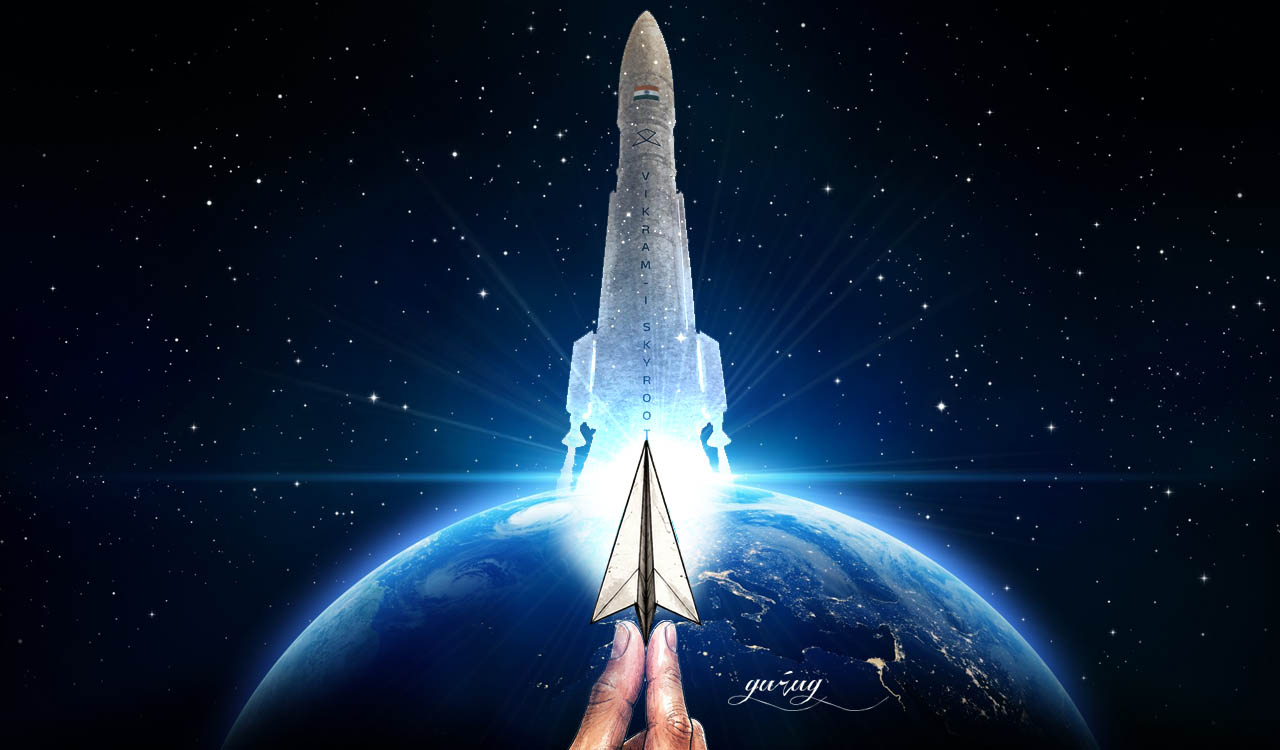

Hyderabad-based Skyroot’s orbital success signals a startup revolution, and a turning point for India’s private space industry
Published Date – 25 July 2026, 11:59 PM
Illustration: GuruG
By Praveen Bose
For decades, rocket launches were the preserve of nation-states. NASA, Roscosmos, ISRO, and China’s space agencies operated with vast facilities, long development cycles, and budgets that rivalled the GDPs of small countries. That era is changing.
On July 18, 2026, a seven-storey-tall rocket named Vikram-I lifted off from Sriharikota’s Satish Dhawan Space Centre. Developed by Skyroot Aerospace, a startup founded in 2018 by former ISRO engineers, it marked India’s first privately developed orbital rocket. Co-founder and CEO Pawan Chandana, who began his career at ISRO, and his team had achieved in less than a decade what once required entire government programmes: designing, manufacturing, and launching an orbital-class rocket.
The milestone signals a broader shift. Private capital, agile engineering, and entrepreneurial ambition are reshaping space exploration. The question is no longer whether startups can build rockets, but how quickly they can out-innovate established players and what new markets they can unlock.
“We built India’s first all-carbon fibre rocket, which was built using 3D printing technology, thus reducing the development cycle. Carbon composites and 3D printing helped cut the development cycle,” said Pawan Kumar Chandana, CEO of Skyroot, in a media interaction. On the global opportunities, he added, “In five years, India can have 6-7% of the global market, and it will need several companies to achieve that.”
The Skyroot Milestone
Vikram-I is a four-stage small-satellite launcher with three solid-fuel stages and a liquid orbital-adjustment stage. Its significance lies not only in its 350-kg payload capacity to low Earth orbit (LEO) but also in its engineering philosophy.
An all-carbon-composite structure reduces weight while maintaining strength. Its 3D-printed liquid engine, including the regeneratively cooled thrust chamber of the Raman-II engine, dramatically reduces the number of components and welds, eliminating potential failure points. Additive manufacturing can also reduce production timelines from months to days.
The rocket carried the SCOPE and Grahaa satellites, along with additional experiments on its upper stage. The mission was both a technical triumph and a commercial validation.
Skyroot had raised $60 million in May 2026, reaching a valuation of more than $1.1 billion. But capital alone cannot guarantee a successful launch. What the company demonstrated was that a young private team could design, test, and fly an orbital-class rocket on its maiden attempt.
Chandana’s journey, from a Rs 35,000-a-month ISRO scientist to the head of a unicorn, captures the talent, ambition, and frugal determination driving India’s private space sector.
Global Private Space Revolution
Skyroot’s achievement is the latest chapter in a transformation accelerated by Elon Musk’s SpaceX during the 2010s. By demonstrating that private capital, iterative engineering, and vertical integration could reduce launch costs, SpaceX inspired a new generation of companies to challenge the traditional space industry.
The opportunity is expanding rapidly. Satellite constellations for communications, Earth observation, climate monitoring, navigation, and scientific research are creating demand for flexible and affordable launch services.
Rocket Lab, founded in New Zealand in 2006 and now headquartered in Long Beach, California, has established itself in small-launch services with Electron and is developing the larger Neutron vehicle. Relativity Space, an American aerospace company established in 2015 by Tim Ellis and Jordan Noone, is pursuing large-scale additive manufacturing (building parts layer by layer using a 3D printer) and reusable launch technology. Founded in 2019 by aerospace engineers Andy Lapsa and Tom Feldman, Stoke Space, headquartered in Kent, Washington, is working towards fully reusable rockets. Meanwhile, US-based Firefly Aerospace and Astra, along with Germany’s Isar Aerospace, are competing in the small-satellite launch market.
Their common advantage is speed. Startups can often iterate faster, take greater technical risks, and make decisions with fewer layers of bureaucracy than traditional institutions. The emerging space economy, therefore, is not simply about rockets. It is about the infrastructure supporting a growing data economy.
Standing on ISRO’s Shoulders
India’s space startup ecosystem, which took shape during the 2010s, is particularly compelling because it has developed in partnership with a powerful national space programme.
The 2020 policy reforms opened the sector to private investment, while the Indian National Space Promotion and Authorisation Centre (IN-SPACe) was created as a single-window facilitator and regulator. Startups gained access to launch infrastructure, testing facilities, and decades of institutional knowledge.
More than 70 ISRO-developed technologies have been transferred to private industry, enabling companies to build on proven technologies rather than start from scratch. Skyroot tested its solid motors at ISRO facilities in Sriharikota and drew from a talent pool trained in government laboratories.
The ecosystem has expanded rapidly. Chennai-headquartered Agnikul Cosmos is developing semi-cryogenic propulsion and a mobile launch system. Pixxel, based in Bengaluru, is building hyperspectral satellite constellations for climate and crop monitoring. Hyderabad-based Dhruva Space is developing small-satellite platforms and related services, while another Bengaluru-based company, Bellatrix Aerospace, is working on in-space propulsion.
Bengaluru, home to ISRO headquarters and a deep technology talent pool, has emerged as a major centre for Indian space technology, with Hyderabad and Chennai also playing important roles.
India’s tradition of frugal innovation is another advantage. The Mars Orbiter Mission cost approximately $74 million (around Rs 714 crore at current exchange rates), while Chandrayaan-3 was achieved at a fraction of the cost of comparable international missions.
T-Hub as Launchpad
A driver of the spacetech startups, by no small means, is Telangana’s T-Hub SpaceTech programme, which has played accelerator to many of the spacetech startups. T-Hub, India’s pioneering startup incubator launched in 2015, laid the foundation for Telangana’s innovation ecosystem.
Championed by BRS working president KT Rama Rao (KTR) during his tenure as the State’s IT Minister, Skyroot Aerospace is perhaps the most powerful example of this ecosystem in action. Incubated at T-Hub, the company grew from a young space-tech startup into a globally recognised private space venture.
Hurdles Ahead
The success of Vikram-I should not obscure the difficulties ahead. Reaching orbit once is an extraordinary achievement. Building a reliable commercial launch business is much harder. A single sensor failure can destroy a vehicle, while repeated missions must meet the exacting standards of customers and insurers.
Reusability will be another major frontier. SpaceX has demonstrated its transformative potential, but applying the model to smaller launch vehicles is far from simple. Skyroot is developing its next-generation Vikram-II, with greater payload capacity and plans for future reusable capabilities.
The financial challenge is equally significant. Rocket companies can consume tens of millions of dollars before generating meaningful commercial revenue. Skyroot’s $60 million funding round provides a foundation, but scaling operations will require patient capital and investors willing to accept long development cycles.
The market is also becoming increasingly competitive. Skyroot will need to compete not only on price but also on reliability, launch frequency, customer experience, and global partnerships.
Voices from the Ecosystem
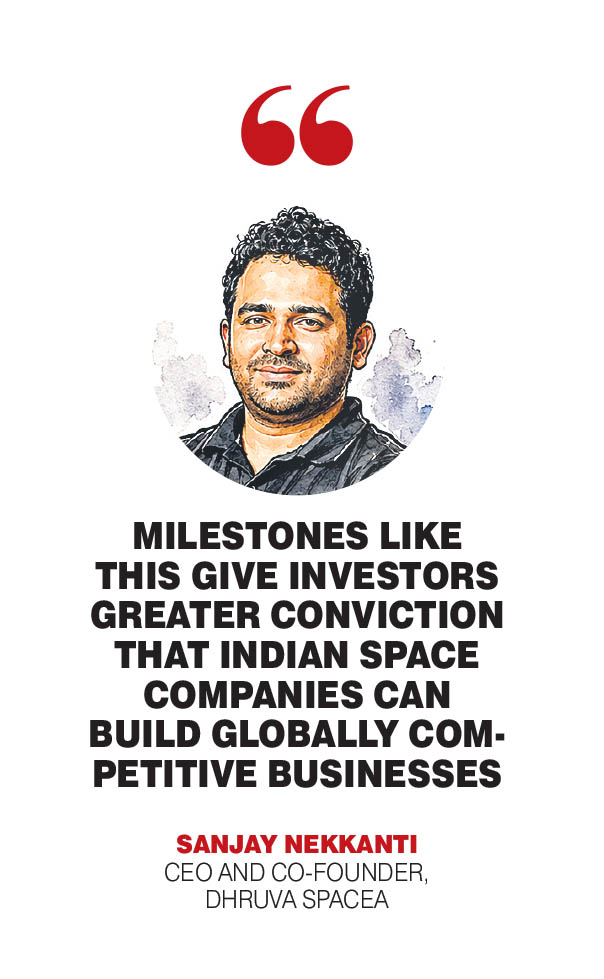
The significance of Vikram-I resonated across India’s space sector. Sanjay Nekkanti, CEO and co-founder of Dhruva Space, says: “Skyroot’s success is a significant milestone for the entire Indian Space ecosystem because it builds trust. I believe this will increase global confidence in India as a serious space technology destination. International customers will now view India as a place where complete space missions, from satellite development and launch to operations, can be executed. It also opens up opportunities for global partnerships, supply chain collaborations, and deeper technology co-development.”
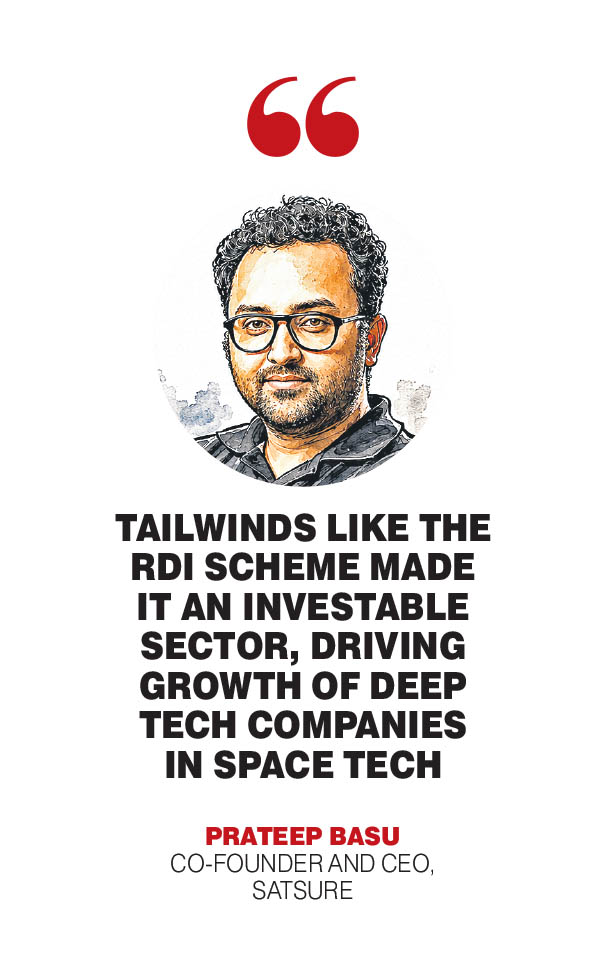
Targeted government funding like the RDI (Research, Development and Innovation) Scheme has given a shot in the arm to deep tech. Prateep Basu, co-founder and CEO of SatSure, believes there’s growing confidence in deep tech today. “Space is a strategic sector, and tailwinds like the RDI scheme made it an investable sector. This is driving the growth of deep tech companies in space technology,” he points out.
ISRO also acknowledges the collaborative effort behind the mission. “The mission reflects the growing capability of the country’s space ecosystem. The IN-SPACe and ISRO teams, who enabled and facilitated the launch and ground testing operations along with technical consultancy and 24×7 safety surveillance, have done a great job.”
The mission also highlighted the depth of India’s space research ecosystem. Signals from the SOLARAS satellite were received and verified at the SSPACE-Tarang ground station at the Indian Institute of Space Science and Technology (IIST), Thiruvananthapuram.
Grahaa Space’s technology-demonstration nanosatellite, SOLARAS, successfully completed Mission SIDDHI, transmitting telemetry and payload data from LEO. The mission validated the Bengaluru-headquartered startup’s indigenous, stackable nanosatellite platform and demonstrated the performance of its onboard systems under real orbital conditions.
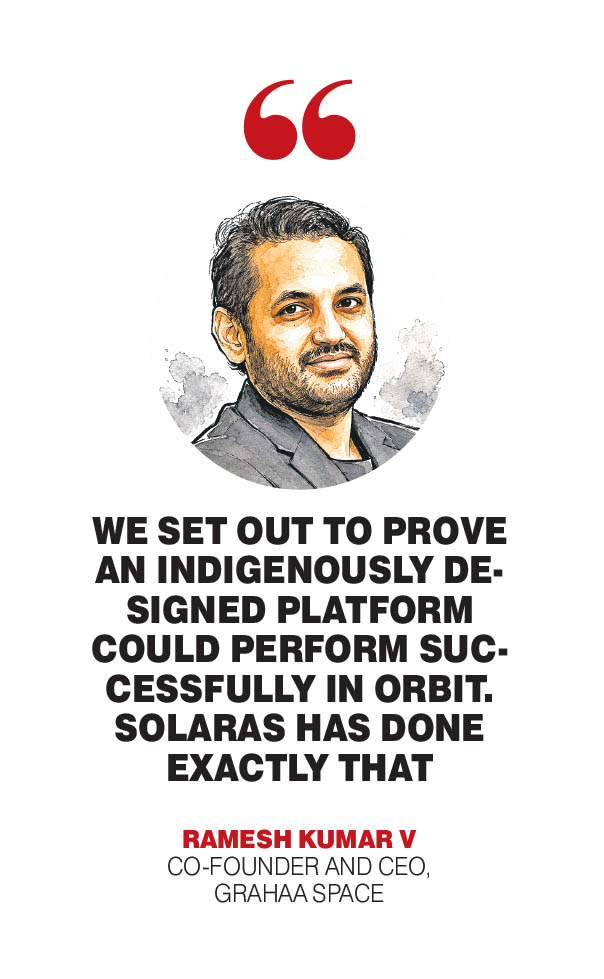
Calling Mission SIDDHI a major milestone for the team, Ramesh Kumar V, co-founder and CEO of Grahaa Space, remarked: “We set out to prove that an indigenously designed nanosatellite platform could perform successfully in orbit, and SOLARAS has done exactly that. Our hearty gratitude to Skyroot Aerospace for deploying SOLARAS into its intended orbit during its maiden mission, to STIIC (Space Technology Innovation and Incubation Cell) at IIST for their support throughout development, qualification and post-launch signal verification, and to IN-SPACe and ISRO for their continued handholding, guidance and support. We also thank the global amateur radio community for helping validate our telemetry.”
The Economic and Strategic Stakes
Skyroot’s success carries implications far beyond the launchpad.
- Cost: Commercial components, additive manufacturing, and agile development can cut costs and timelines, making satellite constellations for agriculture, disaster monitoring, climate intelligence, and connectivity economically viable.
- Strategic autonomy: Space now underpins communications, navigation, weather forecasting, defence, and national security. Indigenous launch capability reduces dependence on foreign providers.
- Commercial opportunity: The growing small-satellite market offers a chance to compete globally. But winning customers will require reliability, responsiveness, strong customer service, and insurance-grade performance
- Sustainability. Skyroot’s partnership with LICO Materials to recover raw materials from end-of-life batteries reflects the broader need to build more circular supply chains
A New Era for Exploration
Skyroot’s Vikram-I launch is more than a technological achievement. It is a symbol of a fundamental shift in how space exploration is organised and financed. The old model—dominated by monolithic government agencies, enormous budgets, and decade-long timelines—is giving way to a more dynamic ecosystem of governments, startups, investors, universities, suppliers, and commercial customers.
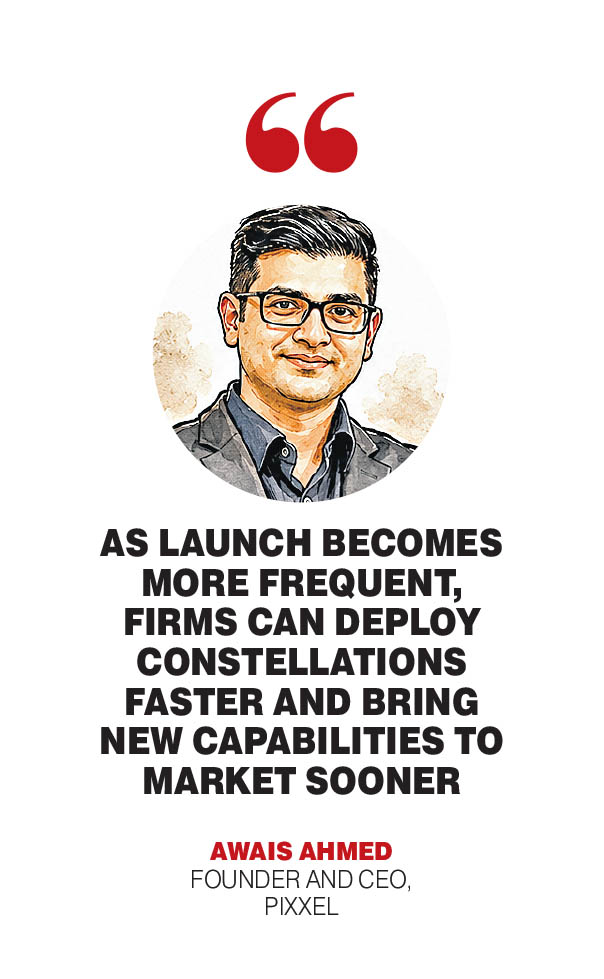
“As launch becomes more accessible and frequent, companies can deploy constellations faster, iterate more rapidly, and bring new capabilities to market sooner. That’s how India moves from participating in the global space economy to helping shape it,” says Awais Ahmed, founder and CEO, Pixxel, an Indo-US company that is building a constellation of hyperspectral imaging satellites into a sun-synchronous orbit.
The real significance of Vikram-I may not lie only in the rocket that reached orbit, but in what its success makes possible on the ground. The new space race will not necessarily be won by the country with the biggest rocket. It may be won by the ecosystems that innovate the fastest, manufacture efficiently, attract the best talent, and turn space technology into practical economic value.
With Vikram-I, India has crossed an important threshold. The country is no longer merely participating in the global space economy. It is increasingly becoming a place where the next generation of space companies can be built.
The final frontier is opening, and this time, startups are helping lead the way.

(The author is a former business journalist)

Comments are closed.