

Virendra Pandit
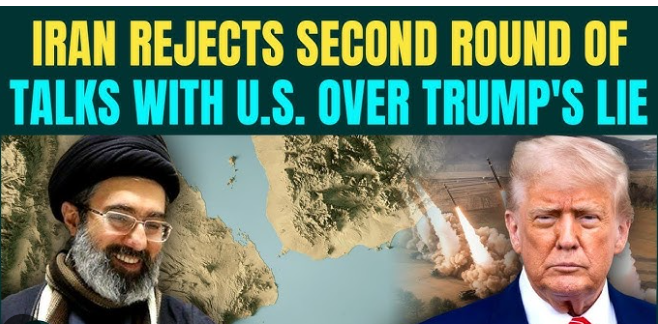
New Delhi: With their cycle of violence restarting around the Strait of Hormuz, there is little possibility of a second round of ceasefire talks between the US and Iran, the media reported on Monday.
On Sunday, the US attacked and seized an Iranian-flagged cargo vessel that it said had tried to evade its blockade of Iranian ports.
Nevertheless, Pakistan moved ahead on Monday with preparations for a new round of talks, before a tenuous ceasefire expires on April 22, even as renewed conflict around the Strait of Hormuz raised questions about whether the meeting would take place at all.
Iranian Foreign Minister Abbas Aragchi told his Pakistani counterpart Ishaq Dar that American threats to Iranian ships and ports were “clear signs” of Washington’s disingenuousness ahead of the planned talks, Iran’s state media reported.
US President Donald Trump said American negotiators would head to the Pakistani capital on Monday, but it was not immediately clear whether those plans would now change. Iran has not officially commented on possible talks, but Iranian state media suggested the talks would not happen.
Iran throttled traffic through the Strait of Hormuz, which connects the Persian Gulf to the Arabian Sea, shortly after the US and Israel attacked Iran on February 28. The US has also blockaded Iranian ports.
Nearly one-fifth of the world’s oil trade normally passes through the strait, along with critical supplies of fertilizer for the world’s farmers, natural gas and humanitarian supplies for places in dire need like Afghanistan and Sudan.
Since the war started 52 days ago, at least 3,375 people have been killed in Iran, according to a new toll released Monday in official Iranian media by Abbas Masjedi, the head of Iran’s Legal Medicine Organization. He did not break down casualties among civilians and security forces, but said that 2,875 were male and 496 were female; 383 of the dead were children 18 years old and under.
More than 2,290 people have also been killed in Lebanon, 23 in Israel and more than a dozen in Gulf Arab states. Fifteen Israeli soldiers in Lebanon and 13 US service members throughout the region have been killed.
oil prices
Iran’s grip on the Strait of Hormuz has also sent oil prices skyrocketing and created one of the worst global energy crises in decades.
Oil prices recovered slightly on Friday after Iran’s announcement to reopen the strait following a 10-day truce between Israel and the Iranian-backed Hezbollah militant group in Lebanon.
But then Trump said the US blockade “will remain in full force” until Tehran reaches a deal with the US and on Sunday the US military seized the Iranian cargo ship, the first interception since the blockade began last week.
Iran’s joint military command called the armed boarding an act of piracy and a ceasefire violation, the state broadcaster said, and vowed to again enforce restrictions imposed early in the war. Already on Saturday, Iran fired at ships trying to transit, that included an Indian vessel.
Oil prices were up again in early trading on Monday, with Brent crude, the international standard, at about USD 95 a barrel — up more than 30 per cent from the day the war started on February 28.
Iran early Monday warned it could keep up the global economic pain as ships remained unable to transit the strait, with hundreds of vessels waiting at each end for clearance.
Security of the strait is not free and “the choice is clear: either a free oil market for all, or the risk of significant costs for everyone,” Mohammad Reza Aref, first vice president of Iran, said in a social media post calling for a lasting end to military and economic pressure on Tehran.

Comments are closed.