

Virendra Pandit
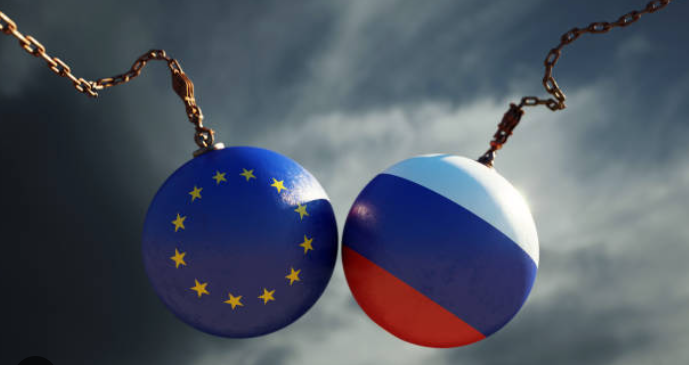
New Delhi: Russia has filed a lawsuit seeking 18.2 trillion rubles (USD 229 billion) in damages from Europe’s largest securities depository, Euroclear, the Interfax news agency said.
The legal move comes as the European Union (EU) debates how to use frozen Russian sovereign assets to support war-ravaged Ukraine. Euroclear holds around 185 billion euros (USD 217 billion) of those immobilized Russian reserves, which are subject to EU sanctions imposed following the February 2022 invasion of Ukraine, the media reported.
Russia’s Central Bank had announced last week to sue Euroclear after the EU decided to freeze Moscow’s assets indefinitely to provide long-term financial assistance to Ukraine.
A spokesperson for Moscow’s Arbitration Court said the Russian Central Bank had filed a claim seeking 18.2 trillion rubles in damages (195.5 billion euros), according to the official exchange rate as of December 12.
He said the bank would later decide how to enforce any ruling against Euroclear’s assets, including those held outside Russia, once a decision takes effect.
On Monday, EU foreign policy chief Kaja Kallas acknowledged that talks on using Russian frozen assets had become “increasingly difficult” ahead of a summit of European leaders scheduled for Thursday.
The European Commission (EC) has proposed ‘reparations loan’ of about 90 billion euros (USD 105.6 billion), which Ukraine would repay only if Russia eventually pays war reparations. It aims to avoid outright confiscation of Russian assets, a move some member states fear could expose them to legal retaliation, or more from Moscow.
Belgium, where Euroclear is headquartered, has become a key opponent of the EC plan, warning that it could face significant legal and financial risks if Moscow prevails in international courts. Italy has also protested against the proposed confiscation.
The EC has proposed a “three-tier defence” to shield both Belgium and Euroclear from potential claims, but the proposal has so far failed to break the deadlock among member states.
Momentum behind the loan proposal has grown in recent weeks after a US-backed peace deal outlined alternative uses for frozen Russian assets, prompting concerns in Europe that the funds could otherwise be returned on terms favorable to the Kremlin.
The Russian suit is seen as the first step in what the Kremlin has warned will be a legal nightmare for the EU over plans to use frozen Russian assets to support Ukraine.
The EU wants to tap part of the nearly 210 billion euros worth of Russian central bank assets frozen in Europe to back a loan for Kyiv’s military and civilian needs in 2026 and 2027.
The new US National Security Strategy (NSS) demonstrated that Europe is vulnerable. The EC now calls for “an integrated, whole-of-government-and-business approach”. The EU’s Joint Research Center mapped out vulnerabilities in critical materials supply as early as 2011 and 2013. The same period featured fierce warnings against excessive dependence on Russian energy when Germany was blithely pursuing a second Nord Stream pipeline, the media reported.
The problems and solutions the EU identified have not been acted on. Various think tanks, including the EPC, have called for an “economic security council”. But the challenge is fundamentally political. Trump commented on Europe thus: “They talk too much…They talk but they don’t produce.”
He was referring to the one area — Ukraine policy — where his criticism is least justified. In general, however, Europeans sit on the wrong side of a chasm between rhetoric and action.
Recently, however, the EU has woken up to the challenges. On Friday, it used a majority procedure to put the blocking of Russia’s central bank reserves on a new legal basis, no longer requiring six monthly unanimous renewals. With a pen stroke, the power of Hungarian Prime Minister Viktor Orbán, or any other EU leaders diminished; they have been used by the Kremlin to frustrate Europe’s greatest means of pressure against Russia.
Orban has warned that seizing frozen Russian assets could provoke severe retaliation from Moscow, raising fears of wider conflict. Redirecting the funds to support Ukraine could be seen as a declaration of war and cautioned that taking hundreds of billions of euros would trigger consequences. His remarks come as European allies debate ways to finance aid for Kyiv. The warning follows Slovak Prime Minister Robert Fico’s strong protest against the EU’s strategy.
In a few days, EU leaders are likely to push through a big “reparations loan” for Kyiv, funded by cash accumulated on EU banks’ balance sheets due to the sanctions on Russia.

Comments are closed.