

Virendra Pandit
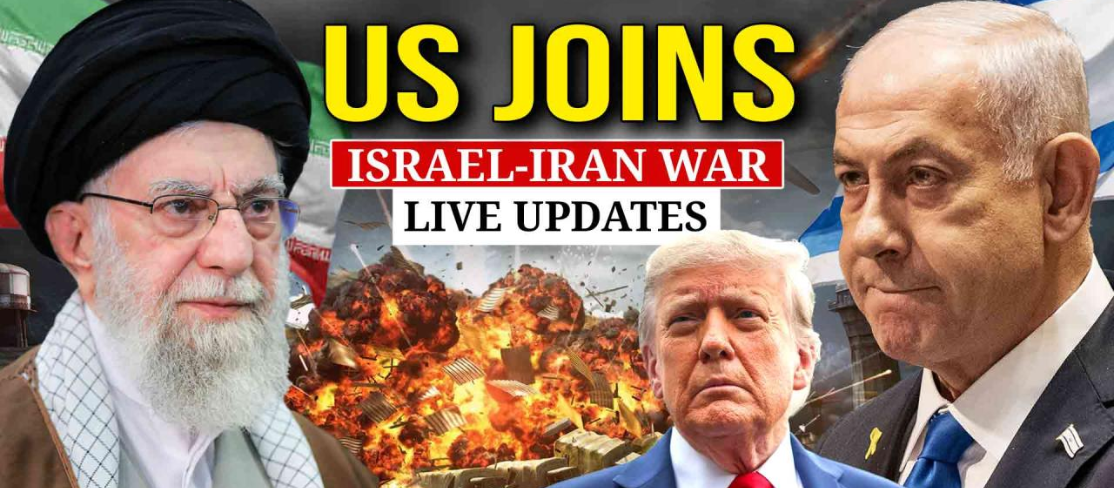
New Delhi: After three rounds of nuclear talks in Geneva collapsed, President Donald Trump on Saturday called on the Iranian people to “take over” their government, and Israel, with US assistance, launched a fierce, daylight attack on Iran, threatening global energy supplies and economies, the media reported.
Authorities offered no casualty information from the strikes.
Announcing that the US has begun “major combat operations in Iran” after Israel’s strikes, Trump called the attacks “a noble mission,” saying they were necessary because of Iran’s pursuit of nuclear weapons and missile systems that threatened the US.
He called on Iranian officials to “lay down your arms” or “you will face certain death,” and encouraged the Iranian people to “take over your government — it will be yours to take.”
According to reports, clouds of smoke rising from Tehran’s downtown. The first apparent strike happened near the offices of Supreme Leader Ayatollah Ali Khamenei.
The US is also participating, although the full extent of its involvement was not clear. It was also not immediately clear whether Khamenei, 86, was in his office. He hasn’t been seen publicly in several days as tensions with the US and Israel mounted. In Tehran, witnesses heard the first blast by Khamenei’s office. Iranian state television later reported on the explosion, without offering a cause.
The attack followed as the United States has assembled a vast fleet of fighter jets and warships in the volatile Middle East to try to pressure Iran into a deal over its nuclear programme.
Trump wanted a deal to constrain Iran’s nuclear program as he smelt an opportunity at home where he is struggling with growing dissent following nationwide protests, and midterm US Congress elections this year. According to reports, after the Supreme Court junking his tariffs, his administration is facing over 2,000 lawsuits on this issue alone.
Iran, facing a civil war-like situation, had hoped to avert a conflict on the borders, but maintains it has the right to enrich uranium and does not want to discuss other issues, like its long-range missile program or support for armed terror groups like Gaza’s Hamas and Lebanon’s Hezbollah.
It was also unclear if Iran would immediately strike back, but it had warned that not only Israel but American military personnel and US bases spread across the region would also be targets for any retaliation.
Israeli Defense Minister Israel Katz described the attack as being done “to remove threats.” He did not immediately elaborate.
After it launched attacks on Iran, sirens sounded across Israel at the same time. The Israeli military said that it had issued a “proactive alert to prepare the public for the possibility of missiles being launched toward the State of Israel.” More explosions struck Iran’s capital after Israel said it was attacking the country.
After Israeli attacks, Iran shut down its airspace. The warning to pilots came out as explosions rang out across Tehran.
Impact on energy supplies
The ongoing attack could disrupt oil and gas output and cause damage to energy infrastructure in West Asia, threatening energy supplies and economies across the world.
Iran, the third largest producer in the Organization of the Petroleum Exporting Countries (OPEC), pumps about 4.5 percent of global oil supplies. Its output is nearly 3.3 million barrels per day of crude, plus 1.3 million bpd of condensate and other liquids.
Its domestic refineries have a capacity of 2.6 million bpd, according to the consultancy FGE. In 2025, it exported nearly 820,000 bpd of fuel, including LPG, according to Kpler, slightly below 2024 levels, the media reported.
Iran’s oil and gas production facilities are concentrated in southwestern provinces: Khuzestan for oil and Bushehr for gas and condensate from South Pars. It exports 90 percent of its crude via Kharg Island, for shipping through the narrow Strait of Hormuz.
Saudi Arabia and other OPEC members could compensate for a drop in Iranian supply by using spare capacity to pump more, even though this spare capacity has been shrinking due to output increases the producer group has undertaken over the past year.
Iran’s oil customers
Chinese private refiners are the main buyers. The US Treasury has imposed sanctions on some Chinese refiners for purchases of Iranian oil.
China says it does not recognize unilateral sanctions against its trade partners, but its purchases of Iranian crude have declined. As Iran also seeks to protect its stocks from potential US strikes, it has built up a record amount of oil on the water of about 200 million barrels, equivalent to about two days of global consumption.
Iran has skirted sanctions for years by taking measures such as transferring oil from one ship to another at sea and changing the origin of the oil, to hiding tanker locations from satellites.
It produces natural gas from the offshore South Pars gas field, which makes up around a third of the world’s largest reservoir of natural gas. The country shares the reservoir with major exporter Qatar, which calls its field the North Dome.
Sanctions and technical constraints have meant most gas Tehran produces from South Pars is for domestic use.
Iran’s gas production totaled 276 billion cubic meters in 2024, with 94 percent consumed domestically.
Israeli attacks in June last year struck four units of Phase 14 of South Pars, around 200 km (125 miles) from Qatar’s gas installations, many of which are joint ventures with energy giants ExxonMobil and ConocoPhillips of the US.
Qatar has made hundreds of billions of dollars exporting liquefied natural gas (LNG) for nearly three decades.
The entire reservoir contains an estimated 1,800 trillion cubic feet of usable gas – enough to supply the entire world’s needs for 13 years.

Comments are closed.