
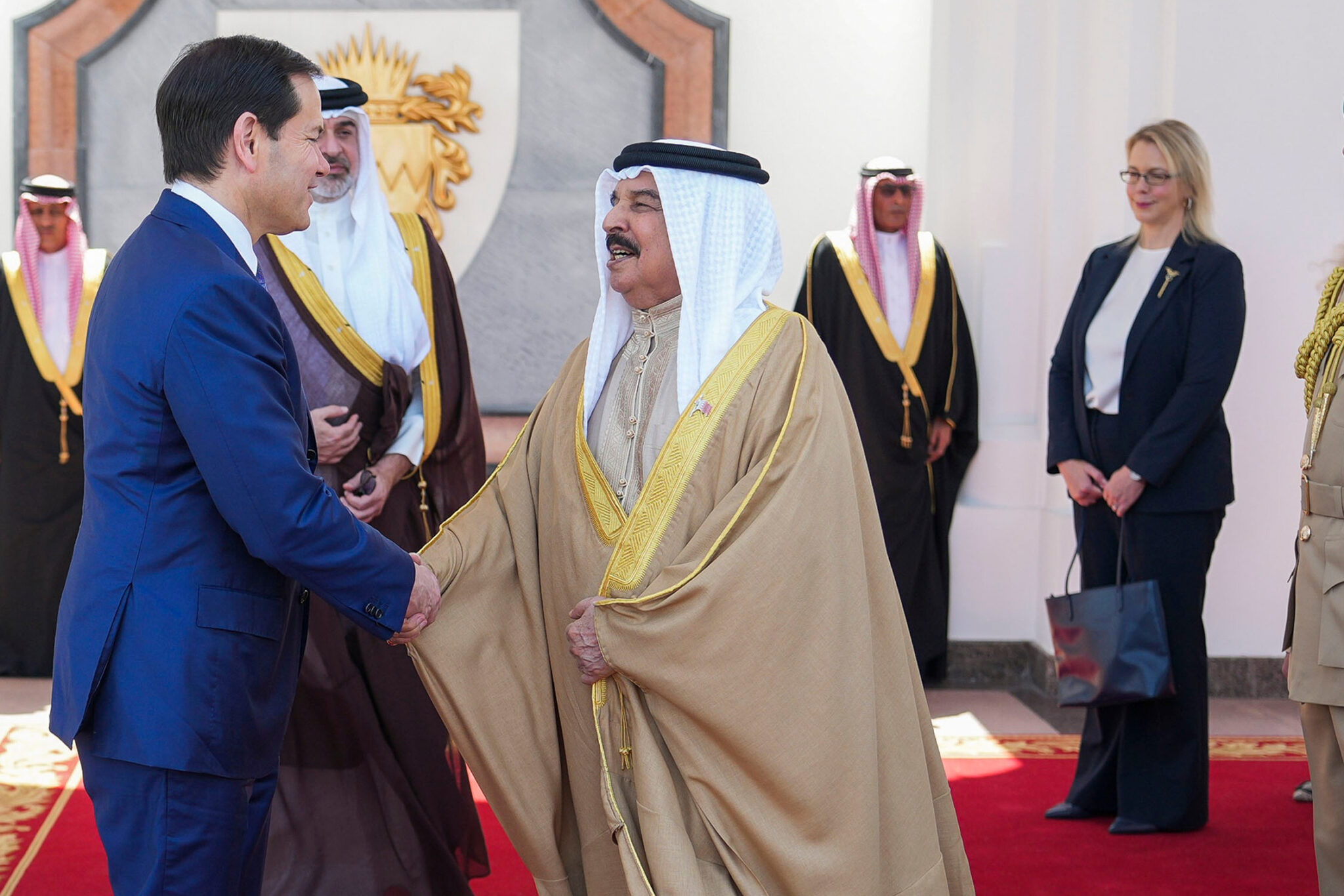

Rubio Reassures Gulf Allies on Iran Talks and Regional Security/ TezzBuzz/ WASHINGTON/ J. Mansour/ Morning Edition/ Secretary of State Marco Rubio sought to reassure Gulf Arab allies that they will remain closely involved in negotiations with Iran. Gulf leaders welcomed cooperation but stressed concerns about regional security, the Strait of Hormuz, and Iran’s future commitments. The meetings produced a joint statement supporting diplomacy while emphasizing that any benefits for Iran depend on full compliance.

- Marco Rubio completed a three-country Gulf tour.
- Meetings included Bahrain, Kuwait and the United Arab Emirates.
- Gulf leaders want greater involvement in Iran negotiations.
- Joint statement reaffirmed shared security goals.
- Officials opposed Iranian control or fees in the Strait of Hormuz.
- Gulf nations emphasized regional stability and sovereignty.
- Bahrain urged strict Iranian compliance with agreements.
- Rubio pledged continued U.S. consultation throughout negotiations.


Rubio Reassures Gulf Allies Over Iran Negotiations
Secretary of State Marco Rubio sought to reinforce America’s commitment to its Gulf Arab partners on Thursday, insisting the United States remains fully aligned with regional allies despite lingering concerns over negotiations aimed at ending the conflict with Iran.
Rubio concluded a three-day diplomatic tour through the United Arab Emirates, Kuwait and Bahrain with meetings focused on reassuring members of the Gulf Cooperation Council (GCC) that they will have a voice throughout ongoing negotiations between Washington and Tehran.
The outreach comes after the conflict involving the United States, Israel and Iran disrupted regional energy exports and exposed several Gulf nations to Iranian missile and drone attacks.
Gulf Leaders Want Greater Involvement
Rubio acknowledged that Gulf governments have expressed concerns about being fully informed as negotiations continue.
“They’ve shared with us some very concrete concerns, ideas,” Rubio said in Bahrain. “And when I say concern, the biggest concern is that they really just want to be informed every step along the way as we enter these negotiations at both the technical and political levels.”
He emphasized that the Trump administration intends to keep Gulf partners closely involved.
“We want them to be involved and we want the views of all these countries to be reflected,” he said. “We don’t want to and will not be making any decisions or commitments that in any way undermines the prosperity, stability or security of our Gulf partners.”
Joint Statement Highlights Shared Priorities
Following the meetings, the United States and the six-member Gulf Cooperation Council issued a joint statement emphasizing cooperation on ending hostilities while preventing Iran from obtaining nuclear weapons.
The statement said both sides:
“stressed the need to maintain momentum and unity as negotiations proceed toward a more permanent end to hostilities and the shared objective of preventing Iran from ever developing or otherwise acquiring a nuclear weapon.”
Officials also reaffirmed opposition to any Iranian attempt to impose tolls, fees or restrictions on commercial traffic through the Strait of Hormuz, one of the world’s most critical energy shipping lanes.
The statement welcomed Oman’s proposal to establish a safe maritime corridor for stranded vessels and stressed that any economic benefits available to Iran would remain conditional.
According to the agreement, any relief provided to Iran “is conditional and reversible, contingent on Iran’s compliance” with both the temporary memorandum of understanding and any final peace agreement.
Signs of Unease Remain
Despite the optimistic tone of the joint statement, Gulf officials made clear they still have concerns about the direction of negotiations.
Gulf Cooperation Council Secretary-General Jasem Mohamed Albudaiwi said future agreements must fully account for the security interests of regional states.
He said any future understandings must incorporate the requirements of Gulf member nations to safeguard “their security and stability.”
His statement also stressed:
“Such arrangements must be based on the principles of international law, respect for state sovereignty, good neighborliness, and non-interference in internal affairs, thereby contributing to the consolidation of regional security and stability.”
The comments suggested some Gulf governments remain concerned they could be sidelined during future negotiations.
Bahrain Calls for Strict Iranian Compliance
Before Rubio addressed GCC officials, Bahraini Foreign Minister Abdullatif bin Rashid Al Zayani welcomed diplomatic progress while cautioning that significant issues remain unresolved.
“While this progress is encouraging, it is critically important that Iran fully adheres to its obligations,”
he said.
Bahrain also reiterated longstanding regional concerns, calling for guarantees that Iran will never develop nuclear weapons, preserve freedom of navigation through the Strait of Hormuz, end missile and drone attacks, cease support for proxy groups and refrain from interfering in neighboring countries.
Regional Diplomacy Continues
Rubio’s visit underscored the importance the Trump administration places on maintaining strong ties with Gulf allies while pursuing negotiations with Iran.
Although officials projected unity publicly, the discussions highlighted continuing concerns among Gulf governments that any lasting agreement must address their security priorities and include them throughout the diplomatic process.
More on US News
Comments are closed.