
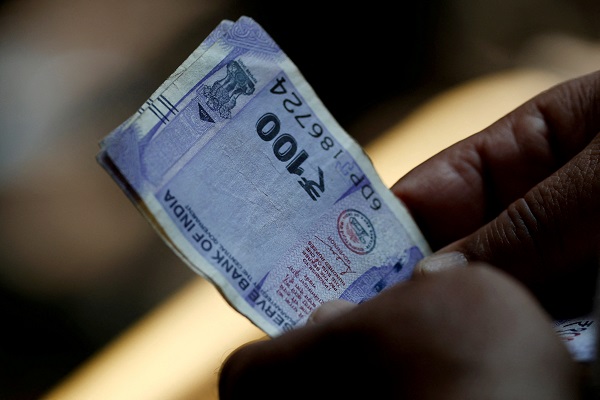

The Indian rupee momentarily fell above ₹91 per US dollar during thin trade on Thursday, indicating ongoing volatility in the foreign exchange market. With the key trading hub in Mumbai closed for a holiday, weak liquidity and increased dollar demand in offshore markets led to the currency’s high decline, leading experts and traders to keep an eye out for catch-up losses when regular trading resumes. The dynamics highlight the weak sentiment gripping the rupee as external pressures build ahead of the weekend.
Currency markets said that the rupee could open worse compared to the dollar in the 91.02-91.06 area on Friday if it “catch-up” to the fluctuations observed in minimal holiday activity. The fall above 91, a critical psychological limit, shocked some investors because such fluctuations are unusual on a day when the Mumbai market is closed. The rupee’s depreciation was made worse by strong dollar buying in the non-deliverable forward (NDF) market, where offshore demand for dollars put extra pressure on the currency.
Drivers of the Rupee’s Weakness:
A variety of causes contributed to the rupee’s depreciation. With Mumbai closed for a local vacation, most onshore liquidity was unavailable, allowing offshore flows to dominate prices. In this thin trading environment, increased demand for the dollar, especially from traders and speculators, contributed to currency movements. Bankers told Reuters that a significant public sector bank was aggressively buying dollars, adding to rupee selling pressure.
The rupee was also impacted by international market forces. As global tensions heated up, especially in relation to the United States’ increased rhetoric about Iran, oil prices rose, driving up energy expenses. Increased import costs for India are usually caused by higher oil prices, which can also affect the value of the rupee. At the same time, as markets struggled with central bank outlooks and risk aversion across asset classes, the U.S. dollar itself was on the rise and was about to have its greatest weekly performance in several months.
The combination of a strong dollar and rising commodity prices presents a difficult environment for emerging market currencies such as the Indian rupee. When global demand for dollars rises, whether due to shelter buying, hedging, or corporate desire for hard currency to finance imports, local currencies can fall sharply, especially when domestic market activity is weak.
Impact of Holiday Trading Conditions
The unusual conditions that coincided with the rupee’s move past 91 underscore how market structure and timing can influence price action. Because Mumbai’s foreign exchange market was closed on Thursday, major onshore participants were absent, leaving other centres and offshore desks to set rates. In such contexts, even moderate orders can cause relatively large swings due to limited opposing liquidity.
Currency traders have highlighted that these weak market conditions might exaggerate the “true” underlying market mood because the absence of significant players lowers balancing trades, which would ordinarily reduce volatility. As a result, when the complete market reopens on Friday, the rupee may experience catch-up losses, implying that the price may change to reflect moves that occurred overseas while the domestic trading window was closed.One-month rupee NDFs, a measure of the currency’s predicted movement, suggested additional weakness. With non-deliverable forwards pointing to levels over 91, traders expected the rupee to follow suit once full trading liquidity resumed. Such offshore rates frequently predict movements that are later mirrored in onshore markets once local exchanges are operational.
Outlook for the Rupee and Forex Markets:
A number of variables will affect the rupee’s direction. Offshore markets will continue to respond to Federal Reserve policy signals and U.S. macroeconomic data, which impact the strength of the dollar abroad. In the meanwhile, currency markets can be further shaped by geopolitical developments, especially in the Middle East, which can affect commodities prices as well as demand for the dollar as a safe haven.
Domestically, India’s trade balance and capital movement dynamics will be key. A growing trade deficit, fueled by expensive imports like oil, might put pressure on the currency, while foreign investment inflows into shares or bonds can provide some support. Recent volatility in flows, with foreign investors buying some Indian stocks and bonds, shows how mood can change swiftly, influencing currency direction.
As full trading resumes in Mumbai and other Indian markets, the immediate focus will be on how the rupee adjusts to reflect the movements seen during thin holiday trading. Whether the currency stabilises around the 90.90–91.00 area or extends losses further will likely depend on both domestic market liquidity returning and broader global dollar trends. For now, traders and policymakers alike will watch the interplay of dollar demand, oil prices, RBI support efforts, and global risk sentiment for clues on whether the rupee’s slide marks a temporary anomaly or a shift toward greater weakness.

Comments are closed.