
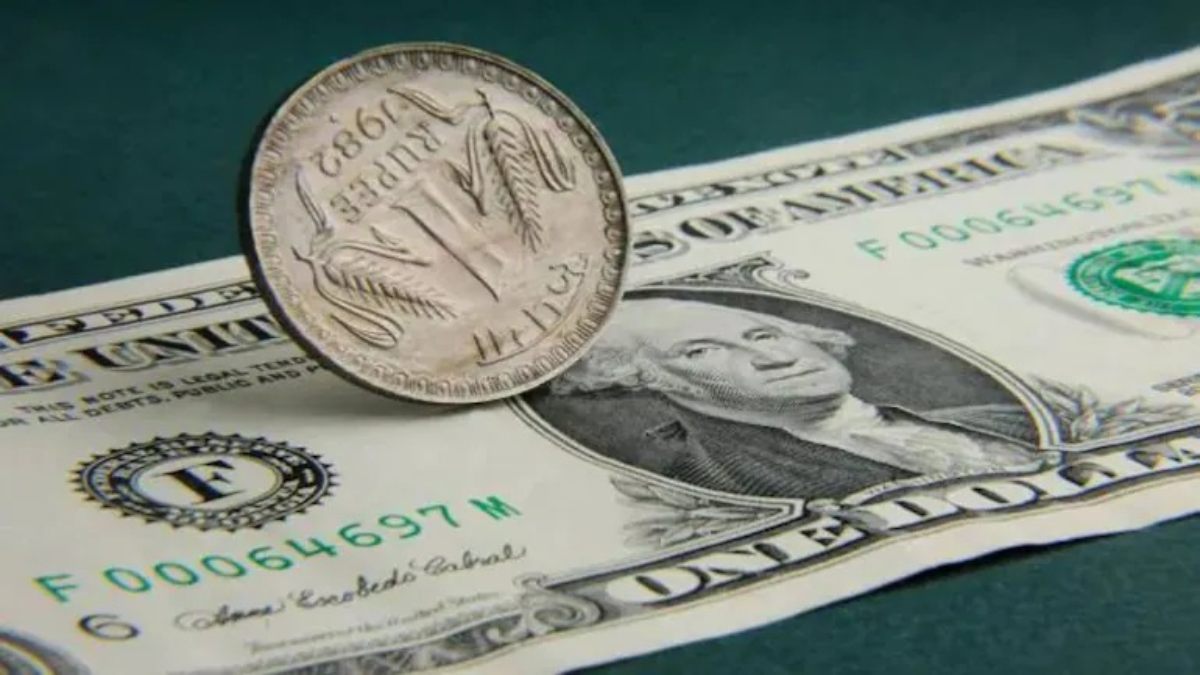
Rupee Vs Dollar Update: Rupee recovers after continuous fall, know by how much percent it increased?

Rupee Vs Dollar Update: The rupee strengthened sharply against the US dollar on Wednesday, December 17, and rose by more than 1% during the session. This happened when the Reserve Bank of India (RBI) intervened in the foreign exchange market to control volatility after it hit an all-time low for four consecutive sessions.
The local currency opened slightly weaker at 91.07 per dollar compared to Tuesday’s (December 16) closing price of 91.03, but soon recovered. The rupee strengthened to around 90.34 in early trade. Dealers said state-owned banks probably sold dollars on behalf of the Reserve Bank of India (RBI), while traders also liquidated long dollar positions after the fall in crude oil prices.
“The RBI was selling dollars, but the recovery was only partly due to intervention. The market was also moving away from the 91 per dollar level, and traders were reducing long dollar positions,” dealers said. The rupee had fallen to its lowest level in the last four sessions.
Continued foreign portfolio outflows and uncertainty over India-US trade talks were putting pressure on the rupee. However, market experts said resistance near 91 per dollar and low demand for the dollar helped stabilize the currency on Wednesday (December 16).
Senior forex expert KN Dey said that low liquidity at the end of the year was increasing intraday fluctuations. “Markets remain quiet towards the end of the year, which increases volatility. If positive flows come back, there could be some stability from the second half of January,” he said.
Kanika Pasricha, Chief Economic Advisor of Union Bank of India, said that the rupee’s rise beyond 90 seemed excessive. “We had expected the rupee to move towards 89-90 this year. Moving beyond 90 seems like an overshoot. The presence of the RBI has helped manage volatility, and the currency is likely to return to fundamentally sound levels of 90 or below by March,” he said.
Neeraj Seth, founder and chief investment officer of 3R Investment Management, said the recent weakness reflects capital flows and prolonged trade uncertainty. “Flows have not been supportive in recent months, and trade deal delays have added to the fatigue. Additionally, the RBI seems more comfortable allowing more certainty into the market rather than strictly managing volatility,” he said.
Despite Commerce Secretary Rajesh Agarwal saying earlier this week that India was close to finalizing an initial framework for a tariff agreement with the US, trade uncertainty still remains a key issue. Strong export growth in November has given India some leverage in negotiations, which has reduced the pressure for a quick deal.
Seth said if sentiment stabilizes at the current equity and currency levels, and then gradually stabilizes and inflows come back, then foreign portfolio outflows may ease from January onwards, provided domestic growth and earnings improve.
Economists said that there is no macroeconomic risk due to the fall of rupee at present. Kotak Mahindra Bank Chief Economist Upasana Bhardwaj said that RBI may face some currency weakness in the next six to nine months due to low inflation.


Comments are closed.