
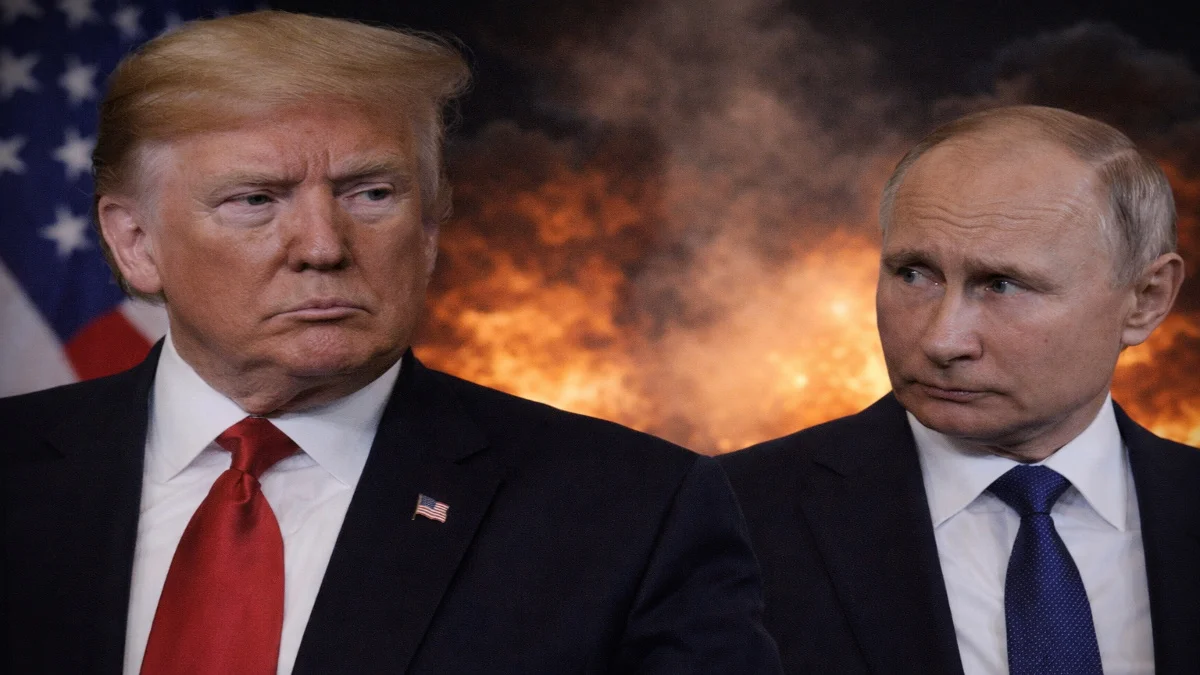

By the time the U.S. president, Donald Trump, is reelected to the White House in 2025, having made a comeback, many Russian hardliners were also optimistically looking forward to this, in the hope that his unpredictable and transactional approach would eventually work to the advantage of Moscow in its conflict with Ukraine. There were some influential voices in Russia that saw Trump as a pragmatic strongman ready to play realpolitik and could make the deal that would be beneficial to the Kremlin.
Expectations however started changing with time. Trump was triggering concern among Russian nationalists and security hawks due to his foreign policy actions especially in the Middle East. This was altered with the rising tension in the situation with Iran, at the cost of U.S.-Israeli military activities that came after the previous nuclear talks. The developments pushed members of Moscow to wonder whether Washington was negotiating in good faith and whether Trump could still be regarded as a reliable negotiating partner.
Konstantin Malofeyev, a Russian nationalistic businessman has spoken of the United States as an unreliable power and that Washington aims at weakening Europe and Russia. His statements represent a deeper feeling of Russian hardliners who view the United States more and more as an enemy than the negotiating partner.
Critical pro-war blogger Boris Rozhin, who posts online as Colonel Cassad, has also been quite scathing, saying that Trump is reckless and that it would be wrong to count on any agreement with Washington. Academic Andrei Sidorov has raised similar objections, referring to Trump as a dangerous personality and to the awkward situation in Ukraine that Russia is in as constraining the possibility of Moscow responding to world events with the same effectiveness as it could otherwise.
Regardless of this criticism, the Kremlin still tries to follow the more conservative and realistic way. Moscow criticizes the U.S. military activities against Iran as unprovoked aggression but does not personally attack Trump. Russian leaders are still optimistic that Trump might be able to negotiate a deal in Ukraine to suit Russian interests and perhaps open the door to a better relationship between Washington and Moscow.
At this time, Russia is still holding on to the continuing peace talks in relation to Ukraine despite the fact that it is still unknown when and where the next talks may take place. The given policy presents a fine line walking exercise: Moscow aims at maintaining constructive relations with Trump and publicly criticizing the policies that it considers to be aggressive.
Both the Russians and the West analysts observe that Moscow can do little more than just offer diplomatic support to Iran. Though Russia has been importing and redesigning Iranian-made drones to be used in Ukraine in the past, its military engagements in Ukraine do not leave much room to intervene in the Middle East.
There are also some analysts and some Russian officials who anticipate some benefits in the changing situation. An increase in the price of oil in the world market may alleviate the negative impacts on the state budget of Russia, and a decrease in discounts on Russian oil to the other large buyers of its products like China and India may increase revenues. According to other people, the long-term Middle East conflict could also pull the U.S. military and political resource and political focus out of Ukraine.
However, good rhetoric by the Russian hawks is indicative of real discomfort in the political and security establishment in the country. People assume that the United States is growing more aggressive when Russia is still more engaged in the war in Ukraine and has limited resources to exert power overseas.
According to some of the hardliners, the policies of Trump are undermining the international relations of Russia by attacking governments that are believed to be friendly to Moscow. They cite the overthrow of Syrian leader Bashar al-Assad at the end of 2024, the U.S. campaign against the Venezuelan dictator Nicolas Maduro and the assassination of Iranian leader Ayatollah Ali Khamenei in combined U.S.-Israeli attacks as indicators of a larger trend. The same applies to Cuba whose relations with Moscow have long been a partnership.
Trump, even though his critics in the West frequently accuse him of being excessively conciliatory of Russia – through his meetings with President Vladimir Putin and even diplomatic interaction – has been growing concerned that Trump will ultimately eventually turn on Moscow itself.
Ultranationalist theorist Alexander Dugin, who previously viewed Trump as a potential partner, now threatens that Russia can be subjected to severe consequences based on the result of the situation in Iran. He claims that Trump has left behind the ideology with which the collaboration was possible, and he says that Moscow should now handle him carefully.

Comments are closed.