
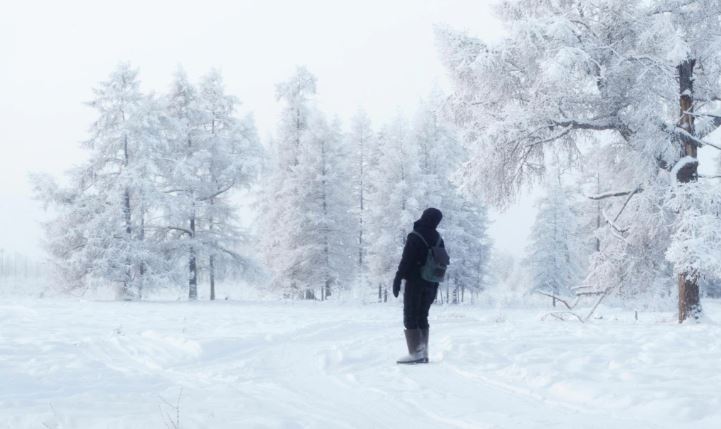
Russia’s cold inhabited regions: In -50 degree winter, moisture from breath turns into ice in a moment, severe cold in these cities

Russia’s cold inhabited regions: Remote areas of Russia are currently in the grip of severe cold, where the temperature has fallen to -50 degrees Celsius. While on one hand the cold and dense fog in North India has forced people to shiver, on the other hand the situation in some parts of the world is even more frightening. Remote areas of Russia are currently in the grip of severe cold, where the temperature has fallen to -50 degrees Celsius. The conditions in these areas are such that even staying in the open for a few minutes can be fatal. The moisture coming out of human breath turns into ice in a moment. These are the areas where winter never ends. Living life here is like a challenge every moment.
Read :- Leader of Opposition in Lok Sabha Rahul Gandhi shared the video from Germany, said that the manufacturing sector is declining rapidly in India.
Bardigestyah (Russia)
Temperature: -52.1°C
This area of Siberia is currently being seen as one of the coldest places in the world.
Tomot (Russia)
Read:- Protest in Pakistan, but Asim Munir is desperate to bow at the feet of Trump… going to America again
Temperature: -52°C
Truck engines are freezing here and people have been advised to stay at home.
Verkhoyansk (Russia)
Temperature: -50°C
Read :- After Bangladeshi leader Hasnat Abdullah’s anti-India statement, India’s Foreign Ministry summoned
The city is already joining Asia as the coldest inhabited place in the world. More than 1,000 people live in this place, which proves that humans can adapt to all types of weather.
According to experts, these areas are located very close to the Arctic Circle. Here sunlight is available for a very short period. The ground covered with snow is unable to return heat. Strong winds further increase the effect of cold.
Schools have been closed in many cold areas of Russia. Public activities have been limited and people have been advised not to leave their homes unnecessarily.

Comments are closed.