
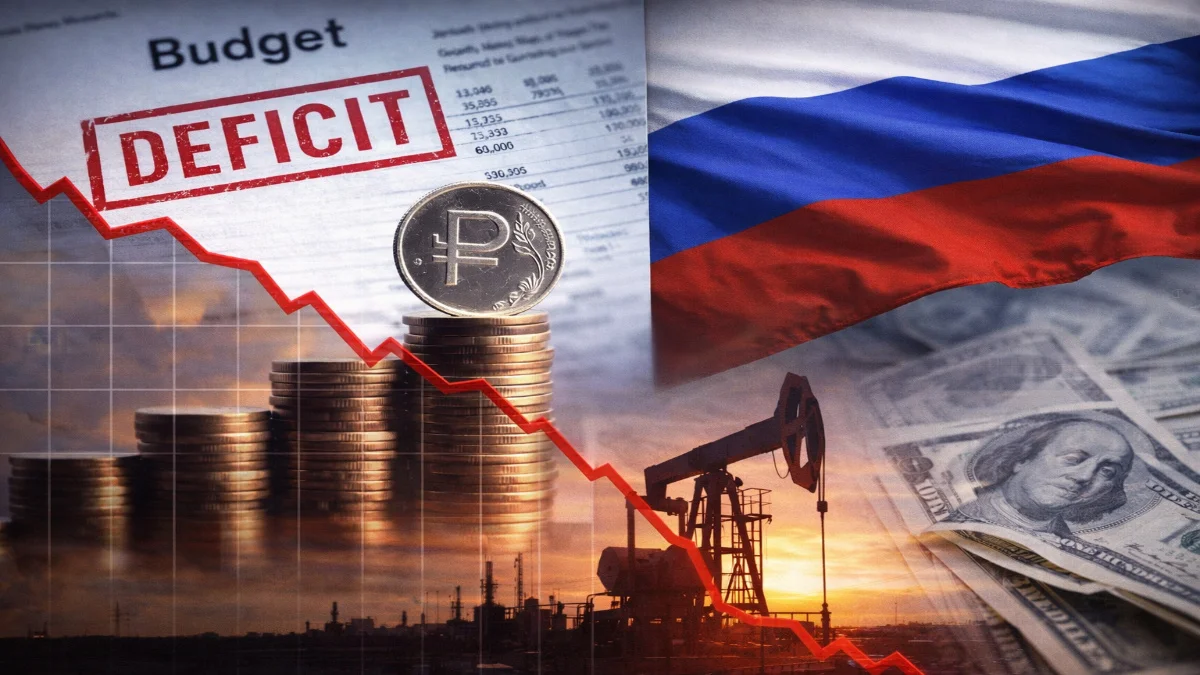

The economic strains of Russia have been accumulating in the last few years as the export margins and the increasing military expenses have redefined the financial system of the country with the Western sanctions. Energy incomes and high taxation have become the most important sources of government expenditures, especially military ones especially since the intensification of the war in Ukraine. There have been increasing concerns over the credibility of official Russian economic data over the years with analysts cautioning that the structural flaws of the oil based economy may be further escalated unless corrective actions are implemented.
Such pressure of the long-term is now more apparent in the recent fiscal statistics in Russia. Intelligence estimates of the Federal Intelligence Service (BND) in Germany have given a figure of approximately 3.6% of GDP in the federal budget deficit of Russia in 2025, which is approximately 26 percent higher than the official report numbers. The report indicates that the Russian government is trying to conceal the actual state of affairs with the help of distorted or unfinished statistics.
The current economic indicators in various sectors are moving in the negative direction. Intelligence tests caution that without significant policy changes, Russia structural economic difficulties can be chronic particularly because of its over reliance on energy exportation.
The oil-based Russian economy is currently experiencing increasing pressure on several sides. Government taxes are getting progressively heavier to cover war expenditures and Ukrainian drone attacks and Western sanctions are hurting critical energy infrastructure and export routes. Simultaneously, the sanctions are compelling Russia to market crude oil at huge discounts relative to world market rates, eliminating general revenues.
The main source of foreign currency, which is the exports of energy, is also becoming strained in Russia. The German intelligence evaluation shows that US sanctions are also having a significant impact on reducing revenues in both oil and liquefied natural gas (LNG) exports.
The patterns of trade are also changing. India and China are still some of the biggest purchasers of Russian oil, however intelligence agencies claim that India is currently sharply decreasing its purchases under the pressure of United States, putting further pressure on Russia business on exporting oil.
These pressures are increasing and the trust in the official Russian economic data is still declining. The foreign capital is not encouraged in Russia, as analysts are more likely to refer to the country as unpredictable and high-risk investment environment.
In the meantime, the fiscal priorities of Russia are shifting towards defense. An estimate of intelligence estimates that the military spending is currently approximated as half of the federal budget and approximates 10 percent GDP in 2025 reflecting the increasing economic weight of the war.
Combined, these processes indicate a slowly changing economy turning from the wartime endurance to a growing structural pressures, and Russia is now as financially challenged as the official statistics indicate.

Comments are closed.