
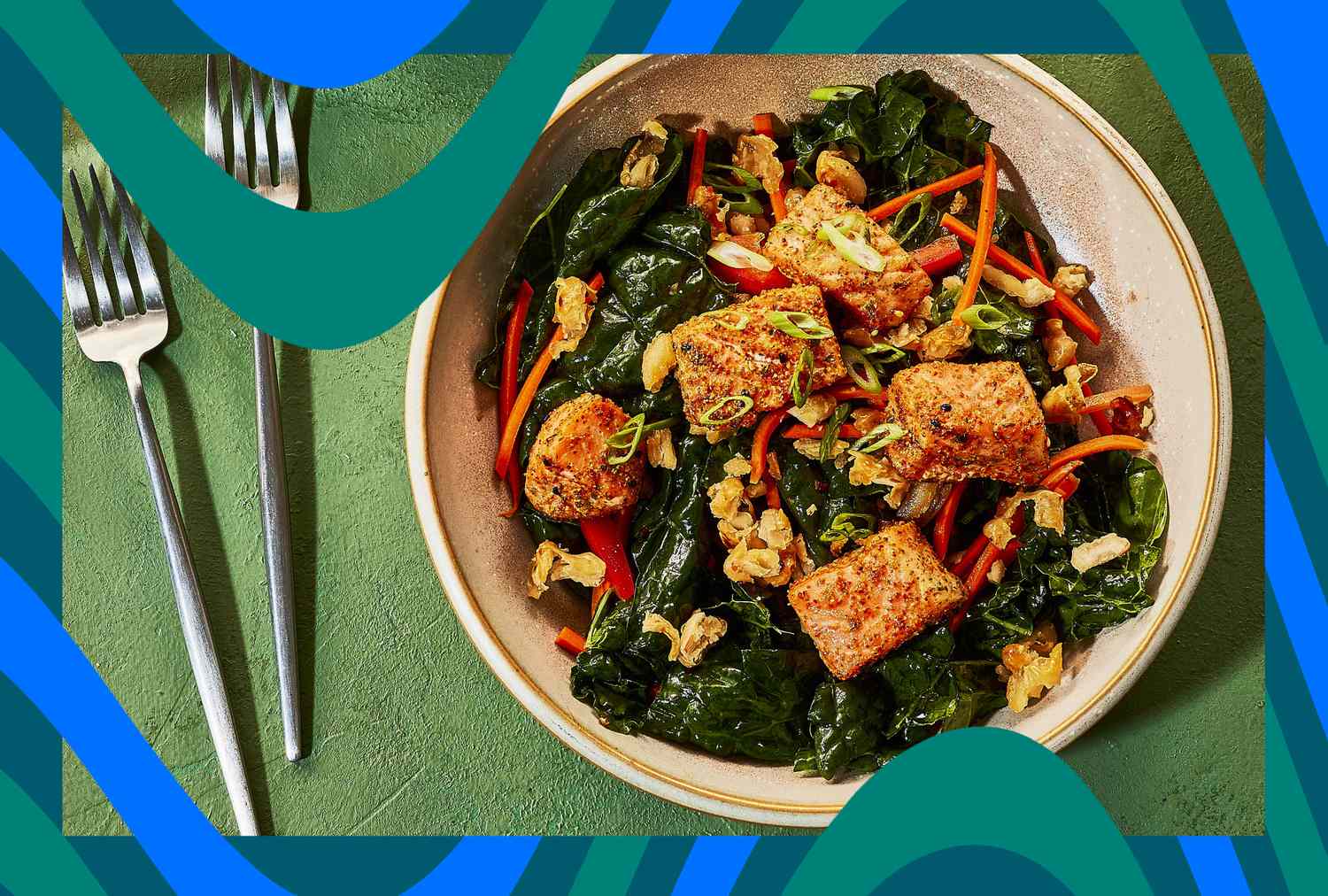

- Salmon Salad with Crispy White Beans is a balanced meal option for those with high cholesterol.
- Omega-3 fatty acids, soluble fiber and antioxidants make this a heart-healthy meal.
- Lifestyle interventions and following a Mediterranean diet pattern support healthy cholesterol.
If you’re working to lower your cholesterol levels, your dinner plate can be a great place to start. Combining the right portion of lean protein, fiber-rich plants and healthy fats can help bring total cholesterol and LDL cholesterol down to healthy levels, while increasing HDL cholesterol to help protect your cardiovascular system.
If you’re convinced a heart-healthy meal will lack flavor or excitement, just give this Salmon Salad with Crispy White Beans recipe a try. With roasted white beans, glazed salmon and tender kale salad all dressed in a garlic, ginger and soy dressing, this dinner is full of flavor and the nutrients you need to support your cholesterol goals.
Keep reading to learn why this dinner is the ideal meal for anyone trying to lower their high cholesterol, along with other dietitian-approved habits to help.
How Salmon Salad with Crispy White Beans Helps Lower Cholesterol
It’s Rich in Heart-Healthy Omega-3s
The American Heart Association recommends eating at least two servings of fatty fish, like salmon, each week to get a regular dose of heart-healthy omega-3 fatty acids. A 3-ounce serving of cooked salmon provides around 1,800 milligrams of omega-3 fatty acids, as well as several other essential vitamins and minerals. “Omega-3 fatty acids slow down liver production of LDL (bad) cholesterol, improve the breakdown of triglycerides, and support HDL (good) cholesterol’s function of delivering LDL cholesterol in the blood back into the liver to be broken down,” explains Andrew Akhaphong, D.C.N., M.S., RD, LD.
While research on omega-3 supplements implies that this fatty acid is highly responsible for the cholesterol-lowering effect of salmon, recent research has identified several other bioactive compounds in salmon that may provide additional heart-protective benefits, giving this whole food an added benefit over supplements.
It’s High in Soluble Fiber
One serving provides 9 grams of fiber, a good portion of which is soluble fiber from the beans, carrots and kale. “Soluble fiber binds to bile (which carries cholesterol) and helps your body eliminate it,” explains Talia Follador, RDN, LDN. This action prevents cholesterol particles from accumulating in the bloodstream, helping lower LDL and total cholesterol levels.
And it doesn’t take that much to make a big difference, either. One meta-analysis found that a 5-gram increase in soluble fiber per day significantly reduced LDL cholesterol by an average of 5.57 mg/dL and total cholesterol by an average of 6.11 mg/dL.
In this meal, the majority of the soluble fiber can be found in the beans. They support healthy cholesterol levels through soluble fiber and resistant starch, which when fermented by bacteria in the gut produces metabolites that disrupt cholesterol metabolism in the body. Even a month of eating more beans can make a difference in your health. One study found that adults who ate 1 cup of any type of bean daily for four weeks saw reductions in total cholesterol and LDL cholesterol compared to those who ate less.
It’s Packed with Antioxidants
With any plant-forward meal, you’ll get a range of antioxidants and plant compounds that help protect your cells from oxidative stress. In this recipe, kale and garlic provide compounds that have been studied for their role in cholesterol metabolism and heart health.
Kale is a strong source of flavonoids such as kaempferol and quercetin, which research suggests may help lower cholesterol by influencing lipid synthesis. By supporting how the liver processes cholesterol particles, these flavonoids can contribute to lower LDL levels over time. While much of the research examines higher intakes or concentrated forms, regularly eating flavonoid-rich vegetables like kale is still associated with heart-protective benefits.
Garlic adds additional antioxidant support through compounds like allicin, which has been shown to slightly reduce total and LDL cholesterol in clinical studies. Many studies use larger amounts or standardized extracts, but even smaller, culinary amounts can support your efforts when eaten consistently as part of a balanced, heart-healthy diet.
It Aligns with the Mediterranean Diet
This recipe fits in the principles of the Mediterranean diet, one of the most well-researched eating patterns for heart health and cholesterol management. The Mediterranean diet focuses on fatty fish, legumes, vegetables, olive oil and herbs while limiting red and processed meats and excess saturated fat.
Following a Mediterranean-style eating pattern is associated with lower LDL cholesterol, improved HDL function, lower triglycerides and improvements in cardiometabolic risk factors like insulin resistance and central adipose tissue. This way of eating naturally combines several cholesterol-friendly strategies in one meal, including more fiber, more unsaturated fats and fewer foods that raise LDL cholesterol.
With fatty fish, fresh veggies, olive oil and legumes all in one dish, this salmon salad easily fits into this heart-healthy meal pattern. Rather than focusing on one single “superfood,” this meal focuses on a bigger-picture approach, including several components that support your heart and overall health in a variety of ways, while providing plenty of flavor and satisfaction.
Other Tips for Healthy Cholesterol Levels
Improving your cholesterol involves more than just one food or one meal, even though this salmon bowl is a great place to start. For a comprehensive approach, try one or many of these strategies to support a healthy heart.
- Eat more plants. Plant-based, high-fiber diets including high amounts of soluble fiber from foods like whole grains, legumes, fruits, and vegetables significantly lower LDL cholesterol and other heart disease risk factors in adults. Even if you’re not giving up meat entirely, adding more plants to your diet can help.
- Swap saturated fats for unsaturated fats. “Choose plant-based proteins (beans, lentils, tofu) or lean fish/poultry more often, and use heart-healthy fats like olive oil, nuts and seeds in place of foods high in saturated or trans fats,” recommends Follador.
- Make exercise a regular routine. “Regular aerobic activity (like brisk walking) plus some resistance training can help raise HDL and improve cholesterol metabolism,” says Karolin Saweres, M.S., RDN, LD. The impact of physical activity on cholesterol could be as significant as an increase in HDL cholesterol by 4.6% and a decrease in LDL cholesterol and triglycerides by 3.7% and 5%, respectively.
- Prioritize a good night’s sleep. Poor sleep has been linked to higher LDL cholesterol and triglycerides. A regular sleep schedule and calming bedtime routine can support better lipid levels over time, and make it easier to implement other lifestyle changes that support a healthy heart.
Our Expert Take
While no single meal can change your cholesterol overnight, regularly choosing dinners like this salmon salad with crispy white beans provides many of the nutrients needed to achieve healthy cholesterol levels. With omega-3–rich salmon, soluble fiber from beans and vegetables, antioxidant-rich plants and heart-healthy fats, this meal supports lower LDL cholesterol, higher HDL cholesterol, and improved overall cardiovascular health. This dinner, along with consistent movement, adequate rest and a plant-forward eating pattern, is a delicious way to support your heart-health goals.

Comments are closed.