
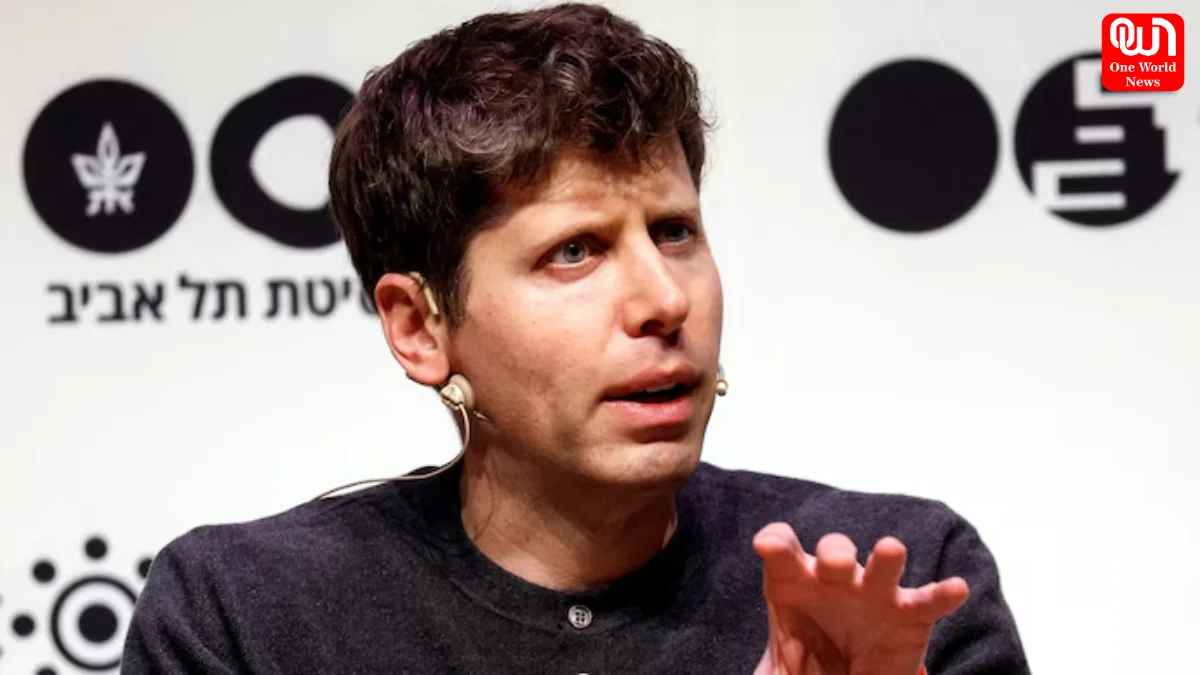

Sam Altman Announces OpenAI Deal With US Government — OpenAI Reaches Agreement to Deploy AI Models in Classified Networks Amid Trump-Anthropic Fallout
In a widely shared post on X (formerly Twitter), OpenAI CEO Sam Altman revealed that his company has reached an agreement with the U.S. Department of War to deploy OpenAI’s advanced AI models on the department’s classified cloud networks. The announcement comes amid a highly public standoff between government officials and Anthropic — a rival AI firm — over the conditions under which artificial intelligence tools can be used in sensitive military environments.
Under the terms of the agreement, OpenAI will deploy its AI systems with strict safeguards that align with key safety principles. Altman highlighted two core commitments central to the deal: a prohibition on using AI for domestic mass surveillance and ensuring that humans remain accountable for any force-related decisions, including applications involving autonomous weapon systems. These stipulations are not only embedded in the contract but are also reflected in U.S. law and policy, Altman said.
Read more: Rashmika Mandanna, Vijay Deverakonda Wedding: Regal Anamika Khanna Looks Steal the Show
The deal signals a strategic win for OpenAI as the company reinforces its role in supporting national security while holding firm on ethical limitations for AI deployment. Altman emphasized that the Department of War demonstrated a deep respect for safety and a desire to partner with OpenAI to achieve “the best possible outcome,” describing the agreement as a cooperative step forward in an increasingly complex technological landscape.
This development comes against a broader backdrop of controversy involving former President Donald Trump’s administration and Anthropicwhich has been under intense scrutiny for its AI safety principles. Days earlier, President Trump ordered all U.S. federal agencies to halt the use of Anthropic’s technologylabeling the company a national security risk and directing a government-wide transition away from its tools, even as some agencies continue to phase out existing deployments.
Anthropic’s refusal to relax its safety restrictions — particularly those that limit how its Claude model could be used in surveillance and autonomous systems — has been at the center of the dispute with the Pentagon and federal authorities. The government argued that unrestricted access was necessary for all lawful purposes, while Anthropic maintained that certain applications posed unacceptable ethical and safety risks, particularly for civilian privacy and battlefield use.
In contrast to Anthropic’s position, OpenAI’s agreement with the U.S. Department of War reflects a balance between ethical guardrails and operational collaboration. Altman has stated that OpenAI will retain control over how safety measures are implemented, which models are used, and where AI deployments occur. Crucially, the company will run its systems exclusively on secure cloud infrastructure rather than on individual military hardware such as drones or combat vehicles.
The implications of this deal extend beyond just one company’s alignment with government interests. Sam Altman’s announcement underscores the growing role of AI governance, national security, and ethical standards in shaping how cutting-edge technologies are integrated into public sector systems. It highlights how private AI firms and federal institutions are navigating the challenging terrain between innovation, regulation, and accountability.
Read more: Khesari Lal Yadav Birthday 2026: A Tribute to the Bhojpuri Superstar
Critics of the Trump administration’s approach to Anthropic say the ban could set a troubling precedent for how ethical safety standards are treated in defense contracts. Meanwhile, supporters of the new OpenAI agreement argue that establishing clear operational and safety guidelines enables both national security and responsible AI development — a key consideration as governments worldwide grapple with the rapid evolution of AI capabilities.
Overall, Sam Altman announces OpenAI deal with US signals a significant moment at the intersection of AI innovation and government policy — one that may shape future discussions on how artificial intelligence is deployed in both civilian and defense contexts.

Comments are closed.