
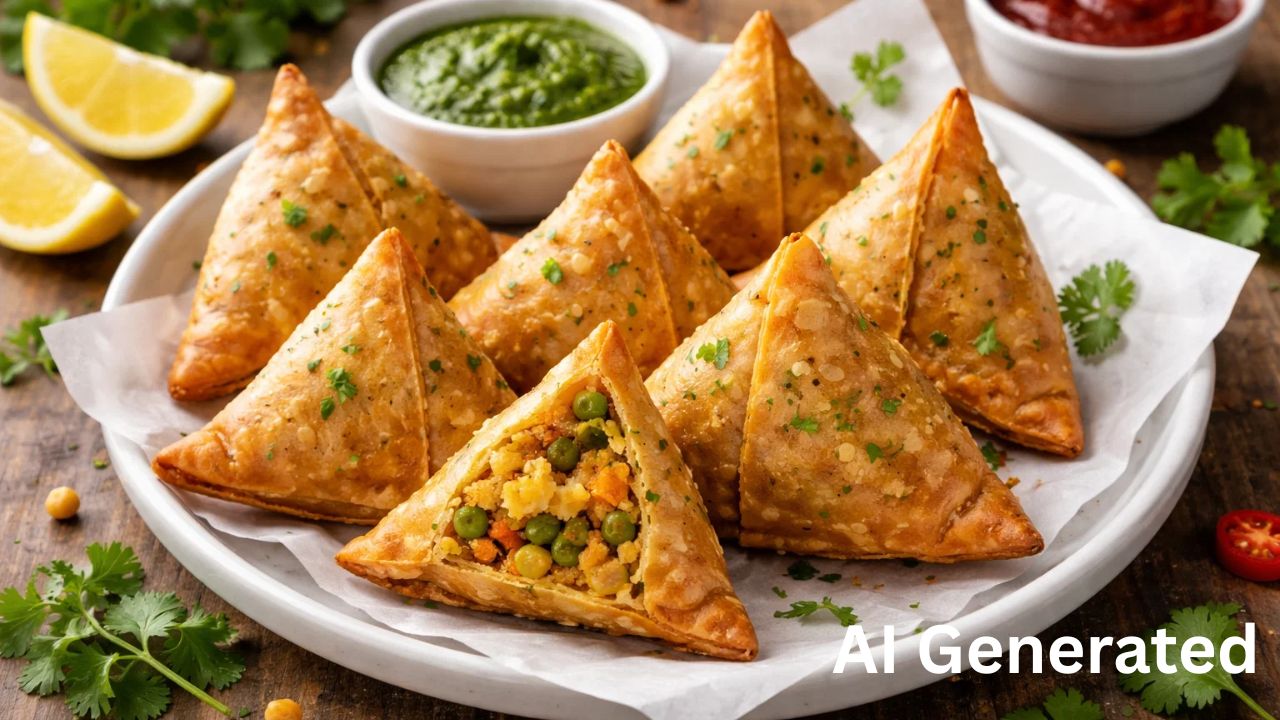

Samosa is very famous all over the world including India for its unique taste and texture. In every city, every town and every street of India, you can easily get this hot and crispy breakfast at samosa shops in the morning. People eat it with tea with great enthusiasm. But have you ever wondered how this common street food, which is available for a few rupees today, was prepared in its early days? Today’s cheap and simple samosa was once a special and expensive dish made in the royal kitchens of royal palaces.
With time, it reached the plate of common people from the royal food and today it has become the most favorite breakfast of every Indian. Recently a post is going viral on social media. According to this post, the roots of our beloved samosa are more than 500 years old. The earliest recipe for samosas is found in the manuscript of an ancient Persian book named ‘Ni, Matnama’. It has been explained in detail in this old book that the samosa which we make today by quickly stuffing potatoes, was once a royal and luxurious dish.
500 year old samosa recipe
In this post shared on X handle, the recipe of 500 years old samosas has been described. This recipe was also very popular during the times of Mughal emperors Akbar and Tipu Sultan. The biggest feature of this old recipe is that it was quite different from today’s samosas. At that time, instead of the potato stuffing that we use today in samosas, roasted brinjal pulp, dry ginger, onion, garlic and cooked mutton masala were used. All these things were mixed well and filled in the samosa dough. Then it was deep fried in pure ghee. Chillies and potatoes were not used at all in the recipes of that time. The reason was that chillies and potatoes had not come to India at that time. They later reached India through the Portuguese.
How has samosa changed over time?
The samosa of that time was much better, tastier and layered than the ordinary samosa of today. This was not a cheap street food, but a royal dish made for kings and emperors. Its dough had many layers, which made it very crispy and delicious. As time passed, samosa came out of the royal kitchen. Many changes took place in it before it reached the common people. In place of expensive ingredients like mutton, cheaper and easily available ingredients started being used. Gradually the potato stuffing became popular and samosa turned into what it is today, a cheap, simple and affordable street food for everyone.
After all, whose samosa is it?
After this old story went viral on social media, excitement about samosas has increased among people. Many people are surprised by its deep connection with India’s food history and cultural heritage. One user has also written, ‘What seems to us to be a simple snack today is actually the result of samosa’s long and interesting journey of hundreds of years.’ One user says, ‘Ni, Matnama’ is not just filled with recipes. It includes medicines, methods of preparing betel leaves, tips for hunting and even delicious dishes for the battlefield. While one said, ‘This is sheer nonsense, samosa is an Indian invention, the Arabs took it with them from India after attacking India in the 7th century. Stop spreading this false food propaganda.

Comments are closed.