
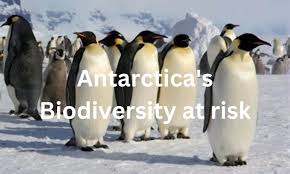
Scary news from Antarctica – Emperor penguin on the verge of extinction, included in IUCN red list

News India Live, Digital Desk: The most painful face of global warming and climate change is now visible on the ice of Antarctica. The world’s tallest and heaviest penguin, the ‘Emperor Penguin’ is now facing an existential crisis. The International Union for Conservation of Nature (IUCN) has prepared to officially put these beautiful creatures in the ‘Endangered’ category in its latest ‘Red List’ update. Scientists have warned that if the speed of melting ice continues at this rate, their population may be completely wiped out by the end of the 21st century. Melting ice has become an enemy of life. The entire life cycle of the emperor penguin depends on the sea ice. They lay their eggs on this ice and nurture their children. But due to climate change, Antarctica’s ice is breaking prematurely and flowing into the sea. Due to this, baby penguins, whose wings are not yet capable of swimming, are drowning in the sea due to breaking of ice. According to recent reports, the entire new generation of penguins in many areas of Antarctica has died due to breeding failure. The situation will become even more dire by 2026. Scientists estimate that by 2026, a historic decline in sea ice levels may be recorded. Emperor penguins no longer have safe places to live. Researchers say that these creatures are accustomed to living in cold areas, but rising temperatures have also reduced the number of their food i.e. ‘krill’ (a species of fish). Penguins are fighting their last battle on both fronts – shortage of food and loss of habitat. Last warning to the world: Joining the IUCN Red List is an indication that now the time for just talking has passed. If global emissions are not controlled, future generations will only be able to see these emperor penguins in books and photographs. Environmentalists have appealed to global leaders to take stronger action to protect the Antarctic marine ecosystem. The extinction of penguins is an indication that the ecological balance of Antarctica has completely deteriorated.

Comments are closed.