
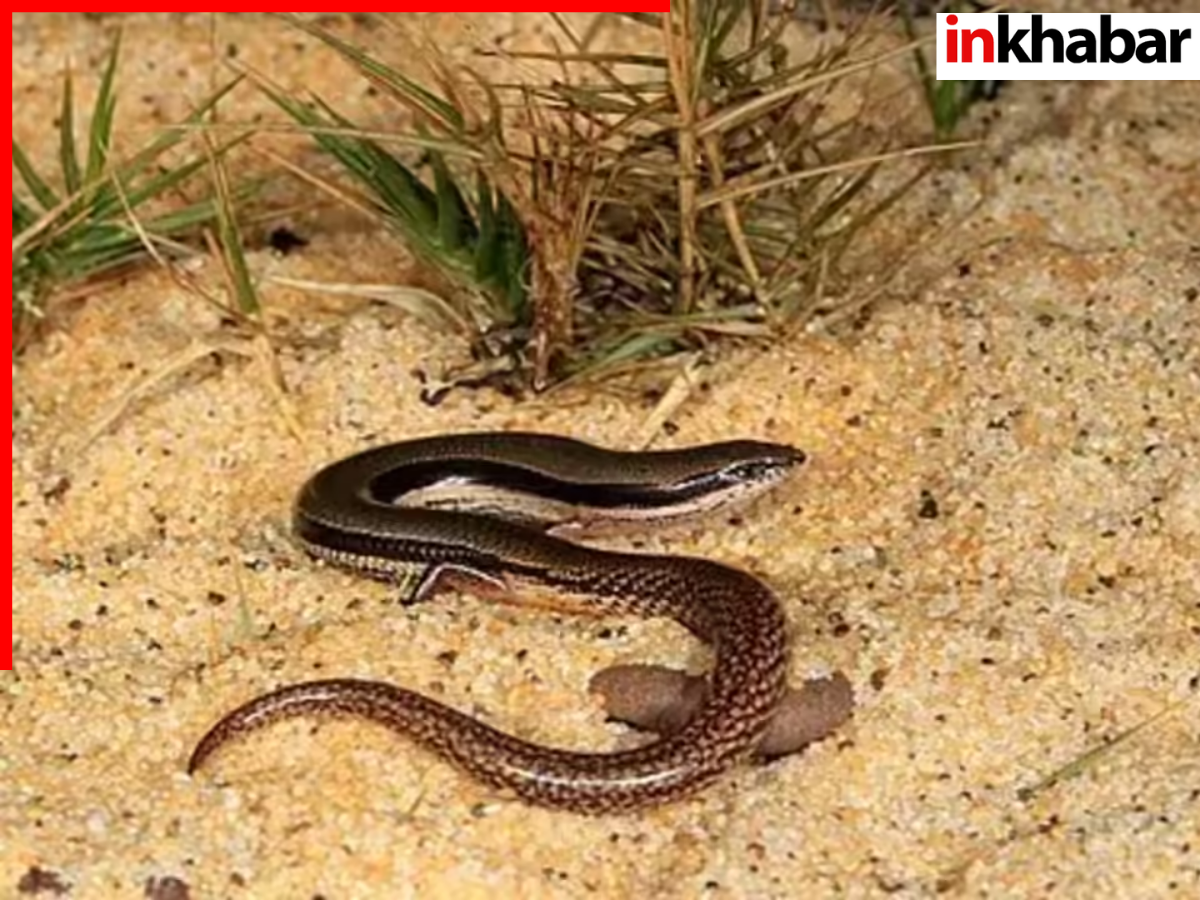
Half snake and half…surprising species found in the sands of Australia; There was a sensation in the world

New Species of lizard: Scientists working in northern Australia have identified a previously unknown species of slider skink in the Gulf of Carpentaria, an area that has received little biological study compared to other parts of the country. The discovery adds to growing evidence that undocumented wildlife still exists across large parts of Australia’s tropical north. This small lizard, which was discovered during surveys conducted at an interval of ten years, belongs to a group known for subtle physical differences and extreme local ranges.
Researchers say the discovery underlines the importance of long-term fieldwork in remote areas, where rare species can be easily missed. It also draws attention to conservation areas that quietly protect biodiversity without attracting much public attention. Even today, some species are known from only a few specimens.
Hidden in the sand: Australian lizard found only twice, at an interval of ten years
The new species has been named Lerista munuwajarlu, which is derived from the Garwa language, in which munuwa means ‘no’ and jarlu means ‘hand’. The name refers to the skink’s short limbs, a common feature in slider skinks. Its common name is Gulf Coastal Slider. Both known species were found in the Pungalina Seven Emu Wildlife Sanctuary in the Gulf of Carpentaria.
The sanctuary is located in Yanyuwa and Wayi Garwa country and is managed by the Australian Wildlife Conservancy. Both specimens were collected ten years apart, which highlights how rare this animal is.
Why is the Gulf of Carpentaria less studied?
Compared to Cape York, the Top End or the Kimberley, there have been very few scientific surveys in the Gulf of Carpentaria. Access is difficult, distances are great, and many residences are far from major research centers. As a result, even small reptiles living under the sand can escape notice for decades. Dr Eridani Mulder of Australian Wildlife Conservation said each new record helps fill gaps in knowledge. Even unobserved species play a role in understanding how northern ecosystems work and change over time, he said.
a decade gap between viewings
The first specimen of Lerista munuwajarlu was collected in 2012 during a comprehensive faunal survey conducted by Australian Wildlife Conservation, CSIRO and the Royal Geographical Society of Queensland. Researchers noted its unusual features, which included two toes on each hind limb and a light stripe on its upper sides. At the time, scientists suspected it might be an unknown species. Targeted searches were conducted, but no other creatures were found. For years, this skink remained only a possibility rather than a confirmed discovery.
Genetic work confirms a new species
In 2022, researchers from the Australian National University returned to Pungalina Seven Emu for further surveys. During this work, they found another species of skink. Genetic analysis later confirmed that it was distinct from other known species, although it was very similar to other Lerista skinks found in northern and eastern Australia. This combination of physical characteristics and genetic data allowed scientists to formally describe the species, even though only two specimens have ever been found.
A genus with many hidden species
Lerista is the second most species-rich reptile genus in Australia, with 98 identified species. Many members of this group have a very limited range, sometimes limited to a single area or habitat. In some cases, the species is known from only one or two collected individuals. This pattern makes this genus difficult to study and shows how easily the species can be missed if surveys are infrequent or too large-scale.
Conservation work supported the discovery
Pungalina Seven Emu Wildlife Sanctuary has been managed as a conservation area since 2008. The work there focuses on controlling wild animals and improving fire prevention methods, both of which can have a significant impact on small reptiles and other land-dwelling species. Researchers say that Lerista Munuvajaralu’s discovery shows the importance of long-term protection and frequent surveys. Without continued management and follow-up fieldwork, this species may never have been confirmed.
What does this discovery silently reveal?
So far, the Gulf Coast Slider is found only in one location. This makes constant protection of its habitat necessary, even if the animal itself is rarely seen. Scientists warn that there may be many similar species in the Gulf region, waiting to be discovered through patient, detailed work rather than dramatic discoveries. In places like the Gulf of Carpentaria, biodiversity does not always manifest itself. Sometimes it appears for a short time, leaves few traces, and waits for years before being seen again.
The post Half snake and half…surprising species found in the sands of Australia; There was a sensation in the world appeared first on Latest.

Comments are closed.