
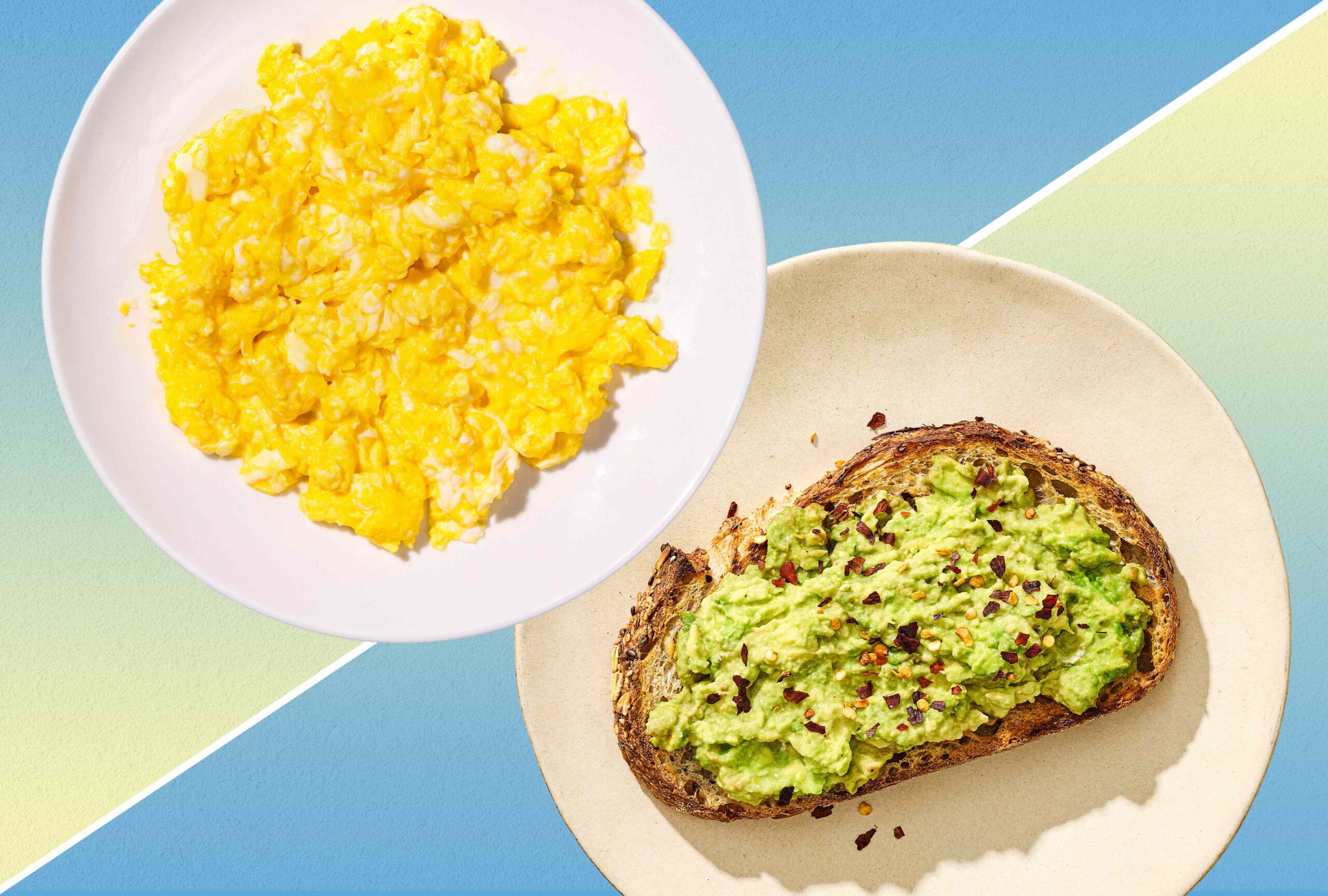

Do you really need to pick between the two? Dietitians weigh in.
Reviewed by Dietitian Alyssa Pike, RDN
Key Points
- Scrambled eggs are rich in protein, choline and vitamin D, supporting fullness, brain and bone health.
- Avocado toast offers fiber, healthy fats and complex carbs, promoting heart health and steady energy.
- Pairing scrambled eggs with avocado toast creates a balanced, filling breakfast with diverse nutrients.
A satisfying breakfast gives you steady energy through the whole morning, and who wouldn’t want that? If you’re a savory breakfast fanatic, you may wonder whether to pick scrambled eggs or avocado toast for your morning meal. They’re both nutritious choices, but they can have different impacts on fullness. We spoke with dietitians to share the health benefits of scrambled eggs and avocado toast, plus which one to pick for long-lasting fullness.
Nutrition Facts
Scrambled Eggs Nutrition Facts
Here is the nutrition content of three scrambled eggs, per the USDA:
- Calories: 216
- Carbohydrates: 1.5g
- Dietary Fiber: 0g
- Total Sugar: 0g
- Protein: 19g
- Total Fat: 15g
- Saturated Fat: 4.5g
- Cholesterol: 621mg
- Sodium: 195mg
If you cook them in butter or oil, the fat content will be higher. Whipping in milk or cottage cheese will also alter the nutrition content slightly, mostly by enhancing the amount of protein.
Avocado Toast Nutrition Facts
Here are the nutrition facts of avocado toast made with one slice of whole wheat bread and half of an avocado: ,
- Calories: 194
- Carbohydrates: 20g
- Dietary Fiber: 10g
- Total Sugar: 2g
- Protein: 5g
- Total Fat: 12g
- Saturated Fat: 2g
- Cholesterol: 0mg
- Sodium: 151mg
Of course, the specifics vary based on the type of bread you use.
Health Benefits of Scrambled Eggs
They Pack Protein
A high-protein breakfast sets you up for lasting fullness and stabler blood sugars through the morning., “Three large scrambled eggs contain close to 20 grams of protein, an ideal amount for many people to start their day feeling satisfied,” says Melissa Mitri, MS, RD. Depending on what you pair with your scrambled eggs and how you cook them, you can turn them into an even higher protein breakfast. “If you’re scrambling your eggs with milk or cottage cheese (that’s my favorite), you’ll also get some extra protein, fat, and other nutrients like calcium, depending on the type of product you use,” says Caroline L. Young, MS, RD, LD, RYT.
Support for Your Brain and Bones
“Scrambled eggs are full of protein, along with two other nutrients that are not super common in other foods but are important—choline and vitamin D,” says Young. Three scrambled eggs provide 507 mg of choline, or 92% of the daily value (DV), and 149 IU of vitamin D, or 19% of the DV. “Choline is critical for nerve and brain function, while vitamin D is essential for bone health,” explains Young., To get these nutrients, be sure to eat the yolks of the eggs—that’s where most of the vitamin D and choline are.
Protect Eye Health
Eggs are also rich in lutein and zeaxanthin, two lesser known antioxidants that support eye health. They’re part of a class of antioxidants called carotenoids—the same kind found in carrots, a veggie known to support healthy vision. Lutein and zeaxanthin can help keep your eyes healthy if you’re on a screen all day or if you have age-related macular degeneration, an eye disease that affects your central vision and contributes to vision loss.,
Health Benefits of Avocado Toast
Supports Blood Sugar and Heart Health
Avocados have a heart-healthy mix of fiber and monounsaturated fat. “This combination helps support balanced blood sugar, can help lower cholesterol levels and is associated with a reduced risk of cardiovascular disease,” says Sarah Anzlovar, MS, RDN, LDN., Using whole grain bread enhances the heart health and blood sugar benefits of this breakfast. Studies show that eating at least 150 grams of whole grains per day can help prevent type 2 diabetes, which is a risk factor for heart disease.
Offers Fiber
Unlike scrambled eggs, avocado toast is full of fiber. In fact, if you use half of an avocado, you’ll get a minimum of 4.5 grams of fiber, or 16% of the DV. You can increase the fiber content even more with certain types of bread. “Choose whole wheat or whole grain toast for additional fiber and longer-lasting fullness,” recommends Mitri.
More Balanced Breakfast
“Avocado toast is a great breakfast choice as it provides balanced nutrition—healthy fats, energizing carbs and fiber,” says Mitri., Unlike scrambled eggs, which have no carbs or fiber, avocado toast has a mix of all three macronutrients (carbs, protein and fat) plus fiber. That said, it’s lower in protein compared to scrambled eggs.
Which Keeps You Fuller Longer?
You may be thinking, “Do I really need to pick between the two?” and the answer is a firm no! Scrambled eggs and avocado toast complement each other perfectly when it comes to lasting fullness. In fact, all three dietitians we spoke with recommend eating them together for the most balanced and filling breakfast. The eggs provide high-quality protein, and the avocado toast provides complex carbs, fiber and healthy fats—a match made in nutrition and culinary heaven.
Our Expert Take
Avocado toast and scrambled eggs are both solid breakfast options, but they have different benefits for overall health and fullness. Avocado toast has a leg up when it comes to fiber and energizing complex carbs, but scrambled eggs are jam-packed with filling protein. So why pick just one? Dietitians suggest pairing them together for a satisfying, well-balanced breakfast that’ll keep you full through the morning.

Comments are closed.