

18
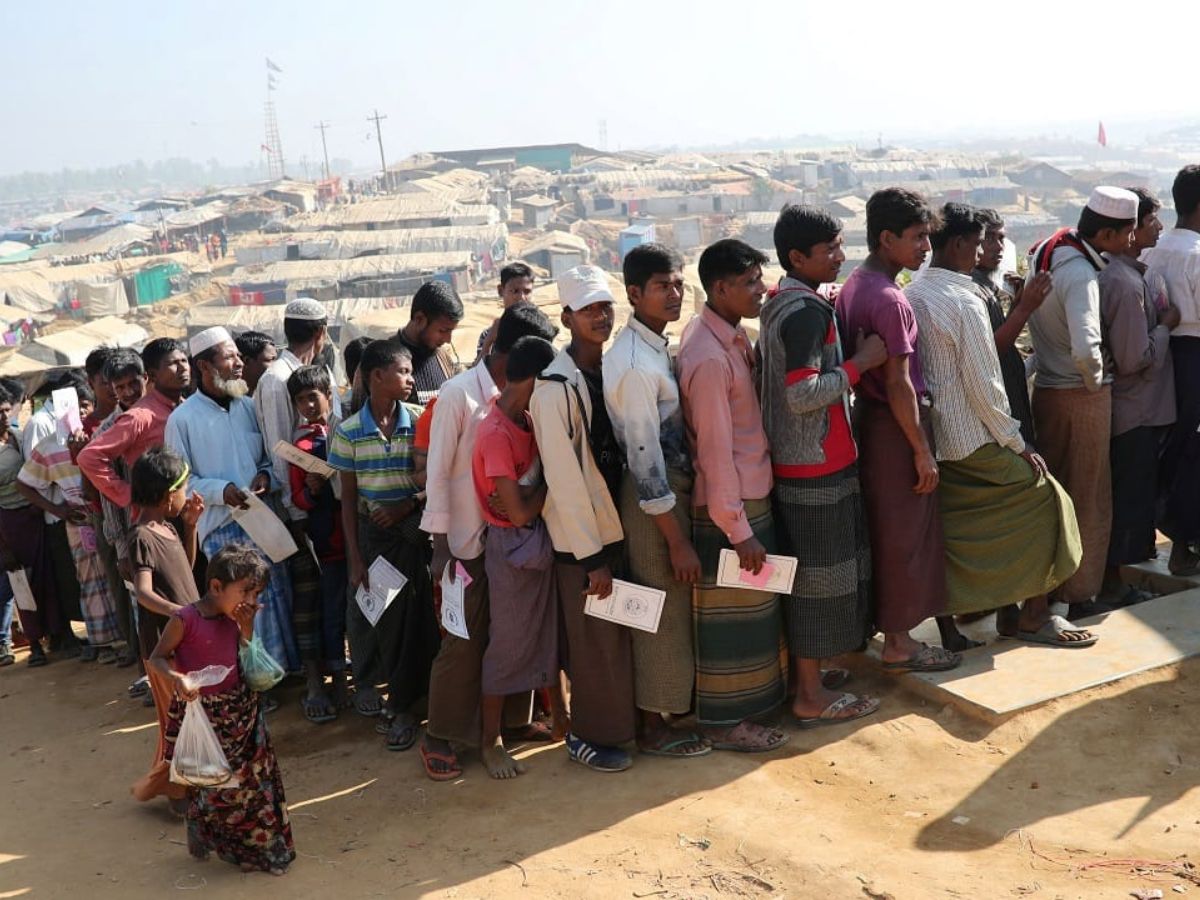
Intelligence circles have warned of a possible security situation developing in the Chittagong Hill Tracts (CHT) and the Rohingya refugee areas of Bangladesh, with Rohingya armed groups apparently being provided arms and ammunition by entities having considerable influence in the recently elected government in Dhaka. The worry is that this may have a direct fallout on India’s Northeast.
Among the individuals seen as influential in the evolving security landscape is Dr Khalilur Rahman, the former National Security Advisor of Muhammad Yunus’ interim government, who was sworn in as the 24th Foreign Minister of Bangladesh in the incumbent BNP government of Prime Minister Tarique Rahman. His appointment, in some quarters, is being interpreted as indicative of a leadership cohort viewed as more aligned with Western diplomatic frameworks, particularly those of the United States.
Sections of the strategic and intelligence community have also advanced the view that the political transition in Dhaka bore the hallmarks of externally influenced regime change, with the United States and allied actors exerting sustained pressure during the period leading up to the installation of a caretaker administration under Muhammad Yunus and the removal of the democratically elected Sheikh Hasina government. Within this framework, Khalilur Rahman is seen as having played a pivotal role during the interim phase because of his close ties with Washington.
However, beneath the diplomatic surface, the situation in the Chittagong region is reportedly evolving. Intelligence inputs suggest a potential resurgence of instability in the CHT, a region historically marked by ethnic tensions, insurgent activity, and entrenched arms smuggling networks. Sources indicate that allegations are emerging regarding the supply of arms to Rohingya militant groups operating along the Cox’s Bazar-Chittagong axis. These claims attempt to link elements of the former security establishment to a covert pipeline aimed at strengthening select factions against both the Myanmar military (Tatmadaw) and the Arakan Army.
It is understood that Turkey is also trying to create its own sphere of influence among Muslim populations in the region, including the Rohingya.
In February 2026, a parallel development underscored the growing external engagement in the Rohingya ecosystem. Mizanur Rahman, the senior Bangladeshi official responsible for oversight of the camps, and Imam Abdul Malik Mujahid, a US-based advocacy figure on Rohingya issues, welcomed a Turkish delegation comprising Bilal Erdogan, associated with influential political and charitable networks in Turkey, Mesut Ozil, who has been active in humanitarian outreach, and Abdullah Eren, head of Turkey’s state-backed diaspora engagement body. The delegation visited the Rohingya refugee camps in Cox’s Bazar with a focus on supporting “Education Hubs”, described as the first structured opportunity for formal education in the camps under an agreement with the Bangladesh government, marking a notable shift in both camp governance and the scale of external involvement.
Within this context, the United States’ strategic posture becomes a critical variable. Washington’s core objective in the eastern Bay of Bengal is to prevent the consolidation of any single dominant influence, particularly that of China, while maintaining maritime access and regional intelligence visibility.Bangladesh, because of its geographic position adjacent to Myanmar’s Rakhine region and key sea lanes, represents a strategic observation and influence point rather than a direct operational theatre.
From this perspective, a calibrated level of instability in the Myanmar periphery, especially in Rakhine, serves to constrain both the Tatmadaw and non-state armed actors from achieving uncontested control. Such a course carries high risks of operational blowback, including destabilization of India’s Northeast and disruption of broader Indo-Pacific alignment, both of which run counter to US strategic interests in the long run.Adding another layer of complexity is the reported presence of Nadine Maenza in the border regions.
Maenza is a former chair of the United States Commission on International Religious Freedom (USCIRF). Officially framed as a humanitarian or fact-finding engagement alongside Khalilur Rahman, the visit is being closely examined by regional observers for any correlation with shifts in the security environment.
For New Delhi, the stakes are exceptionally high. The Chittagong port and the Hill Tracts form a critical gateway to India’s Northeast. Any destabilization, whether through increased Rohingya militancy or the reactivation of Indian insurgent networks exploiting transitional vulnerabilities in Bangladesh, risks reversing years of bilateral security cooperation.
For China, which has been dealing with the Arakan Army and has more or less established a working relationship, the danger is significantly greater. Instability in the broader Rakhine-Chittagong arc directly threatens its strategic infrastructure investments and connectivity projects linked to the China-Myanmar Economic Corridor, particularly those designed to secure alternative access to the Indian Ocean.
A deterioration in security conditions across the Chittagong Hill Tracts-Cox’s Bazar belt also raises the prospect of the region reverting to a permissive operational corridor with direct implications for India’s Northeast. Security agencies assess that any weakening of state control in these contiguous areas would reopen routes historically used by Indian insurgent groups for sanctuary, training, and cross-border movement, arrangements that had been largely dismantled through sustained cooperation with Dhaka over the past decade.
Similarly, the presence of armed Rohingya factions and informal arms networks will further increase the risk of weapons leakage into bordering Indian states such as Mizoram, Assam, Tripura, and Manipur.
Pakistan’s Inter-Services Intelligence has previously leveraged Bangladesh-based armed ecosystems to facilitate infiltration and logistical support into India, particularly in the eastern sector.
Beyond immediate security threats, instability in the Chittagong-Rakhine arc also carries broader strategic implications for India’s connectivity architecture. The Chittagong port and associated transit corridors are central to India’s efforts to secure reliable access to the Northeast and reduce dependence on the Siliguri Corridor.
Any disruption in this geography risks undermining these gains. At the same time, increased involvement of multiple external actors in the Rohingya ecosystem introduces additional uncertainty into Bangladesh’s internal security calculus, potentially diluting the coherence of responses that India has relied upon.

Comments are closed.