
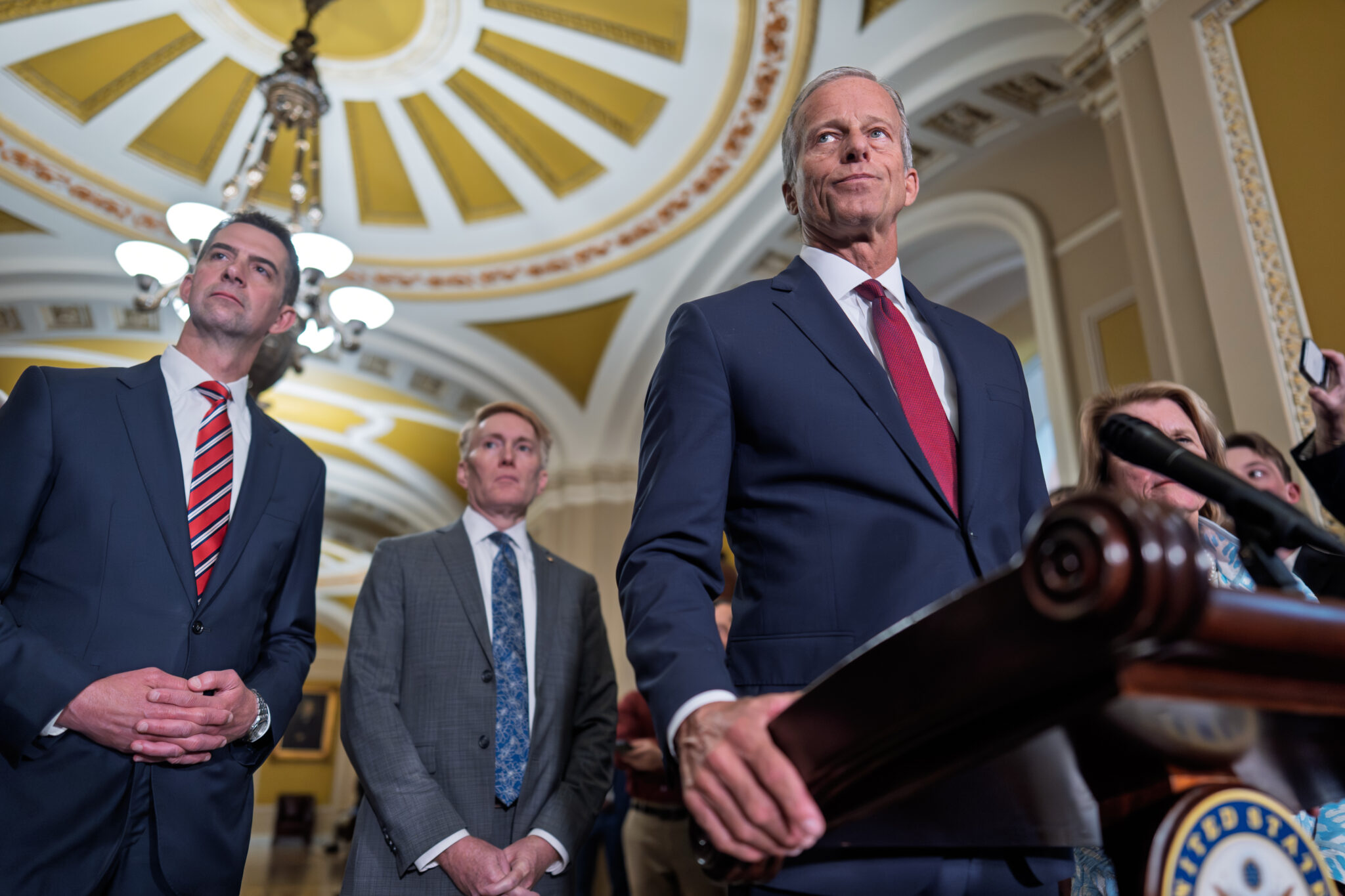

Senate Republicans Block Democratic Bid To Kill Trump’s $1.8B Anti-Weaponization Fund/ TezzBuzz/ WASHINGTON/ J. Mansour/ Morning Edition/ Senate Republicans narrowly defeated a Democratic effort to permanently eliminate President Donald Trump’s proposed $1.8 billion anti-weaponization fund. The vote exposed continued divisions within the GOP as several Republicans joined Democrats in opposing the fund. The battle over the controversial proposal continues to complicate passage of a major immigration enforcement funding bill.
Trump Anti-Weaponization Fund Quick Looks
- Senate rejected Democratic amendment targeting the fund.
- Amendment failed by a 50-49 vote.
- Three Republican senators joined Democrats.
- GOP leaders worked for hours to secure enough votes.
- Debate unfolded during immigration funding bill negotiations.
- Critics argue the fund could benefit Trump allies.
- Administration says the fund is no longer moving forward.
- Trump has declined to fully rule out reviving it.
- Sen. Thom Tillis remains opposed without written safeguards.
- Immigration legislation still faces additional hurdles.

Senate Republicans narrowly blocked a Democratic effort Thursday to permanently eliminate President Donald Trump’s controversial $1.8 billion anti-weaponization fund, preserving a proposal that has become one of the most divisive issues within the Republican Party.
The vote came during a marathon Senate amendment session tied to a broader $70 billion immigration enforcement funding package, exposing lingering disagreements among Republicans even as party leaders work to advance one of Trump’s top legislative priorities.
Democrats Force Vote On Controversial Fund
Democrats opened the Senate’s lengthy “vote-a-rama” process by forcing a vote on an amendment that would have formally prohibited the Trump administration from creating the anti-weaponization fund.
The amendment failed by a narrow 50-49 margin.
Had the amendment succeeded, it could have complicated or potentially jeopardized the larger immigration enforcement legislation that Republicans hope to pass through the budget reconciliation process.
Senate Democrats argued that Congress should permanently block the proposal rather than rely on administration promises that it will not move forward.
Senate Minority Leader Chuck Schumer said that Democrats also plan to force votes on the tax immunity granted to Trump as part of the settlement and a host of other issues — including Trump’s East Wing ballroom project, his tariffs, his war with Iran and his immigration enforcement campaign.
“Amendment after amendment, vote after vote, Republicans are going to have to answer to the American people,” Schumer said.
Several Republicans Break With Party
Although most Republicans voted against the Democratic amendment, three GOP senators crossed party lines.
Sen. Susan Collins of Maine, Sen. Jon Husted of Ohio and Sen. Dan Sullivan of Alaska joined Democrats in supporting the effort to eliminate the fund.
Their votes highlighted ongoing unease among some Republicans regarding the proposal and its political implications.
For several hours before the vote concluded, Senate business slowed significantly as Republican leaders worked behind the scenes to secure enough support to defeat the amendment.
Internal GOP Divisions Remain
The fund has sparked weeks of internal Republican disagreement.
Critics inside the party have expressed concern that the program could eventually operate as a compensation mechanism for Trump allies who claim they were unfairly targeted by government investigations.
Some lawmakers have also raised concerns that individuals involved in the January 6, 2021 Capitol riot could potentially seek payments under the program.
Those concerns have fueled resistance among several Senate Republicans despite strong pressure from party leadership to keep attention focused on immigration funding.
Administration Sends Mixed Messages
The Trump administration has attempted to reassure lawmakers that the proposal is no longer under consideration.
Earlier this week, Acting Attorney General Todd Blanche told Congress:
“We are not moving forward with the fund, period.”
That statement helped convince some Republicans to continue supporting the broader immigration legislation.
However, President Trump has offered less definitive answers.
When asked whether the fund was permanently abandoned or merely paused, Trump said:
“I’d have to ask the lawyers, I don’t know.”
He also defended the proposal, adding:
“As far as I’m concerned, it was a beautiful thing.”
Those remarks reinforced Democratic arguments that legislative action remains necessary.
Thom Tillis Continues Opposition
One of the most vocal Republican critics remains Sen. Thom Tillis of North Carolina.
Tillis has repeatedly stated that he wants explicit legal language ensuring the fund cannot be revived.
On Thursday, he signaled that his support for the immigration bill remains uncertain if such protections are not included.
“No, I’m not going to,” Tillis told CNN when asked whether he could support the immigration package without language eliminating the fund.
“I voted to get on it with the goal of potentially getting an amendment done or supporting some other members’ amendment.”
His position creates additional uncertainty because Republican leaders have little room for defections in the closely divided Senate.
Immigration Funding Bill Still Faces Challenges
The dispute continues to overshadow Republican efforts to pass a three-year funding package for Immigration and Customs Enforcement (ICE) and Border Patrol operations.
Many Republicans view the bill as a major legislative priority and potentially one of Trump’s final significant policy victories before the midterm elections.
Yet the controversy surrounding the anti-weaponization fund has repeatedly delayed progress.
Republican leaders spent weeks attempting to resolve internal objections while preserving enough support to move the immigration package forward.
Thursday’s vote removed one immediate obstacle, but disagreements over the fund remain unresolved and could continue influencing the bill’s final path through Congress.
Political Stakes Growing
The battle reflects broader tensions within the Republican Party over loyalty to Trumpcongressional oversight and concerns about executive authority.
While the administration insists the fund is effectively dead, several lawmakers continue seeking written guarantees that it cannot be revived in the future.
For Democrats, the issue offers an opportunity to highlight Republican divisions and challenge Trump-backed initiatives ahead of the 2026 midterm elections.
For Republicans, maintaining unity while advancing immigration funding remains the immediate challenge as the Senate moves through additional amendment votes and toward final consideration of the legislation.
Thune said he was working with his GOP conference to try and fight off any amendments and ensure he has enough votes for a simple majority to pass the bill in the 53-47 Senate.
“Keep in mind, we’ve got to keep them all together, make sure we’ve got 50 votes for it,” he said.
Republican House leaders said Wednesday they would like to clear the legislation before the end of the week, if the Senate can finish it.
House Majority Leader Steve Scalise, R-La.said that House leaders were having internal conversations about the schedule.
“We just need to make sure everybody’s there,” Scalise said.
More on US News
Comments are closed.