
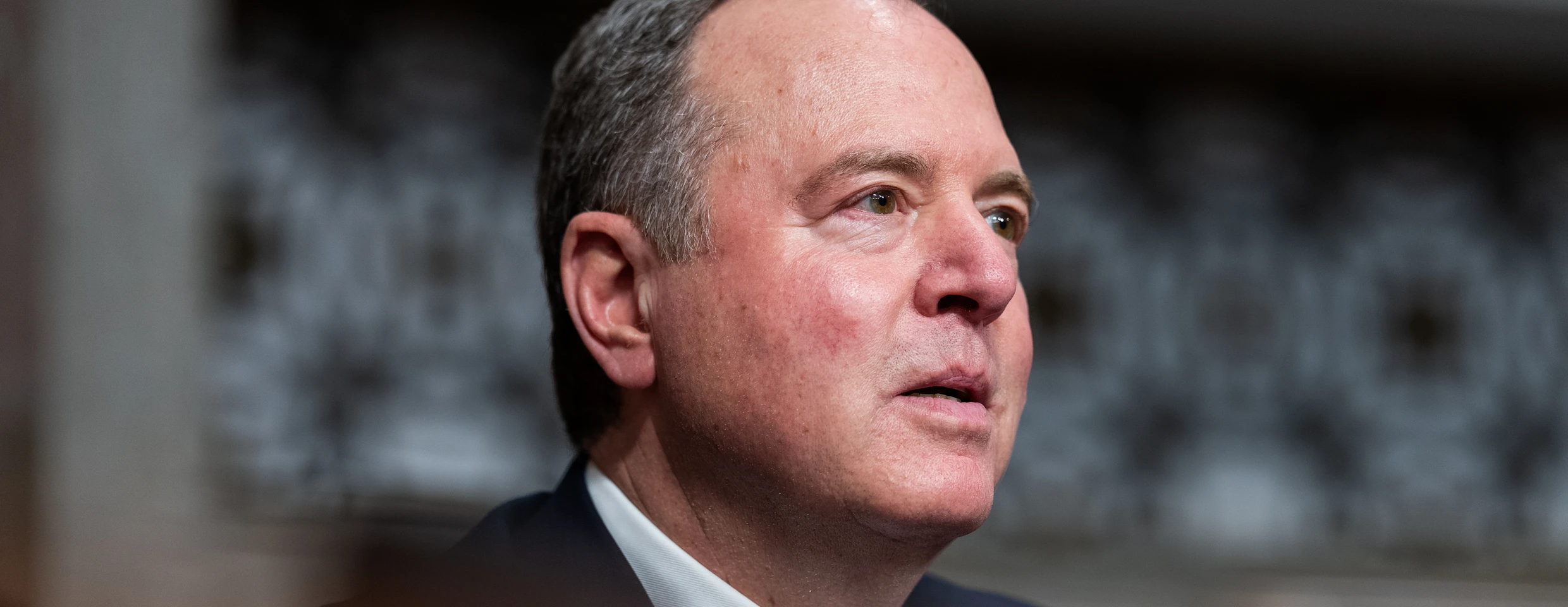
Senator Adam Schiff Proposes Bill Forcing Data Centers to Pay for Their Own Power Infrastructure

In a major federal pushback against the energy demands of artificial intelligence, US Senator Adam Schiff (D-Calif.) introduced a sweeping legislative proposal on May 18, 2026. Titled the Energy Cost Fairness and Reliability Actthe bill addresses an increasingly urgent crisis: the shifting of billions of dollars in power grid upgrade costs from highly profitable technology giants onto regular utility consumers. Schiff’s proposal mandates that large-scale data centers must completely foot the bill for their own power generation and network upgrades, marking a critical transition from federal tech enablement to aggressive regulatory oversight.
The legislative hammer of Schiff’s bill targets the heavy weights of the cloud computing and AI sectors. The act explicitly requires any data center with a power demand exceeding 50 megawatts (MW) to “bring their own power.”
Under the current utility structure, when a hyperscaler builds a massive data center, the local utility often absorbs the immediate infrastructure costs such as erecting new substations or reinforcing high-voltage transmission lines and spreads those capital expenses across its entire residential customer base. Schiff’s bill ends this practice by mandating that these facilities are 100% financially responsible for the grid network upgrades required to deliver power to them, ensuring that everyday families are not siphoning their savings into tech infrastructure.
Codifying the “Ratepayer Protection Pledge”
The bill lands at a unique moment of bipartisan alignment regarding tech regulation. In March 2026, the White House established the Ratepayer Protection Pledgea voluntary agreement under which seven leading US tech hyperscalers committed to ensuring their AI operations would not inflate household electricity bills.
Schiff’s Energy Cost Fairness and Reliability Act essentially transforms this voluntary executive handshake into binding federal law. “Artificial intelligence is already deeply impacting our society, economy, and national security, and it is critical that we maintain our international leadership,” Schiff stated in an official release. “However, that growth cannot come at the cost of consumers or society.” By introducing legal penalties for non-compliance, the bill aims to enforce what tech giants previously only promised to do.
The Grid Flexibility Mandate: AI Flexing and “Dialing Down”
Beyond forcing tech firms to write checks for physical power plants, the legislation introduces a dynamic mechanism to protect the grid from rolling blackouts during high-demand summer heatwaves.
The bill directs the Federal Energy Regulatory Commission (FERC) to rewrite regional transmission policies, establishing a protocol that forces energy-intensive facilities to automatically “dial down” their power consumption during grid emergencies. Rather than risking residential blackouts, data centers would be legally required to throttle non-essential background tasks, like training massive future language models, to maintain stability across the shared “digital arteries” of local municipal grids.
While the bill does not yet have an official Republican co-sponsor, its foundational goals mirror a broader conservative push led by lawmakers like Senator Tom Cotton, who introduced the DATA Act of 2026 earlier this year to encourage data centers to run completely off-grid.
Industry insiders note that the combined pressure of Schiff’s infrastructure penalties and Cotton’s regulatory exemptions is driving a massive strategic shift toward captive, on-site power generation. Tech developers are increasingly looking to skip utility connection waitlists entirely by deploying dedicated natural gas turbines and small modular nuclear reactors directly adjacent to their server farms. For tech giants, “bringing your own power” is quickly evolving from a regulatory penalty into the only viable way to keep their systems running.
As of May 18, 2026, Schiff’s office is actively conducting cross-aisle negotiations to drum up the bipartisan support necessary to advance the bill through a divided Congress. The bill arrives amidst a roaring wave of public anger, as American communities from Virginia to California find their monthly utility bills inflating alongside the local data center footprint.
The Energy Cost Fairness and Reliability Act serves notice to Silicon Valley that the era of hidden energy subsidies is coming to an close. If enacted, the law will fundamentally decouple corporate AI expansion from public utility pricing. In the high-stakes race to construct the physical backbone of artificial intelligence, tech giants are finally being told that if they want to build the future, they have to pay for the electricity to power it.

Comments are closed.