
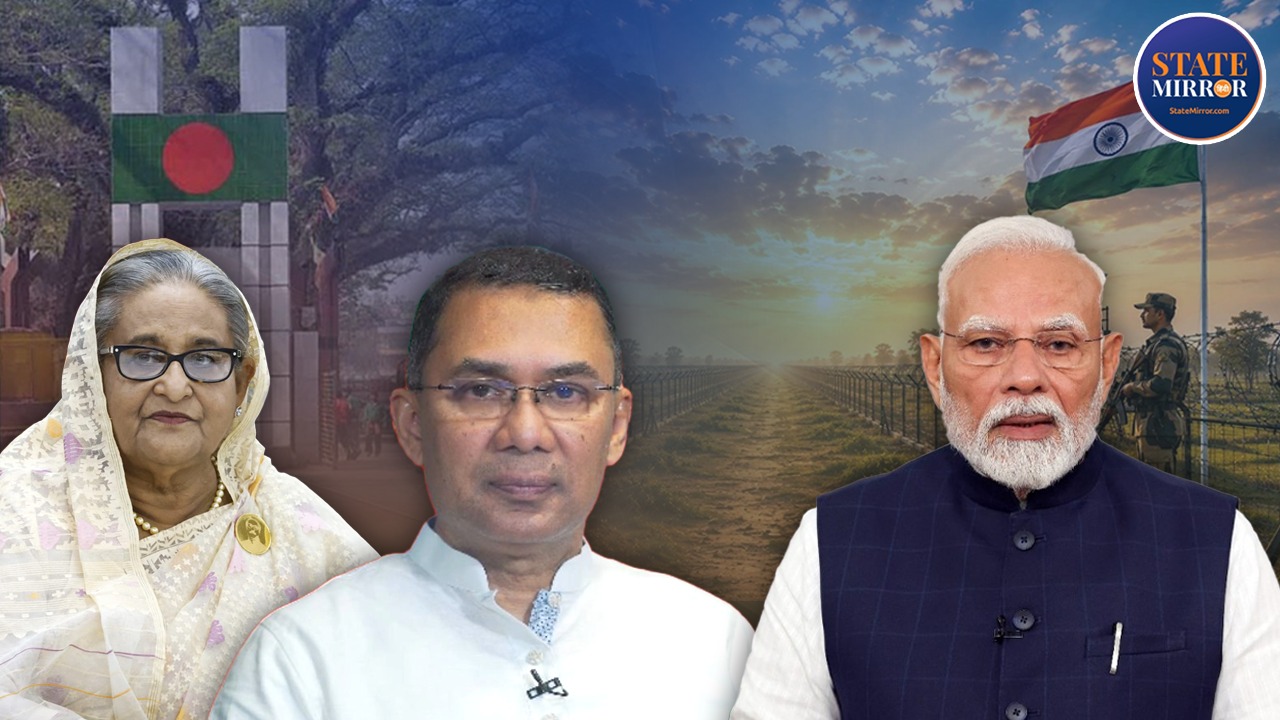
What changed in India’s most trusted neighbor after Sheikh Hasina? Understand 5 important reasons

For almost one and a half decade, under the leadership of Sheikh Hasina, Bangladesh was considered the strongest pillar of India’s ‘Neighbourhood First’ policy. After the formation of Prime Minister Narendra Modi government and Tariq Rehman government, unprecedented progress was made in many areas like resolution of border dispute between New Delhi-Dhaka, anti-terrorism cooperation, connectivity, power, trade and defense cooperation. But after the change of government the situation seems to be changing. Increasing contacts with China during the new government, Dhaka’s changed diplomatic priorities and the deployment of army in six districts before the foundation day of Awami League have indicated that Bangladesh has entered a new political and strategic phase.
In such a situation, the question is arising whether India’s most trusted neighbor is changing, and what impact can it have on New Delhi’s security, diplomacy and economic interests? Understand its 5 important reasons.
1. Political instability changed security concerns
Security cooperation between India and Bangladesh was the strongest link in the relationship during the Sheikh Hasina government. Both the countries together took effective action against terrorism, extremism and cross-border crimes. But after the change of power, the politics of Bangladesh still does not seem stable. The deployment of army in Dhaka, Chattogram, Narayanganj, Ghazipur, Faridpur and Gopalganj before the foundation day of Awami League is an indication that the government is alert about possible political tension.
If this instability continues for a long time, it may affect the India-Bangladesh border as well. India’s concerns may increase regarding illegal infiltration, smuggling and radical activities on the 4,096 km long border.
2. Why is China’s increasing activism a concern for India?
China is already among the biggest investors in Bangladesh. Beijing’s influence has continuously increased in road, rail, port, energy and industrial projects. During Sheikh Hasina’s era, despite economic relations with China, there was a strategic balance with India. But if the new government gives more importance to China in its foreign policy, then the balance of power in South Asia may change. China’s increasing presence in the Bay of Bengal and the Indian Ocean may affect India’s strategic interests.
This is why the Modi government is trying to keep its relations with Bangladesh strong through development partnership, investment and diplomatic dialogue.
3. New challenges may increase from border to Teesta
Along with border security, Teesta river water sharing is also among the most important pending issues between India and Bangladesh. Sheikh Hasina government wanted to take this agreement forward, but it could not take final form. Now, if the new government puts more pressure on this issue or moves towards China-backed water projects, then a new challenge may arise in front of India’s water diplomacy.
On the other hand, if Bangladesh’s domestic politics remains unstable, border management and security cooperation may also be affected. Therefore, both border and water will remain strategic priorities for New Delhi.
4. How secure is the future of business and connectivity?
Trade and connectivity between India and Bangladesh has touched new heights in the last decade. Petrapole-Benapole has become the largest land trade corridor of South Asia. Rail, road, inland waterways and power connectivity have brought the economies of both the countries closer. However, if the new government gives more priority to economic partnership with China or changes its trade policies, some strategic projects of India and the connectivity of the northeastern states may be affected. Despite this, the economic dependence of the two countries is so deep that a sudden major change in relations is not considered easy.
5. The biggest diplomatic test before the Modi government
India’s challenge is not to maintain relations with any one government, but to maintain a long-term strategic partnership with Bangladesh. The role of Bangladesh has been very important in the ‘Neighborhood First’ policy of the Modi government. Now New Delhi will have to maintain trust with the new government and adopt a balanced strategy on issues like border security, China’s influence, Teesta Agreement, trade and regional stability.
If Dhaka adopts a balanced foreign policy, then the relations between the two countries can remain strong, but if China’s influence increases or domestic political instability continues for a long time, then India may have to make new changes in its security and diplomatic strategy. This is why Bangladesh after Sheikh Hasina is now emerging as not just a story of change of power, but the biggest test of India’s regional strategy.

Comments are closed.