
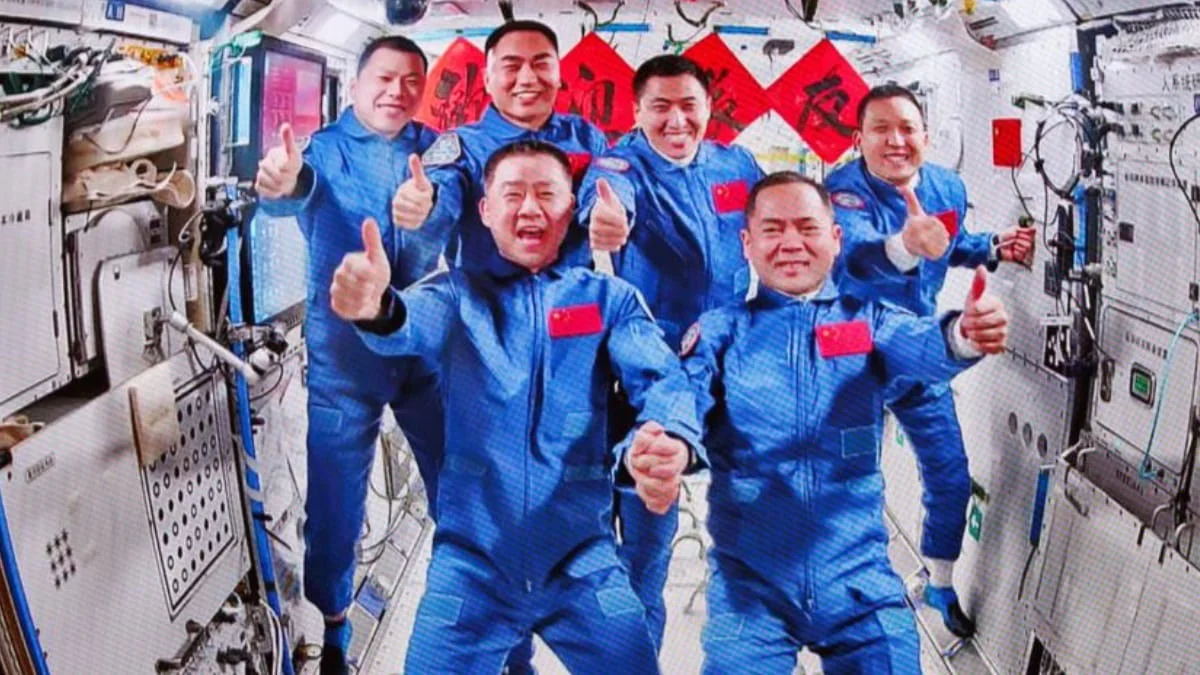
Shenzhou 21 spacewalk underscores China’s expanding legal and strategic presence in outer space

The completion of the second series of extravehicular activities by the Shenzhou 21 crew aboard China’s orbiting space station represents far more than a technical milestone in human spaceflight. The seven-hour operation conducted by the astronaut trio, supported by the station’s robotic arm and an extensive ground control team on Earth, reflects the increasing sophistication of China’s orbital infrastructure and highlights the broader legal and geopolitical dimensions of contemporary space exploration. In the evolving architecture of international space governance, each successful extravehicular activity contributes not only to scientific progress but also to the consolidation of national capability within a domain governed by a complex network of treaties, regulatory norms, and strategic competition.
China’s orbiting space station, commonly known as Tiangong, operates within the legal framework established by international space law, particularly the Outer Space Treaty of 1967. This treaty, which serves as the foundational instrument governing activities in outer space, establishes that outer space shall be used exclusively for peaceful purposes and that no state may claim sovereignty over celestial bodies. While the treaty permits states to develop and operate space stations and satellites, it simultaneously imposes responsibilities regarding the peaceful use of space and the avoidance of harmful interference with other space activities. China’s continued expansion of its human spaceflight programme therefore, exists within a legal regime that balances national technological development with collective international obligations.
Extravehicular activities, such as those performed during the Shenzhou 21 mission, play a critical role in maintaining and upgrading orbital infrastructure. Astronauts conducting spacewalks typically install equipment, perform maintenance operations and test experimental technologies designed to enhance the operational lifespan of the station. The involvement of the station’s robotic arm illustrates the integration of advanced automation systems that allow astronauts to operate efficiently in the harsh environment of low Earth orbit. Such technical achievements contribute to China’s ability to sustain long-duration human presence in space while supporting scientific research across fields, including microgravity physics, materials science, and biomedical experimentation.
The international legal implications of sustained human activity in orbit extend beyond technical operations. Under the Liability Convention of 1972, states bear responsibility for damage caused by their space objects either on Earth or in outer space. Consequently, the operation of a permanent orbital station requires rigorous safety protocols, coordination with global satellite tracking systems, and adherence to international guidelines intended to minimise the risk of collisions and space debris. Extravehicular activities must therefore be carefully planned within a framework of operational safety and legal accountability that governs the conduct of all spacefaring nations.
China’s growing capabilities in human spaceflight also carry important geopolitical implications. Over the past decade the global space sector has experienced renewed competition as major powers invest in satellite networks, lunar exploration and space station infrastructure. With the International Space Station approaching the end of its operational lifespan, China’s Tiangong facility has emerged as one of the few permanent orbital laboratories capable of supporting international scientific cooperation. This development positions China as a central actor in the future governance of space based research and technological innovation.
The strategic significance of these developments is closely linked to the broader evolution of space governance. Space technology underpins critical sectors of the modern global economy, including telecommunications, navigation and climate monitoring. As more states and private actors enter the orbital environment, the need for effective legal frameworks to manage congestion, prevent conflict and regulate resource utilisation becomes increasingly urgent. China’s participation in human spaceflight therefore intersects with ongoing international debates regarding the future of space law and the mechanisms required to ensure that outer space remains accessible and sustainable for all nations.
Ultimately the Shenzhou 21 spacewalk serves as a reminder that technological achievements in orbit are inseparable from the legal and diplomatic structures that govern humanity’s expansion beyond Earth. Each mission contributes to the gradual shaping of international norms that will define how states cooperate and compete in space. As China continues to develop its orbital capabilities, the interplay between innovation, legal responsibility and international collaboration will remain central to the evolving landscape of global space exploration.

Comments are closed.