
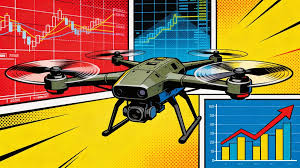

A fresh infusion of $2 billion in capital has been raised by the defense technology startup Shield AI, taking the company’s valuation to $12.7 billion.
The deal is seen as more than doubling the valuation in just over a year and is one of the biggest deals in the space of defense and AI technology.
The deal has been made up of two parts. Shield AI raised $1.5 billion in a Series G equity round. At the same time, the company raised $500 million in fixed return preferred equity from funds managed by the private equity firm Blackstone.
The second part of the deal is designed in such a manner that it does not dilute the equity of the existing shareholders. The $12.7 billion valuation is a post-money valuation, which means it includes the fresh funds.
The Series G equity round was backed by both financial and strategic investors. It was co-led by Advent International and a strategic investment group related to JPMorgan Chase’s Security and Resiliency Initiative. Existing investors Snowpoint Ventures, InnovationX, Riot Ventures, Disruptive, and Apandion also participated in the deal.
This is a significant increase from the $240 million Shield AI raised in March 2025, when the valuation of the company was between $5.3 billion and $5.6 billion. The increase to $12.7 billion is a result of the high demand for AI systems that can operate in combat environments without the need for humans. Investors now see autonomy as part of the future of defence systems, not an extra feature.
How is Shield AI utilising new funding to revolutionise defence autonomy?
Shield AI has announced that it will be using the funds in three major ways.
First, Shield AI will be acquiring Aechelon Technology, a company recognized for its high-fidelity simulation tools, which are used in defense training. Though the terms of the acquisition are not public, it is a move to improve Shield AI’s ability to train its autonomous systems in a virtual world.
Simulation is a critical part of modern defense, where real-world testing is expensive and limited.
Second, the firm plans to expand the Hivemind platform. Hivemind is the core AI pilot system developed by Shield AI. It enables drones and aircraft to fly and function without the use of GPS or direct human intervention.
The software is already embedded in platforms such as the F-16 and is part of the U.S. Air Force’s Collaborative Combat Aircraft (CCA) program. With the new funds, the firm plans to expand the platform to more aircraft and incorporate it into ground vehicles. The aim is to create a common platform that functions across different vehicles.
Third, the firm plans to invest in the development of drones. The firm has developed a range of drones, including the V-BAT, which is a vertical take-off and landing drone used for surveillance.
The firm is also working on a stealth drone, often referred to as the X-BAT, intended for combat functions without the need for a runway. Shield AI plans to complete the first flight of a new prototype of a combat drone by the end of 2026.
80% Growth and the Scaling of Defense Autonomy by 2026
The company’s growth prospects are a reflection of this. Shield AI is expected to have revenue of more than $540 million in 2026. This represents a growth of approximately 80% compared to 2025.
This growth is a result of a number of factors. First, there is continued growth in contracts with the U.S. Air Force. This growth is in relation to autonomous flight and the CCA program. In addition, there is growth in international markets.
This is a result of countries seeking systems with proven capabilities for real-world use. The company’s systems have already been used in active conflict zones. This adds to their credibility.
Shield AI was founded in 2015. It is based in San Diego. The company specializes in creating autonomous systems for military use. Its strength lies in creating software rather than hardware. It designs drones but is focused on creating Hivemind. This is a reflection of a shift in the defense industry. Software is used to create capabilities, with hardware being a platform.
This latest round of funding represents how quickly this change is happening. Defense agencies are now focused on technology that will work in contested environments where GPS may not be available and communication may not be possible. Autonomy is not just a requirement in these environments; it’s a necessity.
Shield AI’s funding will allow it to move faster in this environment. With increased scale in simulation, software, and hardware, the goal is to become a critical provider of autonomous defense technology. The next two years will determine if they can do this and meet the increasing demand from the U.S. and its allies.

Comments are closed.