


The Shikhar Dhawan Foundation has been registered under the Foreign Contribution (Regulation) Act (FCRA), a move that combines opportunity with continuous oversight. The Ministry of Home Affairs’ (MHA) permission permits the charity to lawfully accept foreign donations for its social welfare programs.
But the timing of this clearance is noteworthy because former Indian cricketer Shikhar Dhawan is the subject of an ongoing money laundering inquiry.
Credits: Bussiness
What the FCRA Approval Means
FCRA registration is a crucial compliance requirement for non-profit organisations in India that seek to receive donations from overseas. The law is designed to ensure that foreign contributions are used responsibly and for legitimate purposes such as cultural, educational, economic, religious, or social programmes.
With this approval, the Shikhar Dhawan Foundation joins a growing list of NGOs that have been cleared to access international funding. This opens up new avenues for the foundation to expand its outreach and scale its impact across communities.
The process is far from automatic. Applications undergo detailed scrutiny by the Intelligence Bureau, which assesses the background, financial integrity, and activities of the applicant organisation before granting approval.
Shadow of the ED Probe
The approval comes against the backdrop of an investigation by the Enforcement Directorate (ED), which has been probing an alleged money laundering case linked to a banned online betting platform, 1xBet.
As part of the probe, the ED had previously attached immovable assets worth ₹4.5 crore belonging to Shikhar Dhawan. The case relates to alleged financial links with the betting platform, which has faced regulatory action in India.
While the FCRA clearance pertains specifically to the foundation and not the individual, the overlap in timelines has drawn attention to regulatory processes and due diligence mechanisms.
Rising Approvals Despite Tight Oversight
The MHA’s decision also reflects a steady pace of approvals under a stricter regulatory environment. According to officials, 38 NGOs have been granted FCRA registration so far this year, while 444 organisations received approvals in the previous year.
This suggests that while scrutiny has increased, the government continues to process applications consistently, allowing eligible organisations to access foreign contributions.
Earlier this month, the Bageshwar Dham Sarkar, led by Dhirendra Krishna Shastri, also received FCRA registration, highlighting the diversity of entities being approved—from charitable foundations to religious institutions.
The Application and Verification Process
To obtain FCRA registration, NGOs must apply through an online process, submitting detailed documentation about their activities, governance structure, and financial records.
Once an application is filed, the MHA initiates a background check through the Intelligence Bureau. This includes verifying the organisation’s antecedents, ensuring compliance with regulations, and assessing whether its activities align with declared objectives.
Only after these checks are completed is approval granted, making FCRA registration a marker of regulatory clearance and operational credibility.
Policy Changes on the Horizon
The broader regulatory framework governing NGOs is also evolving. Last month, the Centre introduced the Foreign Contribution (Regulation) Amendment Bill, 2026 in the Lok Sabha, triggering protests from Opposition members.
One of the key proposals in the Bill is the creation of a “designated authority” that would have the power to seize and manage the assets of non-profits that lose their FCRA licence. This move is aimed at tightening oversight and ensuring accountability in the use of foreign funds.
If enacted, the amendment could significantly reshape how NGOs operate, particularly those reliant on international donations.
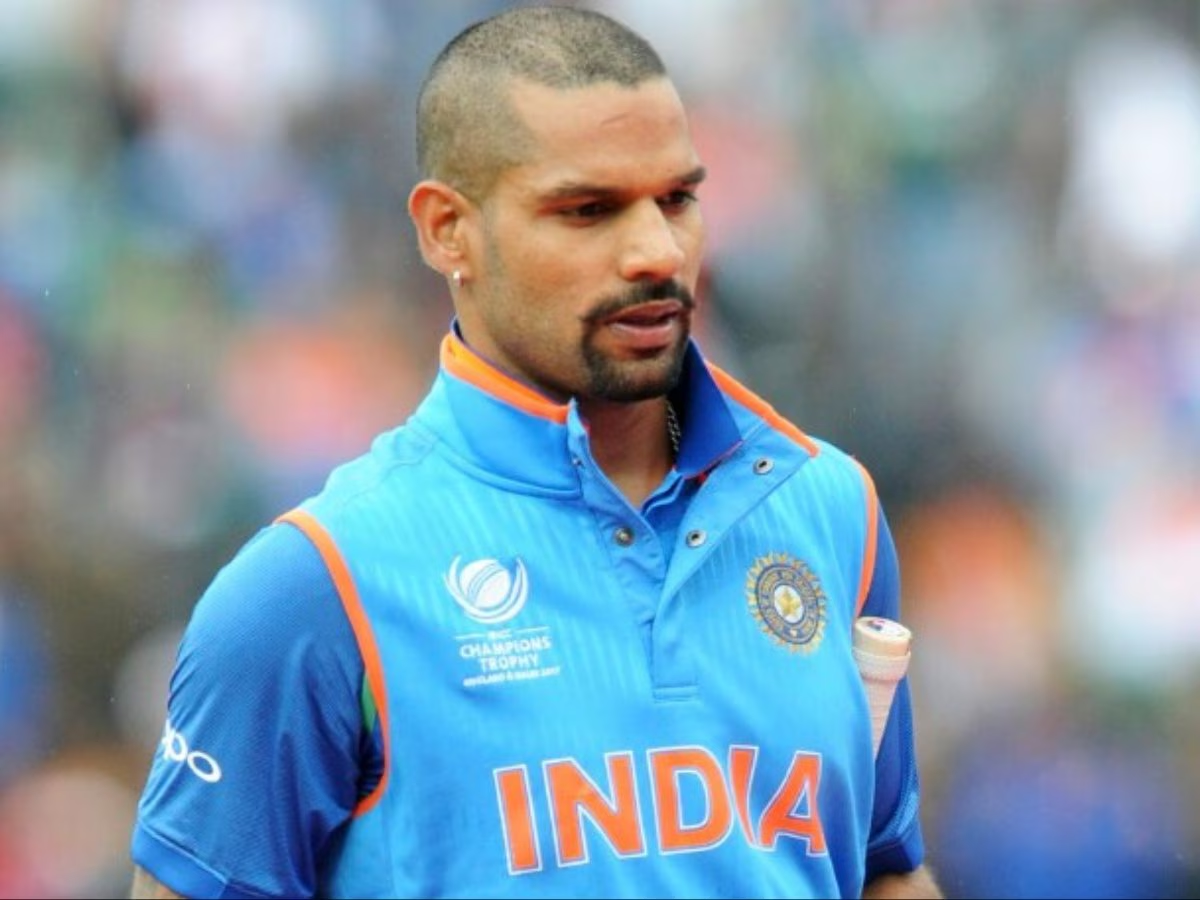
Credits: News18
A Moment of Opportunity and Scrutiny
The FCRA accreditation is a significant milestone for the Shikhar Dhawan Foundation, which may allow it to grow its social programs and garner international support.
Simultaneously, Shikhar Dhawan’s ongoing probe guarantees continued public and regulatory focus. The convergence of these developments highlights a larger story, one in which the operation of non-profits in India is increasingly dependent on compliance, trust, and transparency.
Organizations like the Shikhar Dhawan Foundation will need to carefully combine development aspirations with adherence to changing norms as India tightens its regulatory environment while allowing philanthropic activities.

Comments are closed.