
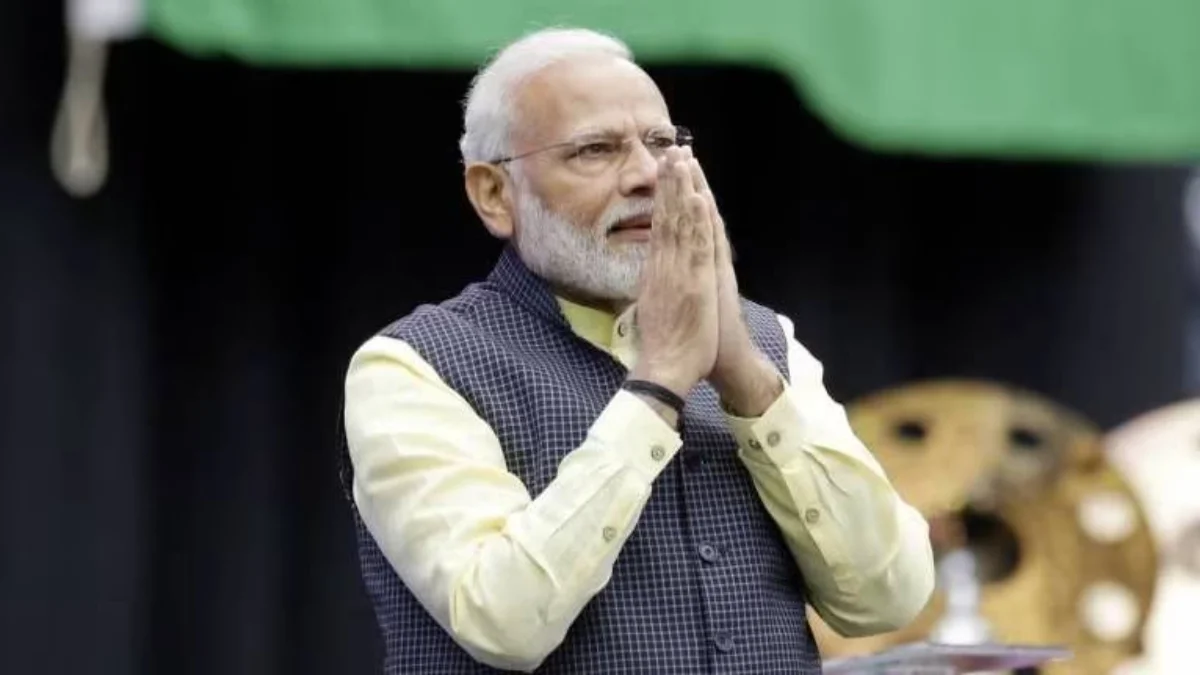

Prime Minister Narendra Modi delivered what may be the most reassuring statement for Indian consumers and markets since the West Asia conflict began, telling Parliament on Tuesday, March 24, 2026 that India will buy oil, gas, and essential commodities from wherever possible, irrespective of nations, and that over the past few days ships loaded with oil, gas, fertilisers, and other necessities have been reaching India safely and securely from multiple places.
The statement is both a supply security assurance and a diplomatic signal, and it deserves to be read as both simultaneously.
What Modi Said
The Prime Minister told Parliament that India’s approach to energy and commodity procurement during the current crisis is nation-agnostic. India will source from wherever it can, from whichever country can supply, without ideological or geopolitical constraint on the purchasing decision. He went further to provide concrete operational reassurance: over the past few days, ships loaded with oil, gas, fertilisers, and other essential commodities have been arriving in India safely and securely from multiple sources.
This is not a statement of aspiration. It is a statement of current operational reality. Ships are moving. Cargoes are arriving. India’s supply chain for the commodities most critical to its economy and its people is functioning.
Why This Statement Matters for Every Indian
The Strait of Hormuz’s effective closure since late February 2026 has created genuine anxiety about whether India can sustain the flow of the essential imports on which its economy runs. India imports over 85 percent of its crude oil. It imports significant quantities of LPG for household cooking. It imports fertilisers that are critical to agricultural production. It imports edible oils that are staples of Indian household nutrition. All of these supply chains have potential exposure to the Middle East conflict and the Hormuz disruption.
Modi’s statement that ships carrying all of these categories of essential goods have been reaching India safely and securely from multiple places over the past few days directly addresses that anxiety. It says the supply disruption that markets have been pricing and that consumers have been fearing has not translated into an actual breakdown of India’s import supply chain. The logistics have been managed. The cargoes are flowing. The shelves will not be empty.
The Nation-Agnostic Procurement Strategy
The Prime Minister’s declaration that India will buy from wherever possible irrespective of nations is a restatement and reinforcement of a procurement philosophy that India has been quietly practising but has now formalised at the highest political level. Over the past several years India has systematically diversified its energy supplier base from 27 countries to 41 countries, as Modi noted in his Lok Sabha address on Monday. Russia has become a major crude supplier at discounted prices. The United States has become a significant LNG supplier. Gulf state relationships remain important. Central Asian and African sources have been developed.
The irrespective of nations formulation is also a diplomatic signal. It tells Iran, the United States, and every other party to the current conflict that India will not allow geopolitical pressure from any direction to compromise its energy and food security. It tells Iran that India will continue buying Russian and American energy even if Tehran objects. It tells the United States that India will continue buying Iranian-adjacent and Russian crude even if Washington prefers otherwise. India’s supply security is a national interest that sits above any bilateral diplomatic relationship.
The Multiple Sources That Are Delivering Right Now
The specific mention of ships from multiple places arriving safely and securely over the past few days provides a window into how India has managed the Hormuz disruption operationally. Some Indian-flagged vessels have negotiated safe passage through the Hormuz strait through India’s direct diplomatic engagement with Iran, as reported earlier this week when Iran approved safe passage for Indian LPG tankers. Other cargoes are being routed around the strait through alternative routes that add time and cost but maintain supply continuity. Some suppliers are delivering from production or storage facilities that do not require Hormuz transit at all.
The mention of fertilisers specifically alongside oil and gas is significant. India’s agricultural cycle has fixed planting and harvesting dates that cannot be postponed. A disruption to fertiliser supply that prevented Indian farmers from planting on schedule would have consequences for food production that would cascade through the economy for months and years, well beyond the resolution of the current conflict. The Prime Minister’s explicit confirmation that fertiliser ships are arriving safely is a reassurance to India’s agricultural sector and to the tens of millions of farming households whose livelihoods depend on timely input availability.
What This Means for Indian Markets
Modi’s supply security statement is directly positive for several categories of Indian stocks and sectors that have been under pressure during the conflict. Oil marketing companies including Indian Oil, Bharat Petroleum, and Hindustan Petroleum have been absorbing massive under-recoveries while holding petrol and diesel prices flat. A confirmed picture of continued supply arriving from multiple sources reduces the worst-case scenario of physical supply shortage that would have forced immediate and dramatic retail price hikes.
The fertiliser sector, whose import-dependent players have been under supply uncertainty pressure, receives direct reassurance. Consumer staples companies dependent on edible oil imports receive some comfort. The broader market benefits from the reduction in the tail risk of a supply breakdown that would have been economically catastrophic.
The statement does not resolve the price problem. Oil arriving from multiple sources is still arriving at prices significantly above pre-war levels given the crude basket’s position and the rupee’s weakness. But price is a manageable problem. Availability is an existential problem. Modi’s statement says the existential problem is not materialising.
India’s Diplomatic Achievement in Plain Language
Read between the lines of Modi’s statement and what it reveals is a significant Indian diplomatic achievement that has received insufficient attention amid the daily drama of Trump ultimatums and Iranian denials. India has managed to keep its essential supply chains functioning through the most serious Middle East energy crisis since the 1970s by combining direct diplomatic engagement with Iran to secure passage for Indian-flagged vessels, aggressive procurement diversification across 41 supplier nations, and a nation-agnostic purchasing stance that gives India maximum flexibility to source from wherever supply is available and accessible.
That achievement, conducted quietly through India’s foreign ministry and oil ministry working the phones and the shipping routes simultaneously, is what Modi is now placing on the parliamentary record. India did not panic. India did not pick sides. India kept the ships moving.
Disclaimer: This article is for informational purposes only and does not constitute financial or investment advice.

Comments are closed.