
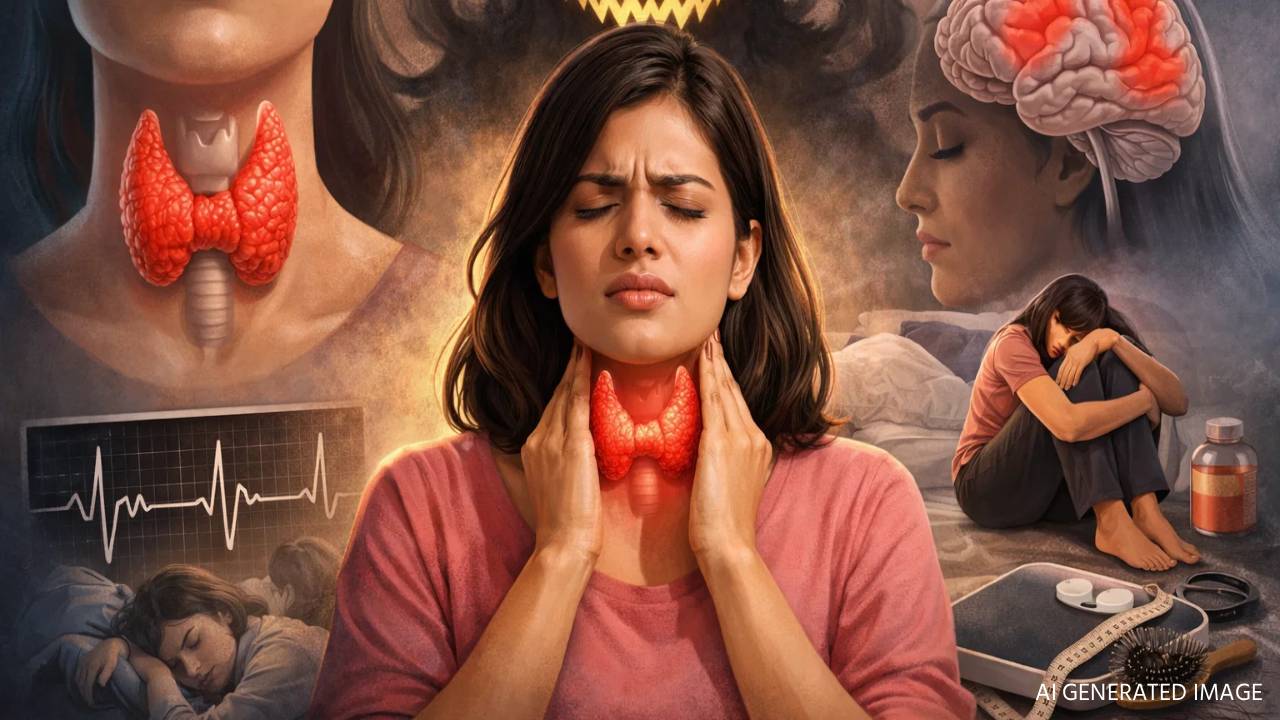

Thyroid Hormone Effect on Women: There are many problems related to women’s health which gradually start affecting not only the body but also the mind. Thyroid is one such problem, which people often associate only with weight gain or loss, whereas its effect is much deeper and complex than this.
It is a hormonal problem that controls the body’s metabolism, but when it gets disturbed, it directly affects mental health, emotional balance and daily life. Dr shrey Srivastava (Senior consultant- Internal Medicine, Sharda Hospital) has given complete information related to this thyroid. Let us know what he said?
What is thyroid?
The thyroid is a small butterfly-shaped gland located in the neck, which produces hormones like thyroxine and triiodothyronine.
What does thyroid do?
These hormones control energy, temperature, heartbeat and brain function in the body. When this gland produces more or less hormones, conditions like hyperthyroidism or hypothyroidism arise. This problem is seen more in women than in men, especially during pregnancy, postpartum period and menopause.
What is the effect of thyroid on the brain?
Thyroid is directly related to mental health, which is often ignored. In hypothyroidism, where hormone levels are low, women experience symptoms like lethargy, fatigue, sadness and depression. Sometimes this situation becomes so serious that the person loses interest in any work, self-confidence decreases and social life starts getting affected.
On the contrary, in hyperthyroidism, hormone levels increase, leading to problems like nervousness, restlessness, irritability and insomnia. This mental instability gradually affects relationships and efficiency.
How does thyroid complicate the problem in women?
Hormonal changes are a normal process in women’s lives, but when thyroid is added to it, the situation becomes more complicated. Imbalance of thyroid during pregnancy not only affects the mental health of the mother, but it can also affect the development of the child.
Many women face mood swings, anxiety and depression in the postpartum period, which is often ignored as just hormonal changes, whereas in many cases the thyroid plays a role in it.
How does thyroid lead women to depression?
Thyroid also has a major impact on self-image and self-esteem. Changes like sudden weight gain or loss, hair fall, drying of skin or swelling on the face disturb women mentally.
Due to the beauty standards set in society, women are more sensitive to these changes, which affects their self-confidence and makes them feel inferior. This situation can gradually cause social distance and mental stress.
How does thyroid affect work?
Apart from this, the effect of thyroid is also clearly visible on the performance of women. Constant fatigue, difficulty concentrating and memory loss affect both professional and personal life. Many women ignore it considering it to be normal fatigue, due to which the problem worsens. The consequences are decline in performance at the workplace, lack of interest in household chores and tension in relationships.
Can this problem remain without symptoms?
An important aspect of thyroid problems in women is that it can persist for a long time without obvious symptoms. Due to gradually increasing symptoms, women accept it as a part of their lifestyle or age. But by the time this problem becomes clearly visible, it has already affected both the body and mind to a great extent. This is why regular testing and awareness is very important.
What causes thyroid problems?
Lifestyle has a deep impact on thyroid. Unbalanced diet, stress, lack of sleep and lack of physical activity can increase this problem. At the same time, a balanced diet that includes nutrients like iodine, selenium and zinc can help in maintaining the health of the thyroid. Activities like yoga and meditation are helpful in improving mental balance and also help in controlling thyroid symptoms.
Is it possible to cure thyroid?
Treatment of thyroid is possible, but timely identification and correct treatment is necessary. Hormone levels can be controlled through medicines, but along with this, changes in lifestyle are also equally important. Without ignoring mental health, adopting a holistic approach is the most effective way to deal with this problem.

Comments are closed.