
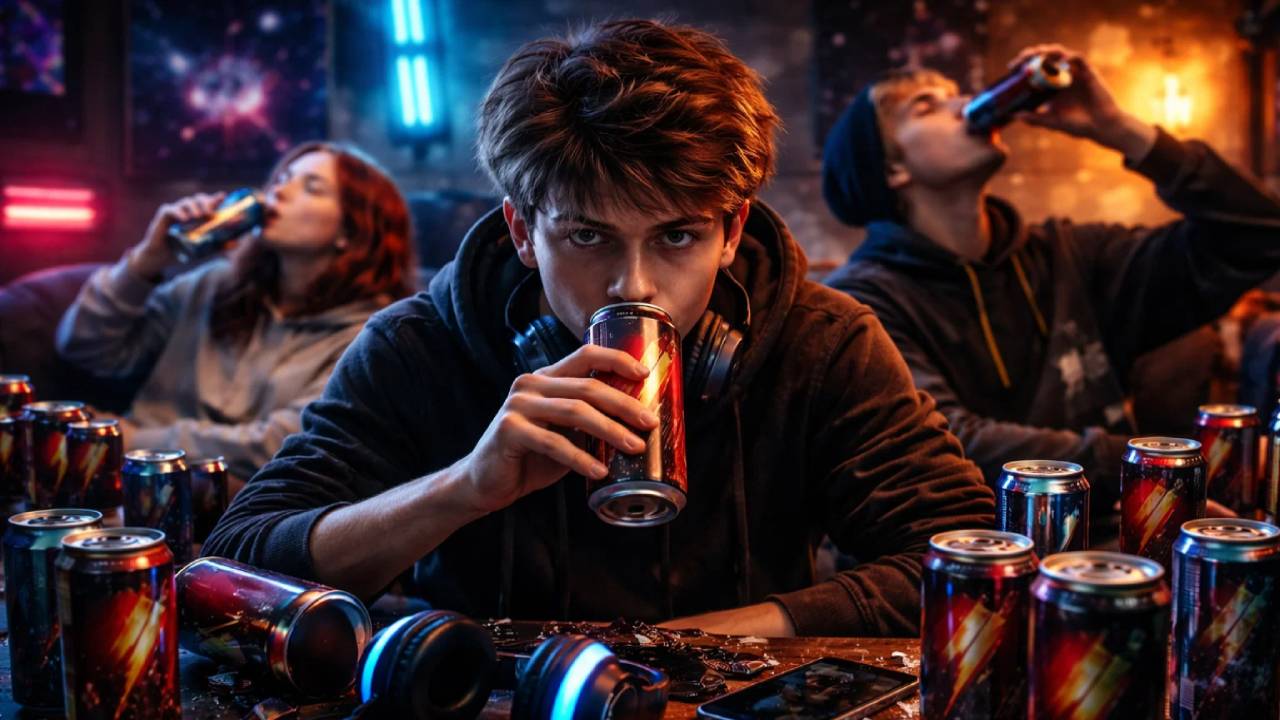
Claims to relieve fatigue, but the danger is great! How is Energy Drink becoming the new ‘cigarette’ for the youth?

Side Effects of Energy Drink: Prepare for the exam till late night gaming Whether you need more energy in the gym or want to stay awake for long hours, one thing is becoming increasingly common in the hands of today’s young generation, that is energy drinks. With colorful cans, attractive advertisements and promises of instant energy, these drinks are now seen everywhere from college campuses to gyms and offices.
But the question is, are these drinks really as safe as they are shown? Many health experts and researchers around the world are warning that excessive caffeine, sugar and other stimulants present in energy drinks can have a serious impact on the health of youth.
What do studies say about the harm of drinking energy drinks?
Some studies have also revealed that their excessive consumption may be associated with sleep problems, rapid heartbeat, anxiety, increased blood pressure and effects on mental health. This is why many doctors and public health experts are now raising the question whether energy drinks are becoming a new “cigarette” for the youth?
We spoke to Dr Shrey Srivastava (Senior consultant- Internal Medicine, Sharda Hospital) about this issue. He told us what energy drinks are, what they contain, why they are popular among the youth, and what are their possible health risks.
What are energy drinks?
Energy drinks are beverages that are specifically launched in the market with the claim of increasing energy, reducing fatigue and increasing alertness. These usually contain ingredients like caffeine, sugar or optional sweetener, taurine, guarana, B-vitamin and ginseng. Their purpose is to make the body and mind feel more active temporarily.
Why is the popularity of energy drinks increasing among the youth?
1. Marketing and Advertising
Energy drink companies often present them in their advertisements by associating them with sports, adventure and high performance. Advertisements often convey the message that these drinks relieve fatigue, increase focus and improve sports performance. This creates their image among the youth as “cool” and “powerful” drinks.
2. Studying and staying up late at night
The use of energy drinks is increasing among college and school students to study late at night or complete assignments. Some surveys show that many students drink them to suppress sleep and stay awake.
3. Gaming and digital lifestyle
With the increasing trend of online gaming and e-sports, the use of these drinks has also increased. Many gamers believe that this helps them stay alert for longer periods of time.
4. Gym and fitness culture
Some people take them as a pre-workout drink before the gym. However, doctors say that excess caffeine can put additional stress on the body.
How much caffeine should one take in a day?
According to the World Health Organization (WHO) and many health agencies, about 400 mg of caffeine per day is considered a safe limit for adults. However, it depends on different levels for each person. Many people start having insomnia and stomach upset even at 200 mg.
What are the disadvantages of drinking energy drinks?
The health effects of energy drinks have been studied in many researches around the world.
1. Effect on sleep
Many studies have found that excess caffeine can impair sleep quality. If teenagers and young adults consume energy drinks in the evening or at night, sleep may be delayed and sleep may be reduced.
2. Heart beat and blood pressure
Some research has found that consumption of energy drinks can increase heart beat and also increase blood pressure. However, this effect may vary from person to person.
3. Anxiety and nervousness
Consuming excessive caffeine can also cause symptoms of nervousness, restlessness and anxiety in some people.
4. Special impact on teenagers
The American Academy of Pediatrics says that teenagers should avoid energy drinks, because they contain high amounts of caffeine and other stimulants. Drinking it can cause heart problems in young children and it can also cause hormonal disruption.
Apart from caffeine, how else does energy drink cause harm?
Many energy drinks contain very high amounts of sugar. A can often contains 25–30 grams or more of sugar. Eating too much sugar can lead to obesity, type 2 diabetes and dental problems.
Do energy drinks really enhance performance?
Some studies have found that caffeine can increase alertness and attention for short periods of time. But this does not mean that it is a safe solution in the long run. According to experts, the body gets real energy from rest and balanced food, in such a situation the use of energy drinks is not appropriate.
Is mixing energy drinks and alcohol dangerous?
The trend of drinking energy drinks mixed with alcohol has also been seen among some youth. According to health experts, this combination can be risky because caffeine can reduce the feeling of alcohol intoxication. Due to this a person can drink more alcohol. Due to alcohol, there is water deficiency in the body and caffeine also does the same thing. Excessive amount of caffeine causes frequent urination.
Are energy drinks really the “new cigarette”?
Some public health experts use this comparison to draw attention, but the two are not exactly the same. Why comparison? Both are promoted targeting the youth and concerns are raised over the health effects of both. But the important thing is that limited consumption of energy drinks and smoking cigarettes are not the same thing. However, its addiction is similar to that of a cigarette smoker. After a time, a person becomes so addicted to it that unless he drinks caffeinated drinks, he does not feel relieved and he keeps feeling low.
Many types of rules have been set around the world regarding energy drinks. In some countries their sale in schools is limited. In many places, caffeine warnings are required on cans, and in some countries there is debate over sales to teenagers.
What precautions should be taken while drinking energy drinks?
- Avoid more than one can a day
- Do not consume late at night
- Do not give to children and teenagers
- Do not mix with alcohol
- If you have heart or blood pressure problems, consult a doctor
- Don’t make any excuse for drinking it. For example, unless I take it, I cannot exercise or study. By doing this you can become mentally addicted to it.
What other options are there for energy drinks?
- enough sleep
- balanced diet
- Water
- coconut water
- Fruit
- light coffee or green tea

Comments are closed.