
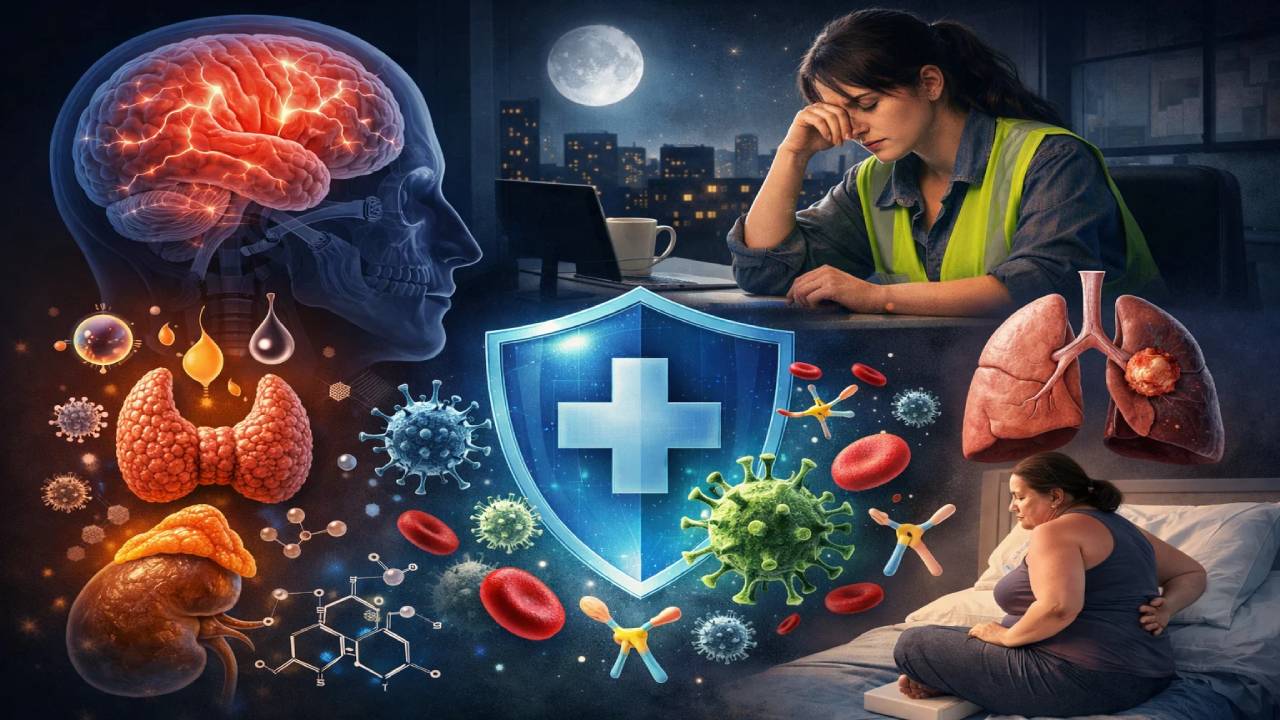
Attack on brain, hormones and immunity, and these deadly diseases – know the long term side effects of night shift before getting affected.

Side Effects of Night Shift: There are many sectors in India in which work is done at night. From IT sector, medical sector to jobs related to security and safety, one has to work at night. But, do you know what effect working at night is having on your body?
Earlier it was normal to work during the day, but now in the 24‑hour world, night shift has become common. This shift is necessary for many people, but working at night for a long time has a serious impact on the body and mind. This not only causes fatigue, but also causes changes at a deep level inside the body.
What things are affected by working at night?
Working night shift for a long time has been seen to affect sleep, brain, physical health, hormones, digestive system and quality of life. Scientific research shows that if night shift is ignored, it can gradually weaken the body from within and increase the risk of many diseases.
Regarding this matter, we talked to Dr Shrey Srivastava (Senior Consultant- Internal Medicine, Sharda Hospital), he told us in detail how night shifts can be harmful for the body. Let us know what happens if we work for long hours at night?
What effect does it have on our internal clock?
Our bodies run on a natural 24‑hour clock, called the circadian rhythm. This clock tells us when we have to wake up, when we have to eat and when we have to sleep. This clock is largely controlled by light and darkness; when the sun rises, the body receives the signal to wake up, and when it gets dark, the body receives the signal to sleep. Accordingly, the level of hormones in the body also keeps changing.
But working in night shift disturbs this natural clock. Getting light at night makes the body feel that now is the time to work and during the day when we sleep, the signals of light and darkness are reversed. Due to this, the internal clock of the body gets confused and the body starts getting harmed.
What happens when the circadian rhythm is disrupted?
The effects of circadian rhythm disturbances don’t just extend to sleep. Many systems like hormones, digestion, energy production, brain function and immune system are also affected. When the body’s timing does not match properly with the day-night cycle, the body begins to remain under stress and gradually it becomes difficult to stay fit.
- sleep problems
Both the quality and time of sleep of people working in night shifts are affected. Many researches show that people who work at night are usually able to sleep only for five to six hours, whereas a normal person needs seven to eight hours of sleep.
This sleep is not complete and many times it is broken, hence the body does not get proper rest. It is not easy to sleep during the day because the body considers the day to be a time to be active. Due to this, deep sleep is not complete and the recovery of the body is reduced. If this condition persists for a long time then there is fatigue and the body remains tired even during the next work. Lack of sleep also has adverse effects on the heart.
- What is the effect of sleep on the brain?
This lack of sleep not only makes the body tired but also does not allow the brain to work effectively. The brain’s memory, attention, thinking power and decision making ability are all affected.
What effect does night shift have on the brain?
Working in night shift also has a serious impact on the brain. Research has found that people working at night face more mental health issues like anxiety, stress and depression. When the circadian rhythm gets disturbed and sleep is not proper, then the brain does not get rest. Due to this, the person often remains stressed, his mood is affected, and he may quickly feel irritable or depressed. Some research has shown that people who work at night for long periods have more symptoms of depression and anxiety.
Another problem of the brain is that fatigue reduces attention and focus. It becomes difficult to pay attention to small things while working, and the possibility of making mistakes increases. This can be especially dangerous in tasks where alertness is required such as driving or operating machines etc.
What are the effects on the body?
Working night shifts increases many health risks to the body, which go beyond just fatigue or lack of sleep. First of all, the level of stress hormone cortisol increases in the body. This hormone keeps the body under stress and its prolonged increase can have a bad effect on blood pressure and heart health.
People working in night shifts often eat less during the day and make a habit of eating at night while working. The body is designed to eat food during the day, but it is difficult to digest food at night. Eating food at the wrong time can increase problems like stomach problems, indigestion, gas, stomach pain etc.
Physically, the metabolic system is also affected by night shifts. This means that the body’s insulin and glucose sensitivity changes, which can increase the risk of type‑2 diabetes. Moreover, night shifts and prolonged periods of circadian rhythm disturbance can also increase the risks of body weight gain, high cholesterol and obesity which lead to heart diseases.
What is the risk of other diseases?
Some scientific organizations have described night shift as a possible risk factor for cancer. This is because exposure to light at night reduces the body’s production of melatonin hormone, and this hormone helps protect the body from diseases like cancer. Research also states that due to disturbance of circadian rhythm, the process of development and repair of cells is affected, which can lead to abnormal cell growth which can cause cancer. However, this is seen in very few cases.
Some studies have shown that working long hours at night may increase the risk of breast cancer in women and prostate cancer in men. The imbalance of circadian rhythms affects DNA repair and cell reproduction, which can lead to serious health problems over time.
What is the impact on professional and social life?
Working in night shift not only affects health but also affects working capacity and social life. When the body and mind remain tired, the person’s ability to work reduces. It becomes difficult to focus, the chances of making mistakes increase and even simple tasks seem difficult.
While working in night shift, a person also finds it difficult to spend time with friends, family and life partner. It can have an adverse effect on social life and family relationships, due to which the person may feel lonely or isolated.
How to avoid problems caused by night shift?
It is not easy to completely eliminate the harm of night shift, but by adopting some measures its effect can be reduced significantly. First of all, try to keep the shift schedule stable so that the body can gradually adapt to that time. To improve sleep quality, keep the room quiet and dark while sleeping during the day. Keep food light and balanced, especially avoid heavy food at night.

Comments are closed.