
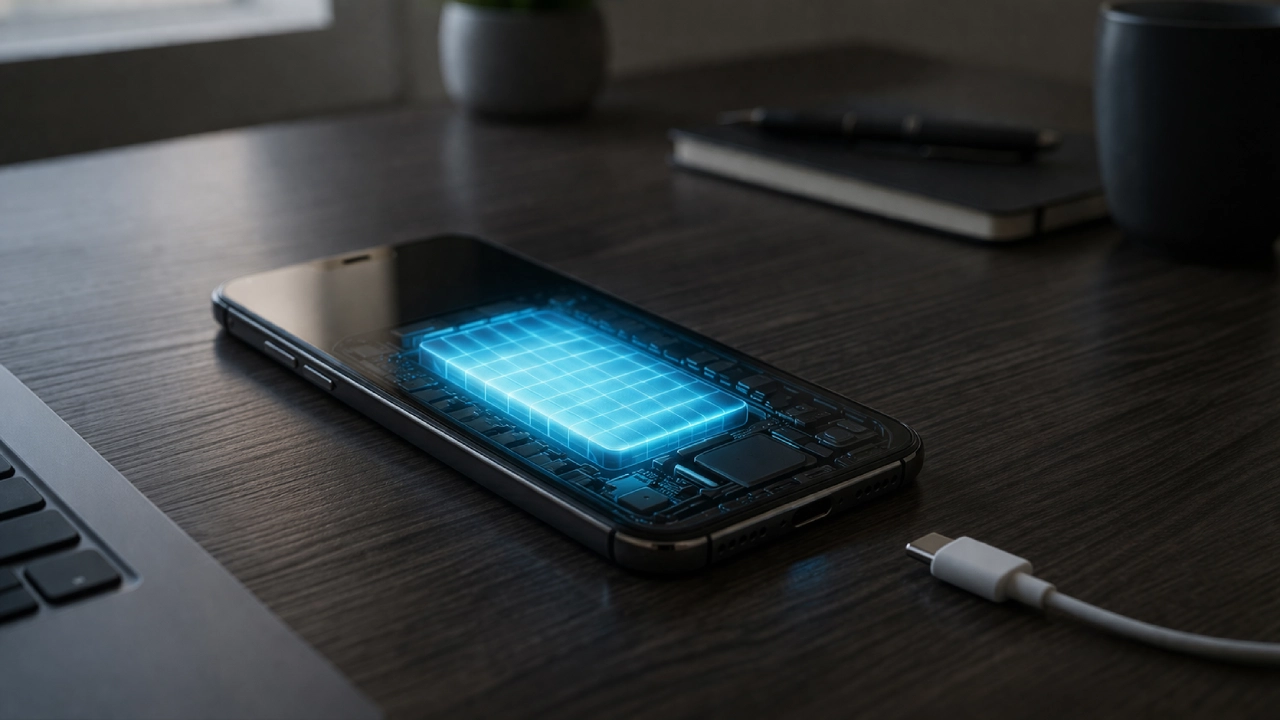

Let’s be honest. For years, smartphone launches sounded exciting. New camera. New chip. New AI feature. But when it came to battery, most of us had the same question — will it last the whole day or not?
In many cases, the answer was “maybe.” In 2026, things feel a little different. Not because brands suddenly doubled battery size. The battery has undergone a lot of change, as has how we charge our devices.
This year is all about small, tangible enhancements instead of grand statements.
The Problem With Older Smartphone Batteries
Smartphones have become more powerful every year. Screens became brighter and smoother. Apps became heavier. 5G became normal. Cameras started recording high-quality video. But the battery inside most phones stayed based on the same lithium-ion idea with graphite.
Yes, charging became faster. Yes, the software tried to save power. But the core battery material did not change much. That is why many users still carry power banks or search for charging points in the evening.
In 2026, brands began to change the battery material itself.
What Is Silicon-Carbon and Why Does It Matter
Some battery manufacturers have started incorporating silicon into a carbon-only battery. One of the advantages of using silicon is that it can hold a greater amount of energy in its volume than pure carbon can hold in its.
By mixing silicon with carbon, we see that the size of a battery can be maintained while the energy that is stored in the battery increases. This is why we see thinner phones with either a 5,500mAh or 6,000mAh battery capacity.
A few years ago, such battery sizes were mostly in thick phones made for battery backup only. Now, regular flagship and mid-range phones are crossing that mark. The good part is simple — more power without a bulky phone.
How It Feels in Real Life
Specs look good on paper. But what about daily use? In normal day-to-day life, many 2026 smartphones easily last one full heavy day. That includes social media, calls, video streaming, camera use, maps, and some gaming.
Screen-on time of around 7 to 9 hours is becoming common in larger battery models. Light users can even stretch it to almost two days. The difference is not dramatic, like double battery life. But it removes stress. You stop checking the battery every hour.
You leave home in the morning and return at night without worrying too much. That is what matters.
Faster Charging That Actually Helps
Charging speed is still a big talking point. Some brands now offer very high wired charging speeds. But the real change is not just higher numbers. It is how steady the charging stays. Earlier, phones charged very fast till 40 or 50 percent and then slowed down a lot.
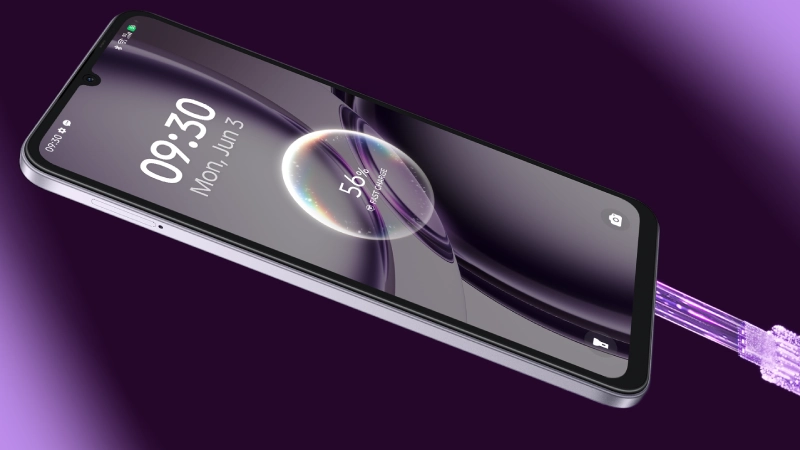
Now, many devices charge fast for longer. The supported devices’ batteries can be charged up to 50 percent in anywhere from 10 to 15 minutes; fully charging the device while charging the battery takes about 30minutes, depending on the battery size.
Thus, if you plug in your phone when you first get ready, your phone should have enough power to last approximately 12 hours before it needs recharging. It is simple, but useful.
Heat and Battery Health
Fast charging used to create a lot of heat. Heat damages batteries over time. In 2026, heat control is much better. Phones now check temperature while charging. If things get too warm, charging slows down automatically. Cooling systems inside phones are also improved. This helps protect battery health.
Many phones also have smart charging features. When a device is plugged in overnight, it doesn’t just go from 0% to 100% in an hour (or a few minutes) and wait there for hours. At this point, it will be nearly charged when imaginable.
You may also have some extra devices aimed at providing a way to charge a phone as much as 80%- 90% of your existing charge to ensure long-term battery life and prevent damage. Making these types of adjustments can help much more than most people confirm.
Processor and Display Also Save Power
Battery life is not only about battery size. New processors are more power-efficient. They do the same work while using less energy.
Displays now change refresh rate depending on what you are doing. If you are reading an article, the screen lowers its refresh rate to save power. When you scroll or play a game, it increases again.
Software also limits background apps better than before. Because of this, the standby drain is lower. Many new phones lose only 2 or 3 percent overnight. That might sound small, but over weeks and months, it adds up.
Wireless Charging in 2026
Wireless charging is also improving slowly. It is faster and more stable than before. You do not have to place the phone very carefully every time. Still, wired charging is more efficient. Wireless charging is about comfort. You just place the phone on the pad, and it starts charging.
Reverse charging is also more useful now. You can charge your earbuds or smartwatch in an emergency. It is not something you use daily, but it is helpful.
What About Solid-State Batteries?
Solid-state batteries have been touted for many years now as a possible future solution to create batteries with enhanced levels of performance and safety, but general consumers will not have access to these batteries until at least 2025 and possibly beyond that time frame.
The manufacturers are continuing to work on stabilizing and lowering the cost of manufacturing solid-state batteries for use in the mass market; therefore, at this time, the most reliable performance enhancement of your devices will be from batteries made of silicon-carbon (Si-C).
Slim Phones With Bigger Batteries
One clear trend this year is a better balance. People want thin phones. They also want long battery life. In previous years, brands could not have both. However, developments in battery technology will allow for increased energy to be stored in the same amount of physical space,e resulting in a phone to remain slim while offering greater storage.
This means improved value for mid-range users. Affordable devices now offer battery life that used to be limited to special battery-focused models. That makes a difference for students and daily heavy users.
Longer Use and Less Waste
Another quiet change is a focus on long-term use. Some brands are making battery replacement easier than before. Not fully removable like old phones, but easier to service. Longer battery health also means you do not feel forced to upgrade after just one year.
If phones last four or five years comfortably, it reduces electronic waste. Battery improvement may not look exciting in ads, but it helps in the long run.
What Actually Changes for You
After removing all technical talk, the real changes are simple. You charge less often. A quick charge gives real backup. Overnight battery drop is small.
Battery health stays stable for years. You think less about the battery icon. And that is the real improvement.
Final Take
Smartphone batteries in 2026 are not revolutionary, but they are better in ways that matter. Silicon-carbon technology allows more capacity without thick designs. Charging is faster but controlled. Power use is smarter. Battery health lasts longer.
The biggest change is not in numbers. It is in how relaxed you feel using your phone all day. And when you stop worrying about battery, that is when you know the upgrade is real.

Comments are closed.