
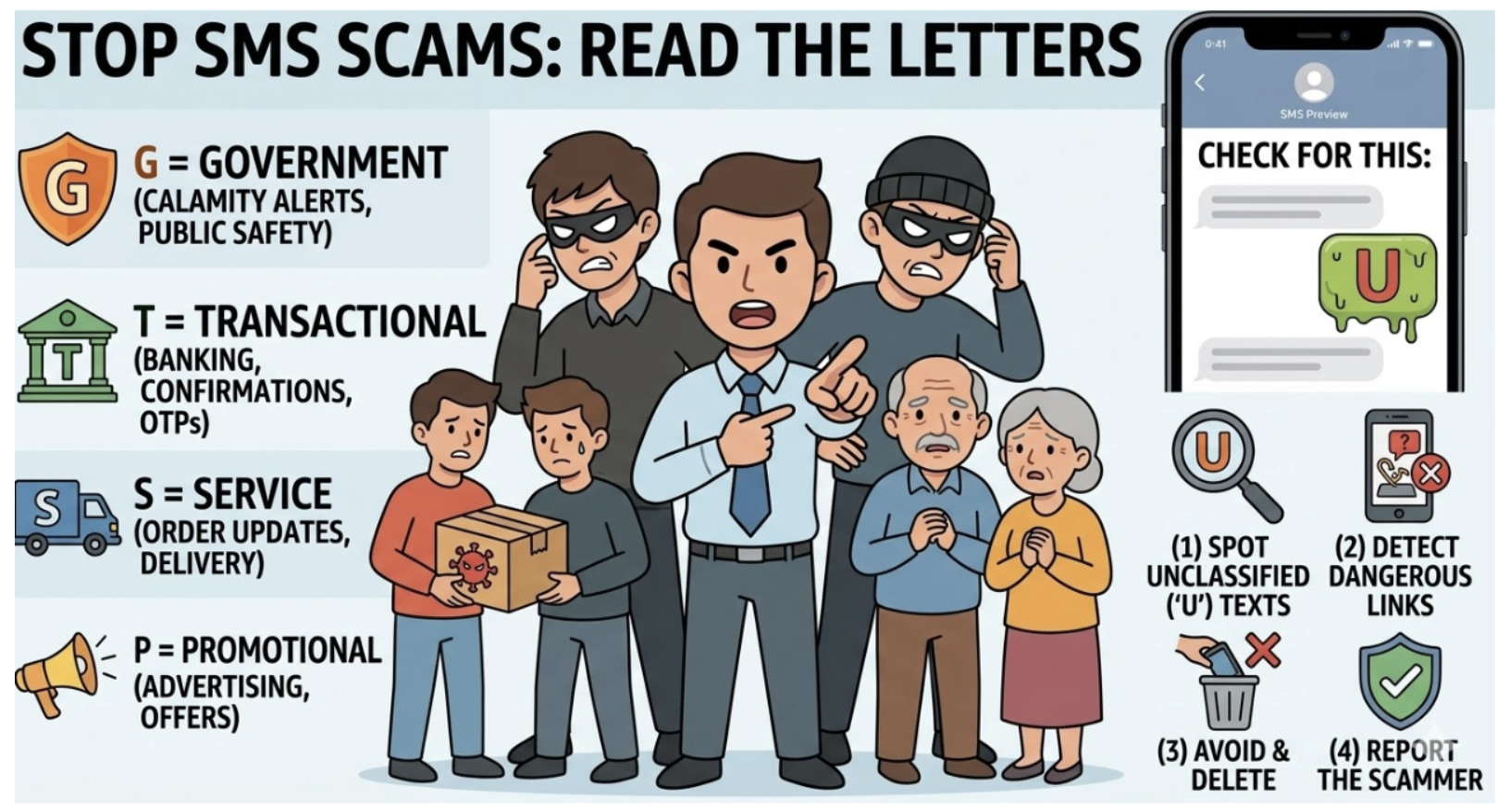

In today’s digital era, smartphone users receive numerous SMS alerts daily, yet many remain unaware that the tiny alphabets appearing at the end of these messages carry important meanings. These characters are not random; they are part of a structured system introduced by telecom regulators in India to categorise SMS communication and help users easily identify the nature of each message.
Understanding these symbols is beneficial, especially for recognising and avoiding potential scams. When an SMS ends with G, it indicates that the message originates from a government authority and may include alerts about natural calamities, public safety, or government schemes. If a message ends with T, it is classified as transactional and usually comes from banks, financial institutions, or other verified services sharing payment details, authentication information, or OTPs.
Better Understanding SMS Codes to Identify Services, Promotions, and Protect Against Scams
An SMS ending with S represents a service-related message and is commonly sent by brands and service providers such as telecom companies or e-commerce platforms like Amazon and Flipkart to update users about orders, deliveries, or active services. Messages ending with P denote promotional content and are typically marketing communications featuring product advertisements, clothing deals, educational loan offers, or college admissions. Identifying these letters also helps users detect potential scams, as fraudulent messages usually do not follow standard SMS classification rules. Although the absence of these alphabets does not guarantee a scam, it serves as an early warning sign, encouraging users to remain cautious when interacting with unknown links or suspicious content.
Users who wish to stop receiving promotional messages can activate the Do Not Disturb (DND) feature provided by their telecom operators. For instance, customers using services like Jio can open the MyJio app, access the menu, navigate to settings, and choose the desired DND level under Set Preferences. Similarly, users of Airtel and Vi can enable DND through their respective mobile applications. By understanding these simple identifiers and managing message preferences effectively, users can reduce unwanted communication while staying alert to potential fraudulent activity.
Summary:
SMS messages in India end with letters like G, T, S, and P to indicate government, transactional, service, and promotional alerts. Recognising these helps users avoid scams, as fraudulent texts often skip these codes. Users can reduce unwanted promotional messages by activating DND through their telecom apps.
Image Source

Comments are closed.