
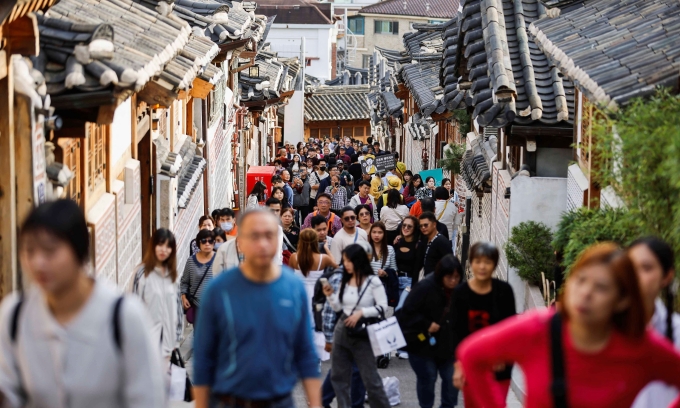

South Korean President Lee Jae Myung personally chaired an expanded National Tourism Strategy Meeting on Feb. 25, the first time a sitting president has led the session since 2019, setting a target of 30 million foreign visitors by 2030.
“If we are satisfied with the reality that 80% of foreign tourists are concentrated in Seoul, the growth of the tourism industry is bound to hit a ceiling,” Lee said, as quoted by the Korea Herald.
“For tourism-led growth to be sustainable, the opportunities and benefits must be shared by local alleyway commercial districts across the country and by small business owners in the regions.”
The urgency is driven by numbers that tell a stark competitive story. South Korea welcomed 18.9 million visitors in 2025, a record that surpassed its pre-pandemic peak of 17.5 million, according to Korea tourism statistics.
Japan, buoyed by a historically weak yen, pulled in 42.7 million in the same period, according to the Japan National Tourism Organization, more than double South Korea’s total and a nearly 16% jump year-on-year.
Culture Minister Chae Hwi-young characterized the moment as a “golden time for us to make a decisive push to become a global tourism powerhouse,” unveiling an initiative titled “K-Tourism Embraces the World,” according to the Korea Herald.
The strategy amounts to the most sweeping set of tourism reforms South Korea has attempted in years, touching everything from visa policy and airport infrastructure to accommodation standards and pricing enforcement.
At the center of the package is a significant easing of entry barriers. Indonesia, one of Southeast Asia’s largest outbound travel markets, will be granted visa-free entry on a trial basis for group tourists of three or more, the Korea Times reported.
Citizens of China and Southeast Asian nations who have previously visited South Korea will become eligible for five-year multiple-entry visas, while residents of major cities in those countries can apply for 10-year visas.
Automated immigration gates, currently available to travelers from 18 nations including Japan, Singapore and Australia, will be expanded to cover nationals from all European Union member states.
The government is making a concerted push to steer tourists out of the capital and into the regions. The Ministry of Land, Infrastructure and Transport plans to sharply increase direct international flights to regional airports by creating dedicated air traffic rights for those hubs and offering fee reductions to attract new routes, according to the Korea Times.
Domestic connecting flights between Incheon and regional airports will be added, and late-night airport bus services, currently limited to 13 Seoul-area routes, will be extended to Chungcheong and Gangwon provinces. KTX high-speed rail tickets will also be made available for advance booking earlier than the current one-month window.
To address a chronic shortage of quality accommodation outside Seoul, oversight of the lodging industry will be consolidated under the culture ministry. A new Accommodation Promotion Act is planned, along with a quality certification system. The government will also develop a South Korean version of Spain’s “parador” model, converting traditional houses, temples and folk villages into premium stays.
“The thing we must be most wary of is unfair practices that cause travelers to turn away,” Lee said, according to the Korea Herald. “The price gouging, unfriendliness and excessive touting that we know all too well are malicious abuses that ultimately inflict great damage on local economies, and they must be rooted out in advance.”
Businesses caught failing to display or honor listed prices will face immediate suspension. A new self-reporting pricing system will require accommodation providers to preregister seasonal rates, and rental car companies on Jeju Island will face caps on peak-season price hikes. Hotels that cancel existing reservations without justification will also face new penalties.
The package also introduces a Visit Korea Year campaign from 2027 to 2029, featuring lifestyle-based tourism products, from beauty and food trails to hiking experiences, that reflect a broader shift as visitors increasingly seek to live like locals rather than check off landmarks.

Comments are closed.