

South Korea is set to give cash assistance of 100,000 to 600,000 won (US$67-402) to 70% of its population to ease the burden of rising fuel costs linked to the conflict in the Middle East.
Aid will first go to vulnerable groups such as basic livelihood security beneficiaries and single-parent households beginning April 27. The remaining eligible recipients will receive payments in stages from May 18 to July 3, depending on income and other qualification criteria, according to Korea JoongAng Daily.
Those receiving basic livelihood security support will get 550,000 won, while near-poor households and single-parent families will receive 450,000 won. People living outside the Seoul metropolitan area or in regions with declining populations will get an extra 50,000 won each.
For the rest of the eligible 70%, the amount will depend on where they live: 100,000 won for residents in the Seoul metropolitan area, 150,000 won for those outside it, 200,000 won for people in priority support areas within shrinking regions, and 250,000 won for those in specially designated support zones in such regions.
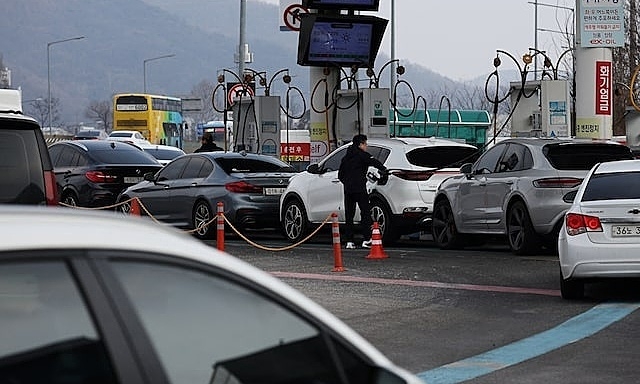
A man fills up his car at a gas station in Seoul, South Korea, March 9, 2026. Photo by Reuters |
Foreign nationals are generally not eligible, though exceptions apply to those listed on a resident registration record with at least one Korean national and who are either enrolled in the National Health Insurance System as subscribers or dependents, or are receiving medical benefits.
The money will be issued through debit cards, prepaid cards or vouchers, and may only be spent at small businesses with annual sales of 3 billion won or less, such as traditional markets, grocery shops, clinics and pharmacies.
The 6.1 trillion won assistance package is part of a 26.2 trillion won supplementary budget recently passed by the National Assembly to cushion the economic fallout from the Middle East conflict.
Around 32.5 million people, or 70% of the country’s lower-income population, are eligible for the support.
Comments are closed.