
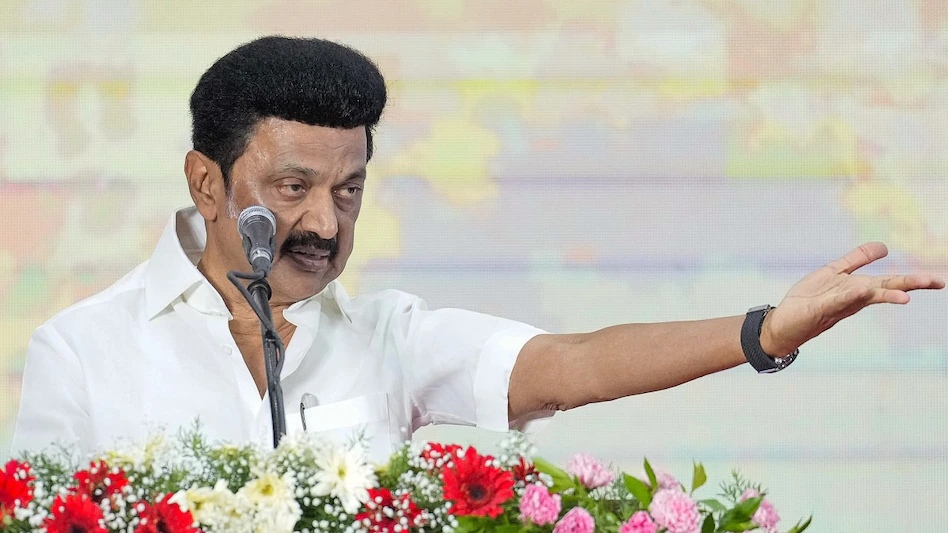

digital desk- The political picture is now becoming clear before the Tamil Nadu Assembly elections. Chief Minister MK Stalin has formally announced the seat sharing in the alliance led by his party Dravida Munnetra Kazhagam (DMK). In this state with a total of 234 assembly seats, DMK itself will contest on 164 seats, while the remaining seats have been given to allies. With this announcement, Stalin has clearly indicated that his strategy is to give balanced representation to the allies while maintaining the strong hold of the party. The alliance has given 28 seats to the Indian National Congress, which has traditionally been the DMK’s biggest ally.
10 seats for DMDK, 8 seats for VCK
This time, the biggest change in seat distribution has been seen with DMDK, which has been allotted 10 seats. Apart from this, VCK has been given 8 seats, Communist Party of India and Communist Party of India (Marxist) have been given 5 seats each. Whereas MDMK has got 4 seats. Keeping in mind the minority vote bank, IUML and MMK have been given 2 seats each, while MJK and SDPI have been given 1 seat each. In this entire list, the most discussed topic is O Panneerselvam. Panneerselvam, once a veteran leader of All India Anna Dravida Munnetra Kazhagam, will now contest from Bodinayakannur seat on behalf of the DMK alliance. Political analysts believe that this move is part of a strategy to break into the ‘Mukulthor’ vote bank of South Tamil Nadu.
KKSSR Ramachandran gets another chance
DMK has also given priority to experience in the selection of its candidates. Senior party leader KKSSR Ramachandran has once again been fielded from Aruppukottai seat. Apart from this, tickets have been given to Mahesh from Kanyakumari and Wahab from Palayamkottai. This shows that the party is betting on its strong and reliable faces. Political experts believe that this step of Stalin is not just distribution of seats, but is part of a broader strategy. An attempt to balance social equations along with the development agenda of the ‘Dravidian Model’ is clearly visible. A plan has been made to bring together different classes and communities through alliance, so that an edge can be gained in the electoral contest.

Comments are closed.