
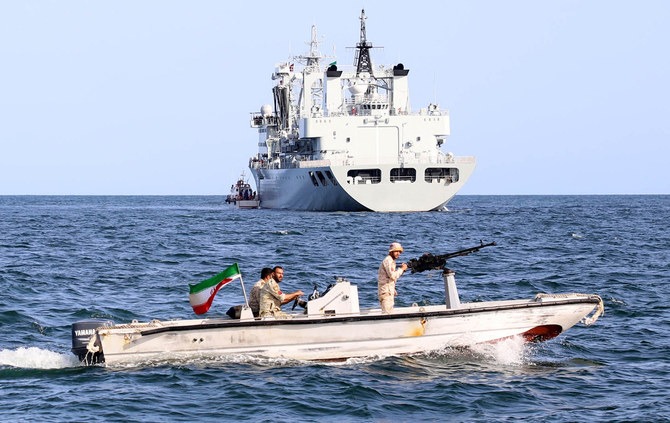

As the global spotlight turns to the narrow mouth of the Persian Gulf, the waters of the Strait of Hormuz have become the stage for a dramatic display of geopolitical muscle. On Wednesday, February 18, 2026Russia and China joined Iran in launching the “Maritime Security Belt 2026” naval exercises a coordinated move that comes at a time of peak friction between Tehran and Washington.
These drills aren’t just about routine practice; they are a calculated message to the West.
The Drills: “Maritime Security Belt 2026”
While Iran’s Revolutionary Guard (IRGC) conducted separate live-fire exercises earlier this week, the trilateral “Maritime Security Belt” officially brings the heavyweights together.
The Goal: Officially, the maneuvers focus on anti-piracy, search-and-rescue, and protecting maritime trade routes.
The Reality: Russian presidential aide Nikolai Patrushev framed the drills as a step toward a “multipolar world order on the oceans,” explicitly countering what he called Western maritime “hegemony.”
The Hardware: Russia has deployed the Udaloy-class frigate Marshal Shaposhnikovwhile China’s 48th Flotilla has dispatched the guided-missile destroyer Tangshan and the frigate Daqing to the region.
Tensions at the Boiling Point
The timing of these exercises is no coincidence. They occur against a backdrop of several high-stakes events:
US Carrier Surge: In response to Iranian threats, the US has bolstered its presence with two carrier strike groups—the USS Abraham Lincoln and the USS Gerald R. Ford—patrolling nearby waters.
Nuclear Negotiations: The drills coincide with delicate, indirect nuclear talks between Tehran and Washington currently being mediated by Oman in Geneva.
The “Rare” Shutdown: In a highly unusual move on Tuesday, Iran temporarily closed parts of the Strait of Hormuz for “safety and security” during its own live-fire drills, sending a tremor through global energy markets.
The Strategic “Chokepoint”
The Strait of Hormuz is the world’s most important energy chokepoint, with approximately 20% of the world’s oil consumption passing through its narrow lanes every day. By hosting Russia and China here, Iran is demonstrating that it has powerful allies willing to help secure its “sovereign claims” over the waterway.
For the international community, the sight of Russian and Chinese warships operating alongside the IRGC is a stark reminder that the Middle East’s maritime security is no longer a unipolar affair. As the “Maritime Security Belt” drills continue into Thursday, the world watches the “bending waterway” with bated breath, hoping that military signaling doesn’t escalate into a global economic catastrophe.
Read More: Standoff at the Strait Russia, China, and Iran Signal a New Naval Era

Comments are closed.