
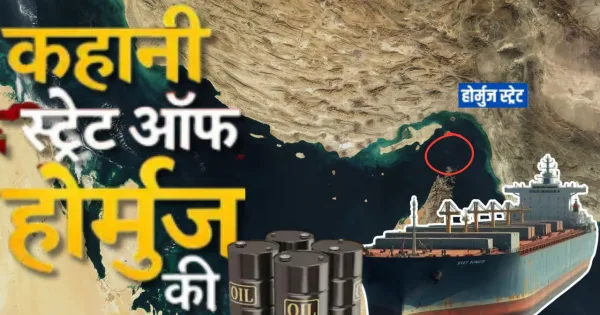
Story of Strait of Hormuz! How is the Naval War Act implemented, how is the fare decided for passing ships, know the detailed report

Australia. The Strait of Hormuz is a narrow waterway located near Iran and Oman that connects the Persian Gulf to the Gulf of Oman. This route, which has come into limelight these days during the ongoing West Asia conflict, is extremely important for world trade and energy supply, because exported materials like oil, gas and fertilizers pass through this route. The passage is only 21 nautical miles (39 kilometres) wide at its narrowest point.
Recently, due to the ongoing conflict between Iran, Israel and the US, Iran has limited the movement of ships in this waterway, which has affected the global oil supply and trade of other vital commodities. Now the question arises under international law whether Iran can do this and can America send military convoys to protect international waterways?
The Strait of Hormuz is used for international navigation between high seas areas and is considered international waters under international law. Coastal countries have sovereignty over these waters, but ships of other countries have the right to pass through them. The coastal countries are not allowed to create any kind of obstruction in their path.
In the event of an armed conflict, the law of armed conflict or international humanitarian law applies, including the law of naval war. Most countries follow the San Remo Manual, adopted in 1994, which guides the law of the sea in times of armed conflict. Under this law, countries are usually divided into warring and neutral categories. Ships of neutral countries, even their warships, may pass through belligerent waters. They are advised to inform neutral warships about their visit.
According to law, warring countries should not target neutral ships. The Iranian area of the Strait of Hormuz is considered a naval battle zone during wartime. Warring countries are required to respect the legitimate rights of neutral countries. However, legal protection for commercial ships from neutral countries is weak, and many ships avoid passing through the strait. According to the San Remo Manual, bay areas owned by neutral countries must remain open to all ships, but bay areas belonging to warring countries may be kept closed.
Warships usually accompany commercial ships to protect them from attacks. If a commercial ship sails in convoy with a warship of a warring country, it can also become a legal target. Commercial ships escorted by warships of neutral countries are not considered targets, but a belligerent country may consider whether they are carrying contraband to the enemy.
If Australia helps the UAE for joint defense against Iranian attacks, Iran may consider it involved in war. In such a situation, Australian warships and the commercial ships under their protection could legally come under attack from Iran. Overall, the provisions of international law and the law of naval warfare are important in both peace and war situations in the Strait of Hormuz, and clearly define the rights and responsibilities of neutral and belligerent countries.

Comments are closed.