
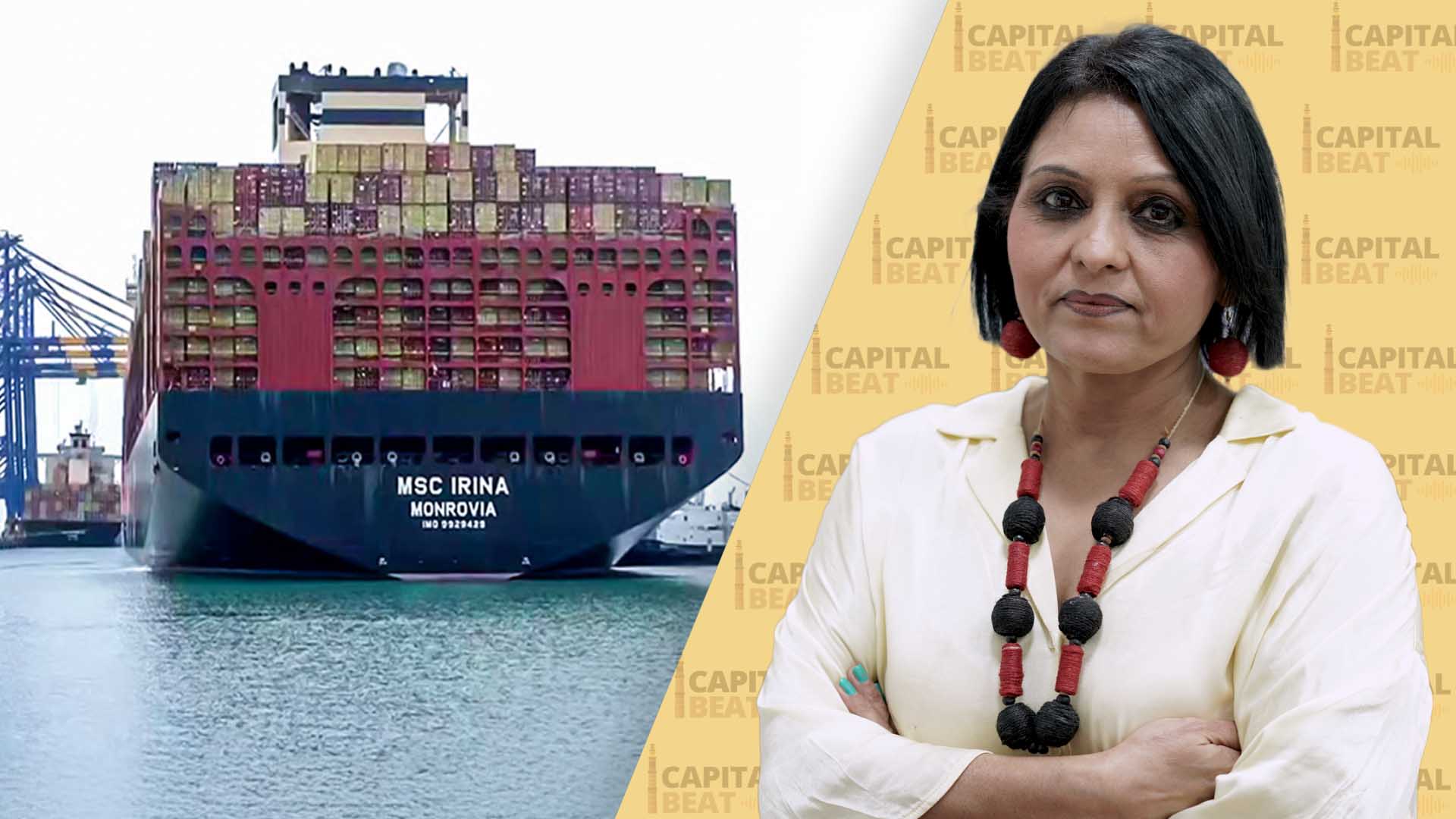

As the US-Israel attacks on Iran disrupt oil flows across the crucial Strait of Hormuz, India faces mounting energy security concerns. With commercial and strategic crude reserves estimated to cover barely two weeks of consumption, policymakers are weighing emergency supply options.
According to Bloombergstate-run refiners and government officials have discussed resuming purchases of Russian crude currently held in floating storage across Asia. Reports also suggest New Delhi may seek flexibility from the United States if sanctions-related hurdles arise.
How severe is the oil risk for the world’s third-largest importer? Will India pivot back to Russian supplies? And will Washington allow it amid ongoing geopolitical tensions?
To get answers to these key questions, on the latest episode of Capital Beat, The Federal spoke to Narendra Taneja, energy expert; Dr. Shubhda Chaudhary, Middle East expert; Pushparaj Deshpande, author and policy expert; and Sanjay Kapoor, senior journalist and international affairs commentator.
Also read: Where do major nations stand with Trump-Netanyahu on Iran?
With nearly 50 per cent of India’s oil imports and 60 per cent of its LNG supplies passing through the Strait of Hormuz, the geopolitical turbulence has triggered concerns over supply disruptions and soaring import bills.
Strait of Hormuz vulnerability
Taneja downplayed the notion of an immediate “crisis”. He stressed that India has not stopped importing Russian oil but only reduced purchases. “We buy oil from 40 different countries,” he said, pointing out that India has invested USD 18 billion in Russian oil and gas assets, including Sakhalin-1, and continues to lift its entitled share.
He cautioned against alarmism over a complete shutdown of the Strait of Hormuz. “The Strait of Hormuz has never been closed in history,” he noted. While tanker traffic has slowed due to insurance risks and warnings from Iran’s Revolutionary Guards, he said the strait remains operational. Oman controls part of the waterway, complicating any unilateral Iranian move.
LPG concerns
A key concern raised during the discussion was LPG vulnerability. Nearly 80–85 per cent of India’s LPG imports originate from the Gulf and transit Strait of Hormuz. Unlike crude oil, India maintains no strategic LPG reserves.
Also read: ‘No sovereign nation will accept what US, Israel are dictating to Iran’
Taneja clarified that LPG is largely produced as a by-product in domestic refineries when crude oil is processed. However, because India’s demand is high — especially after expanding LPG access nationwide — the country imports additional quantities.
Dr. Chaudhari broadened the risk assessment, pointing to export dependencies and diaspora vulnerabilities. She highlighted that India’s trade architecture with Iran and Central Asia, including routes via Bandar Abbas and Chabahar port, could face disruptions. “India is not in a comfortable position,” she said, emphasising the need to activate alternate corridors like the International North-South Transport Corridor (INSTC) and the Chennai–Vladivostok maritime corridor.
Strategic calculations
The panel also debated whether India had curbed Russian imports under US pressure. Deshpande argued that India’s reduction in Russian oil purchases — from about 36 per cent of total imports to single digits in early 2026 — reflected a broader pattern of strategic compromise.
He pointed out that India had earlier stopped Venezuelan and Iranian imports under sanctions pressure. “There is a perceptive sense that we have been buckling under American pressure,” he said, warning that oil volatility could worsen inflation and widen the current account deficit.
Taneja rejected the notion of a formal Indian commitment to halt Russian imports. He argued that economics — not politics — determines sourcing decisions. Russian discounts, once as high as USD 20 per barrel, have narrowed to around USD 4.5 per barrel, making long-haul imports less attractive compared to Gulf supplies that reach India in under five days.
Russia and US factor
Would Russia welcome India back at higher volumes? Dr. Chaudhari believed Moscow would. “It’s economics, it’s profit for Russia,” she said, adding that Russia would not want to lose India as a strategic partner.
On the US response, however, uncertainty loomed. She noted fractures within the Trump administration’s approach and questioned whether Washington had a coherent exit strategy in the conflict.
Kapoor took a more political view, arguing that India has visibly shifted towards the US and its allies. He suggested that any incremental increase in Russian imports may not trigger a major American backlash, as long as the long-term trajectory remains aligned with Washington’s expectations.
Economic impact
The economic implications could be significant. According to data cited in the discussion, every USD 10 increase in oil prices adds roughly USD 13-14 billion to India’s annual import bill. That, in turn, fuels inflation and strains trade balances.
Taneja reiterated that if the war extends beyond nine to thirteen days, “we are entering into a very difficult phase in terms of energy economics — LPG, LNG, oil, even gold.” He suggested that the United States, as the world’s largest oil consumer, would also face domestic backlash if prices spike sharply.
He speculated that geopolitical calculations may aim to keep the conflict short to avoid prolonged market disruption. However, escalation — particularly if Iran expands military actions beyond its borders — could fundamentally alter the global energy landscape.
Indian diaspora and exports
Beyond oil and gas, Dr. Chaudhari highlighted risks to India’s diaspora in the Gulf. With millions of Indians living and working in the UAE, Saudi Arabia, Kuwait, Bahrain and Oman, remittance flows — accounting for a significant share of India’s foreign earnings — could be impacted if tensions escalate.
Exports to West Asia, which account for around 15 per cent of India’s merchandise trade, are also at stake. Deshpande warned that prolonged instability could compress domestic consumption, especially in states dependent on remittance inflows.
Wait and watch
While panellists differed on the severity of the situation, there was broad agreement that India’s energy exposure remains substantial. The country imports nearly 89 per cent of its crude requirements and consumes about 5.7 million barrels daily, making it the world’s third-largest consumer.
For now, the Strait of Hormuz remains open, tanker flows have slowed but not ceased, and policymakers are exploring contingency options. Whether India meaningfully scales up Russian imports will likely depend on pricing dynamics, geopolitical signals from Washington, and the duration of the conflict.
As Taneja summed up, “If it goes beyond nine days, we are getting into crisis zone.” Until then, India appears to be in challenge mode — not crisis mode — but watching events closely.
(The content above has been transcribed from video using a fine-tuned AI model. To ensure accuracy, quality, and editorial integrity, we employ a Human-In-The-Loop (HITL) process. While AI assists in creating the initial draft, our experienced editorial team carefully reviews, edits, and refines the content before publication. At The Federal, we combine the efficiency of AI with the expertise of human editors to deliver reliable and insightful journalism.)

Comments are closed.