

67
NEW DELHI: Within sections of India’s strategic and intelligence establishment, a quiet but increasingly structured debate is underway over what some describe as a structural gap in the country’s national security architecture. The concern is not about kinetic capability or counter-terror response, both of which are regarded as institutionally mature, but about the absence of a dedicated, centralised institutional mechanism for information and disinformation warfare at the strategic level.
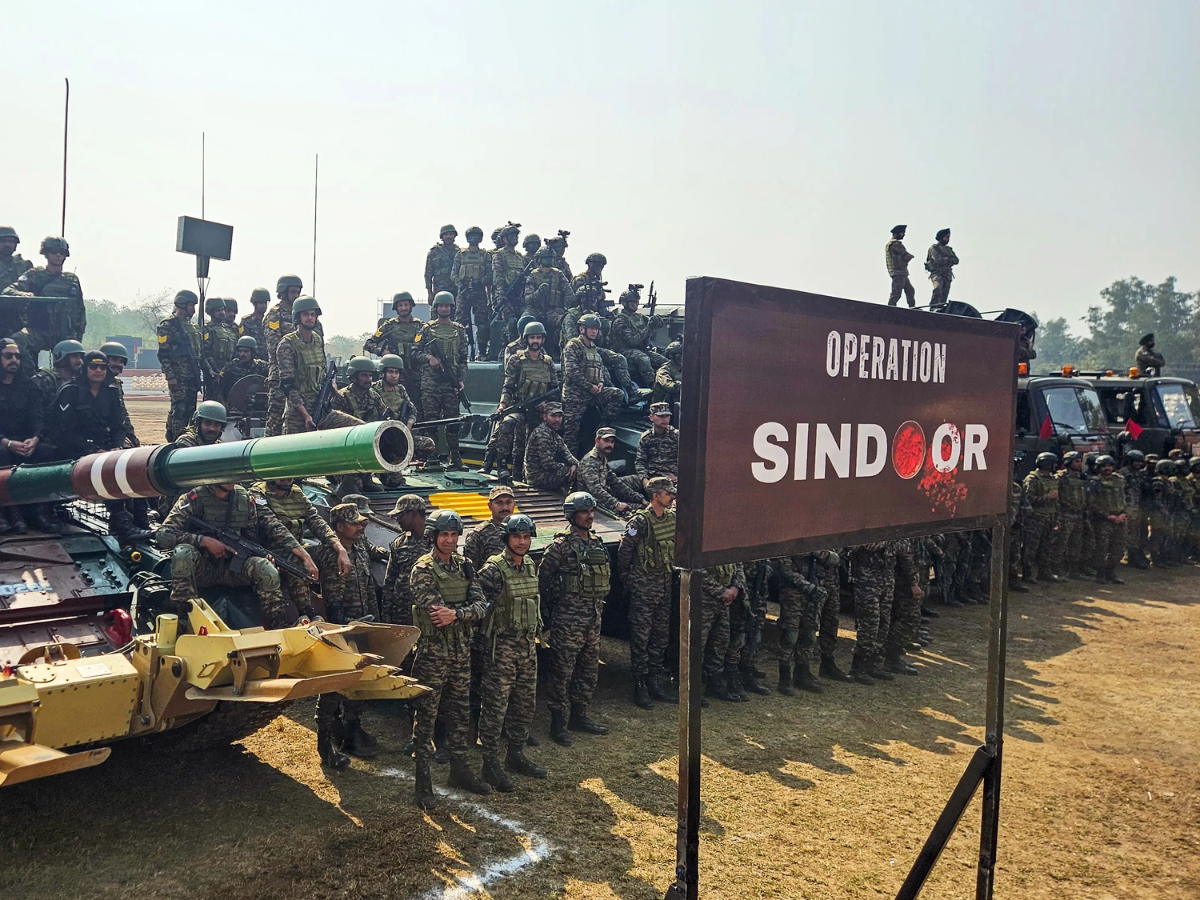
These discussions have gained more traction post Operation Sindoor with some sections suggesting that while India won the war decisively and achieved its stated objectives, the same was not achieved as far as conveying this to the domestic and global audience about it. Officials and analysts familiar with internal assessments say the argument is straightforward: India possesses well-developed operational intelligence networks, counter-terror grids, and cyber capabilities. What it does not possess, according to this view, is a specialised command exclusively tasked with detecting, countering, and, where required, executing disinformation operations as a deliberate instrument of state power.
Instead, as things stand at present, messaging functions are dispersed across multiple ministries, armed forces public relations units, and intelligence-linked communication cells, often operating without a unified doctrine or chain of command.
The debate intensified following Operation Sindoor, during which adversarial information campaigns were perceived to have moved faster and with greater narrative coherence than India’s official communication. While the operational objectives of the mission were pursued through established military and intelligence channels, perception management unfolded in a more fragmented manner. Analysts within the system argue that narrative cycles now move in minutes rather than days, and that adversarial ecosystems are structured to exploit precisely that speed differential.
According to individuals aligned with this assessment, India’s current posture remains reactive rather than pre-emptive. Disinformation is countered episodically, often after narratives have gained digital traction. Responsibilities are distributed across agencies without a single command authority empowered to integrate psychological operations, media strategy, cyber monitoring, and offensive information measures into unified strategic planning. In the end when lapses happen, no one is held accountable, as no one is responsible in the first place. As a result these mistakes are overlooked in the hope that they will not happen again, by god grace.
These individuals said while the government has loosened its purse to the extent of releasing figures in ten digits to augment disinformation warfare, what has still not been done is create one single dedicated agency. Proponents of structural reform frequently cite the media and information wing of the Pakistan military, specifically the Directorate General of Inter-Services Public Relations under the Pakistan Army, as an example of institutional integration. The entity operates not merely as a press office but as a structured information apparatus that embeds narrative shaping, rapid-response communication, and psychological framing into military planning. The comparison, officials stress, is not about institutional imitation but about recognising capability asymmetry in the cognitive domain. The core argument emerging from this internal discourse is that contemporary conflict operates across three simultaneous planes. Physical operations shape territory. Cyber operations shape infrastructure. Cognitive operations shape perception. In this framework, information dominance should not be treated not as a supplementary public relations function but as a parallel theatre of conflict requiring doctrine, trained personnel, offensive and defensive mandates, and defined rules of engagement.
Those advocating reform control that without a centralised command architecture for information warfare, India risks entering future crises with superior kinetic capacity but diluted narrative coherence. Whether this debate translates into institutional restructuring remains uncertain.

Comments are closed.