
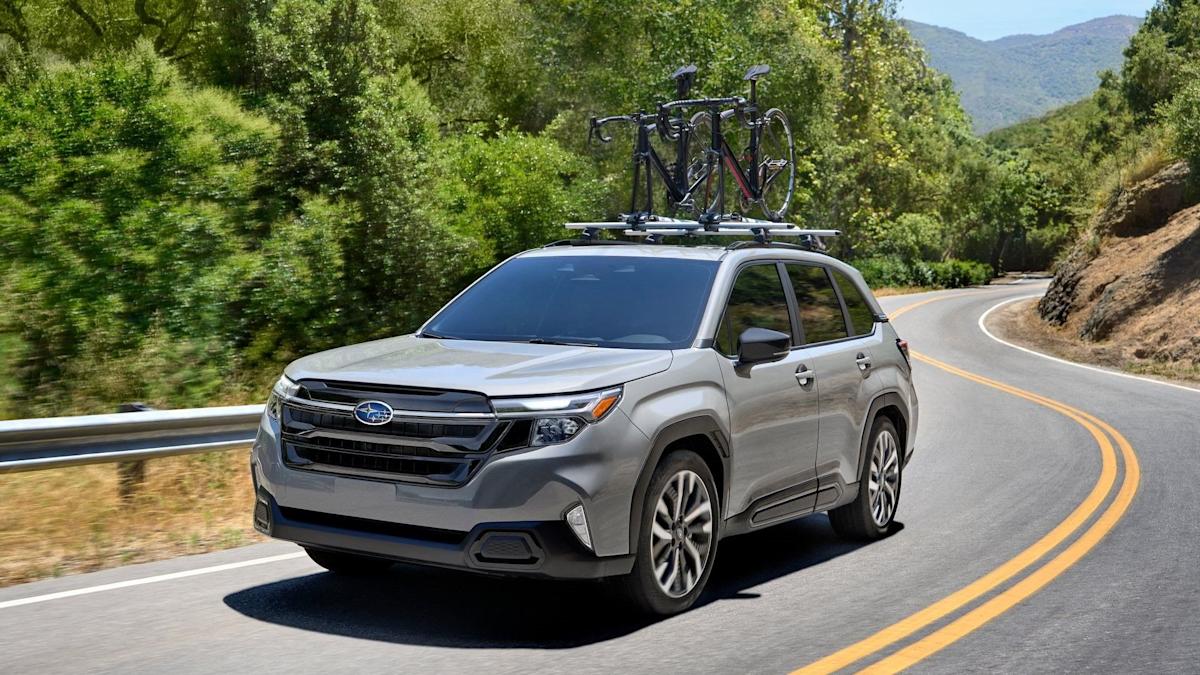

For years, the Subaru Outback quietly did everything right. It wasn’t flashy, but it was dependable, practical, and uniquely positioned between a wagon and an SUV. That formula worked. The Outback consistently ranked among Subaru’s best-selling vehicles in the United States.
Now, things have changed.
Subaru’s all-new Outback has moved further into SUV territory, stepping away from its wagon roots. The redesign was meant to attract more buyers in an SUV-dominated market. Instead, early numbers suggest the opposite may be happening.
Last month, Subaru sold just 10,004 Outbacks across the United States. That’s a steep 42.9 percent drop compared to March 2025, when the previous-generation model was still available. The slowdown isn’t limited to a single month either. During the first quarter of 2026, Subaru delivered 27,074 Outbacks, down from 39,934 units in the same period last year. That’s a 32.2 percent decline.
If this trend continues, Subaru could end 2026 with roughly 109,000 Outback sales. That would be a significant fall from 161,814 units sold in 2023 and 168,771 in 2024.
A Risky Redesign and Higher Price Tag
The Outback’s shift from rugged wagon to conventional SUV may be part of the problem. Long-time buyers often chose the Outback specifically because it wasn’t a typical SUV. By moving closer to mainstream SUV styling, Subaru may have diluted what made the Outback special.
Price could also be playing a role. The new Outback costs about $5,000 more than the outgoing model. While the updated version offers improved technology, design, and features, many buyers are feeling the pressure of rising costs and tighter budgets.
Put simply, the new Outback might be better, but it’s also more expensive and less distinctive.
Subaru’s Broader Sales Struggles
The Outback isn’t the only Subaru model facing challenges. The company’s overall U.S. sales dropped 23.5 percent in March, with 54,674 vehicles delivered compared to 71,478 a year earlier. For the first quarter, total sales fell 14.9 percent to 141,944 units.
Several models posted notable declines. The Ascent dropped 27.5 percent in March, while Crosstrek sales fell 13.5 percent. The sporty BRZ slipped 13.8 percent, and the WRX dropped 17.3 percent. Even the popular Forester saw a 9.6 percent decline for the month.
Some models were hit harder. Impreza sales fell by 50.9 percent, while Legacy deliveries collapsed by 83.5 percent. However, the Legacy decline was expected, as the sedan has been discontinued and remaining sales come from leftover inventory.
A Few Bright Spots Remain
Despite the overall slowdown, not everything looks bleak for Subaru. The Forester actually posted an 8.6 percent increase in first-quarter sales, showing steady demand for one of the brand’s most popular SUVs.
The all-electric Solterra also delivered a surprise. Subaru sold 1,736 units in March, marking a 50.4 percent increase compared to the same month last year. Still, its first-quarter sales remain slightly down overall, highlighting how inconsistent EV demand can be.
A Turning Point for Subaru?
Subaru now finds itself at an interesting crossroads. The brand is leaning further into SUVs, electrification, and modern technology, but early results suggest that change comes with risk.
The Outback’s transformation was meant to strengthen its appeal. Instead, it may have unsettled loyal buyers who appreciated its unique identity.
Whether sales rebound in the coming months remains to be seen. But one thing is clear. When you change a formula that works, even slightly, the market notices.

Comments are closed.