

303
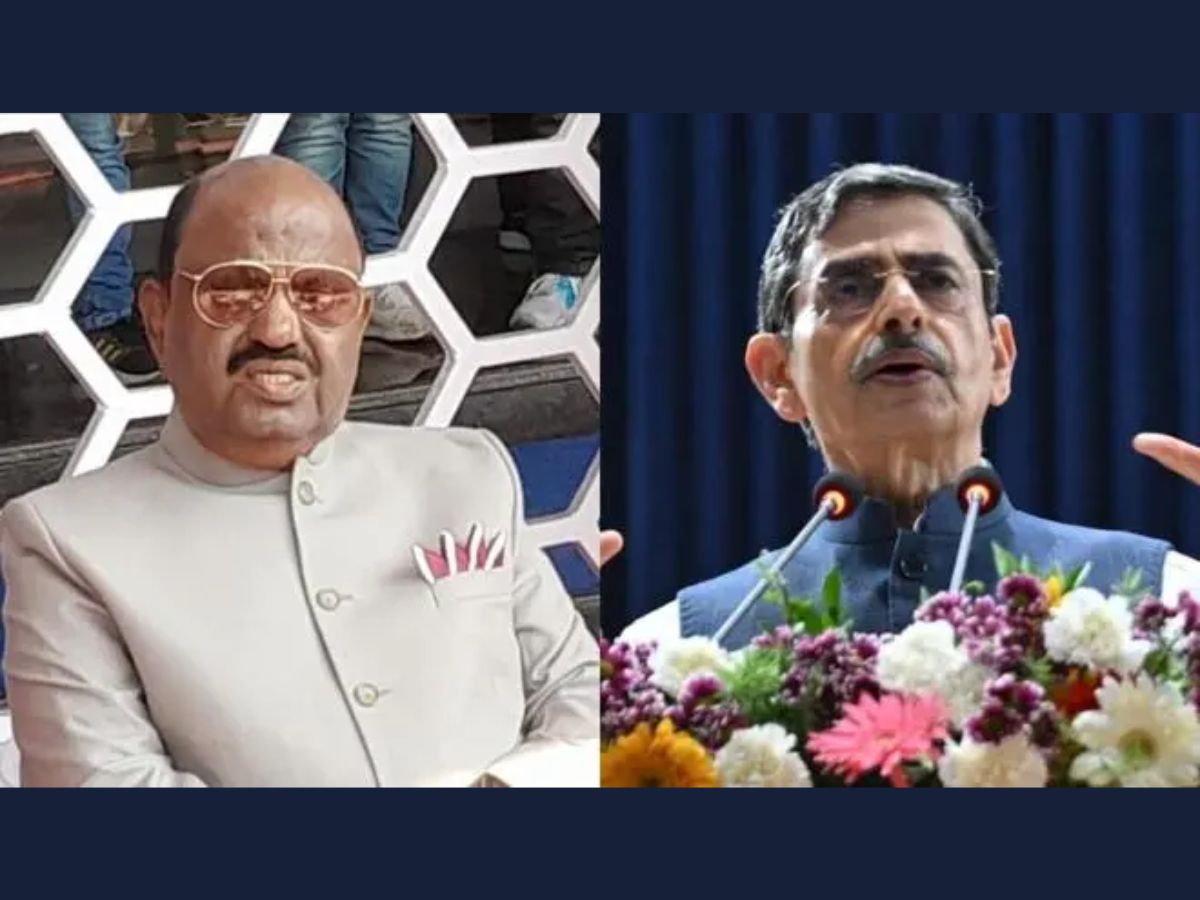
In a dramatic late evening reshuffle on Thursday, West Bengal Governor C.V. Ananda Bose abruptly resigned, citing health reasons after a tumultuous 3.5-year tenure marked by clashes with the Trinamool Congress government. Tamil Nadu Governor R.N. Ravi, known for his confrontational style with Opposition-led state governments, was swiftly appointed as his replacement, igniting fears in TMC circles of intensified Centre-state friction ahead of the 2026 Assembly elections. The move, part of a broader gubernatorial overhaul across nine states and union territories, has been interpreted by political observers as a strategic ploy by the BJP-led Centre to tighten grip on poll-bound West Bengal.
Chief Minister Mamata Banerjee, informed by Union Home Minister Amit Shah, voiced shock and alleged undue pressure on Bose, warning that Ravi’s arrival signals deeper interference.
In her first reaction on X, Banerjee expressed shock: “I am shocked and deeply concerned by the sudden news of the resignation of Shri C.V. Ananda Bose… The reasons behind his resignation are not known to me at this moment. However, given the prevailing circumstances, I would not be surprised if the Governor has been subjected to some pressure from the Union Home Minister to serve certain political interests on the eve of the forthcoming state Assembly elections.”
She further criticised the Centre by saying: “Union Home Minister just informed me that Shri R.N. Ravi is being appointed as Governor of West Bengal. He never consulted with me as per the established convention in this regard. Such actions undermine the spirit of the Constitution of India and strike at the very foundation of our federal structure. The Centre must respect the principles of cooperative federalism and refrain from taking unilateral decisions that erode democratic conventions and the dignity of states.”
Ravi, a retired IPS officer from the 1983 Tamil Nadu cadre, brings his own history of gubernatorial tensions. Appointed Meghalaya Governor in 2021 before moving to Tamil Nadu in 2021, he has clashed with the DMK government over issues like Hindi imposition and holding up approval for state legislations. His run-ins with the M.K. Stalin government reached the Supreme Court as well, forcing it to step in.
Earlier, Ravi served in the CBI, Intelligence Bureau, and as Deputy National Security Advisor and is considered close to National Security Advisor Ajit Doval. Doval is seen as the main troubleshooter for the Narendra Modi government.
Ananda Bose’s resignation caught even Raj Bhavan insiders off-guard. “Yes, I have resigned. I have been the Governor of Bengal for three-and-a-half years; it’s enough for me,” he told media in New Delhi, downplaying speculation of political compulsion while sources cited health issues. His term echoed predecessor Jagdeep Dhankhar’s acrimony with the TMC, including disputes over university vice-chancellors and Bill assent, though Bose had recently enrolled as a local voter, hinting at no immediate exit plans.
The timing, mere months before elections, amplified suspicions and trepidation for the Trinamool Congress. R.N. Ravi, a former IPS officer born and brought up in Bihar, with stints in the CBI and IB, brings a reputation for assertiveness.
In Tamil Nadu since 2021, he repeatedly clashed with the DMK government of M.K. Stalin—walking out of Assembly sessions, withholding assent to 21 Bills (later deemed “illegal” by the Supreme Court), and sparring over NEET, NEP, and Dravidian ideology. Stalin accused him of ideological opposition to Tamil culture, even boycotting Republic Day events at Raj Bhavan.
TMC leaders view Ravi as a “hardliner” poised to replicate this in Kolkata, potentially stalling Bills and fuelling constitutional crises. “He (Amit Shah) never consulted with me as per the established convention… Such actions undermine the spirit of the Constitution,” Banerjee fumed on Ravi’s appointment, decrying it as an assault on federalism.
The Trinamool Congress erupted in outrage, framing the sudden swap as BJP’s bid to convert Raj Bhavan into a “war room.” Party spokesperson Mahua Moitra posted on X: “By unilaterally appointing a new governor for Bengal, the Modi government again displays its contempt for constitutional federalism. Raj Bhavans becoming BJP war rooms.”
Senior leader Derek O’Brien echoed: “Sarkaria and Punchhi Commissions were clear: state governments should be consulted. This is basic grammar of federalism and democracy.”
In a long post on social media site X, Mamata Banerjee reiterated: “The Centre must respect the principles of cooperative federalism and refrain from taking unilateral decisions that erode democratic conventions and the dignity of states.” TMC MPs huddled in Delhi, hinting at Supreme Court pleas if Ravi obstructed governance, with grassroots workers buzzing about “Delhi’s puppet” destabilizing Mamata’s regime.
State Finance Minister Chandrima Bhattacharya hinted at Bose resigning under pressure. “Are they not in favour of getting the supplementary list out and enforcing President’s rule?” she asked. “Now the Raj Bhavan will be converted into the BJP’s party office and money will be distributed from there,” she added.
BJP leaders dismissed TMC’s panic as “overreaction.” Former West Bengal BJP president and Union Minister Sukanta Majumdar said: “Governors are appointed by the President under Constitutional provisions. TMC’s fear shows their guilt over corruption and violence—if Raj Bhavan questions them, it’s accountability, not interference.” Former Union Minister Nisith Pramanik added: “Ravi ji is a seasoned administrator. Bengal needs strong oversight ahead of polls to ensure free and fair elections.”
The BJP portrayed the reshuffle as routine, aligning with President Droupadi Murmu’s approvals, while privately celebrating Ravi’s potential to expose and challenge alleged TMC malfeasance.
CPI(M) politburo member Md. Salim, historically critical of TMC, lent indirect support: “Transfer of power to the Governor through President’s Rule won’t solve Bengal’s problems, but unilateral moves weaken democracy.”
Veteran Congress leader Adhir Ranjan Chowdhury quipped: “Another round of Raj Bhavan drama. TMC reaps what it sowed, but the Centre must follow conventions.”
DMK’s P. Wilson, from Ravi’s old turf, warned: “Ravi’s appointments signify BJP’s controversial intentions, spelling trouble for Constitution and federalism. I am sad for the people of West Bengal and my good friends at the Trinamool Congress. Wherever he goes, the casualty is the Constitution, federal structure and parliamentary democracy.” This rare cross-party murmur underscores unease over gubernatorial overreach.
As West Bengal hurtles toward polls, Ravi’s moves will be closely watched and analysed.
Political analysts predict flashpoints.
Veteran journalist and political commentator Suman Chattopadhyay told Read: “Governor Ananda Bose was all words and no action. TMC had managed to tame him. But now, TMC’s dread stems from Ravi’s track record. A proactive Governor could galvanize BJP’s campaign, amplifying anti-incumbency. If the state has to go to polls under President’s Rule and overseen by Ravi, then Mamata’s goose will be cooked.”

Comments are closed.