
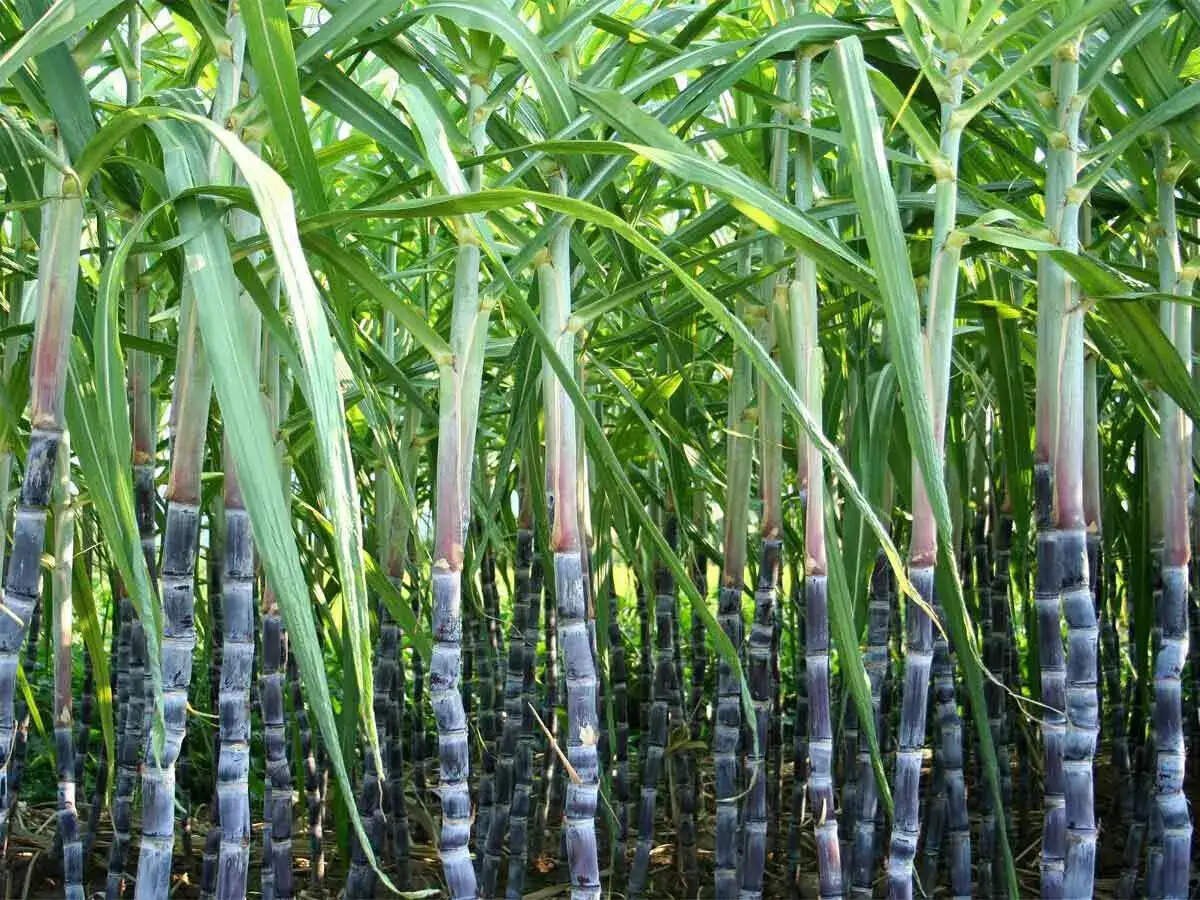

Sugarcane, once a major crop in Haryana’s agriculture, is now facing the challenge of shrinking area and low yield. Keeping this in mind, the government is encouraging farmers to adopt new technologies, subsidies and modern farming practices. During the budget session of the Haryana Legislative Assembly, Haryana Cooperation Minister Arvind Kumar Sharma said that changes in farming practices are necessary as per the changing times. He advised farmers to use modern technology to increase production and reduce costs.
He was replying to an interesting motion moved by BJP MLA Ghanshyam Das, which raised the issue of decline in sugarcane production per acre in the state. Production also declined.According to government data, sugarcane area was 246,357 acres in 2020-21, 263,499 acres in 2021-22 and 266,142 acres in 2022-23. However, the area under sugarcane cultivation has been steadily decreasing since then. This decline is directly impacting the sugar mills and overall sugarcane production.
According to the minister, sugarcane production is estimated to be around 536.24 lakh quintals in 2025-26, which is approximately 37.55 percent less than the 858.78 lakh quintals produced in 2020-21. Sugarcane shortage may also affect sugar mill operations this year. The mills are expected to run for about 108 days.
Online token system has been implemented in all cooperative sugar mills in the state. Through this, farmers can book tokens for sugarcane supply at the comfort of their homes. Hence there is no longer waiting time outside the mill, resulting in savings of 10 to 12 hours per trolley to the farmers. The government believes that new technology, subsidies and improved facilities can revive sugarcane cultivation and increase farmers’ income.
Sugarcane is a crop that requires a lot of labor from planting to harvesting. Due to shortage of labor and rising wages, many farmers are switching to other crops instead of sugarcane. Moreover, limited availability of sugarcane harvesters is also creating problems for farmers. Climate change is also affecting sugarcane cultivation. Earlier, the monsoon in Haryana used to start in the first week of July, but now it often starts in April.
This affects cane germination and seedling growth, thereby reducing yield per acre. The government is implementing several schemes to encourage farmers to cultivate sugarcane. 3,000 per acre is given as subsidy for planting sugarcane in wide rows under sugarcane technology campaign. The 2026-27 budget proposes to increase this subsidy to Rs 5,000 per acre. 5,000 per acre is also being given as subsidy for healthy and disease-free seeds.

Comments are closed.