
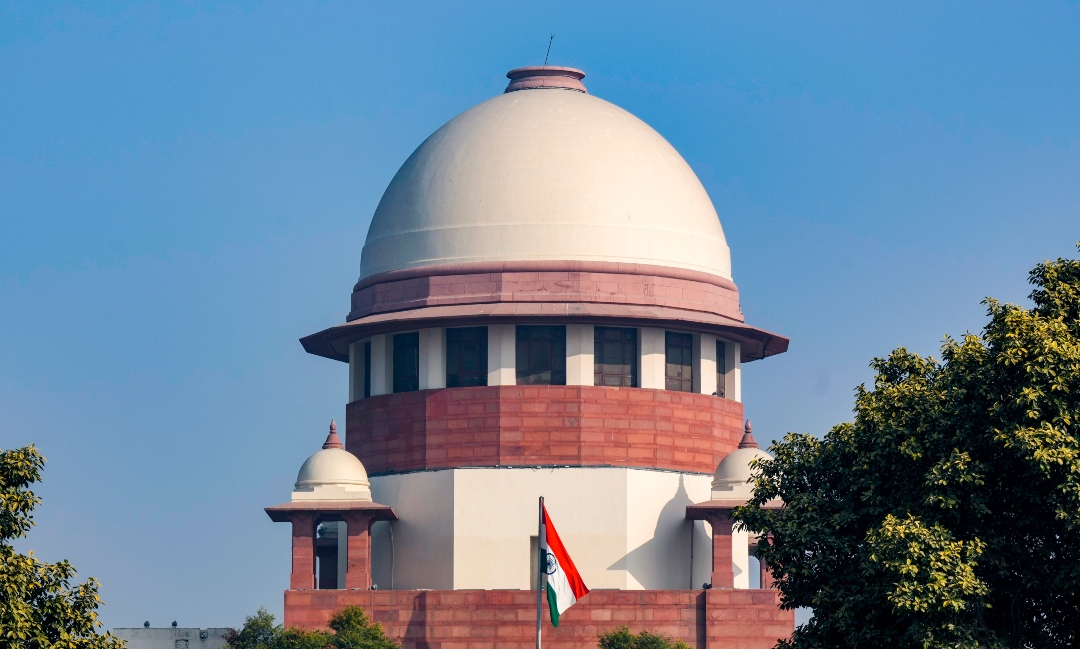

The Supreme Court on Thursday (January 15) reserved its decision on the plea to remove life support for a 32-year-old man who has been in a permanent vegetative state for the last 12 years after falling from a building. The plea made by the person’s father is being heard by the bench of Justice JB Pardiwala and Justice KV Viswanathan.
Earlier, the two medical boards set up by the top court stated that there was no possibility of the man recovering. According to a report in Live Law, as per the guidelines laid down in the 2018 constitution bench judgment in Common Cause, as modified in the January 2023 order, which recognised the right to die with dignity, the Court has to get the opinions of Primary and Secondary Medical Boards before allowing the plea.
Reference to right to die
During the hearing, advocate Rashmi Nandakumar, appearing for the petitioner, referred to the existing jurisprudence on the right to die from the cases of Gian Kaur and Aruna Shaunbagh. She also referred to the directives in Common Cause, according to which, once the primary and secondary medical board is constituted, the process ends there.
“However, when there is a contrary opinion of the primary and secondary medical board, then the case will have to go to the High Court, which will then constitute a three-member board consisting of a neurologist, a physician and a psychologist,” she added, as quoted by Live Law.
Also Read: Supreme Court to meet parents in 12-year coma passive euthanasia case
Nandakumar sought permission for the withdrawal of clinically assisted nutrition and hydration in accordance with the prescribed palliative protocol and under medical supervision at the Institute of Human Behaviour and Allied Sciences, Government of NCT of Delhi.
“They have looked after him for 13 years. His condition has not improved from day 1. They have done their best. But it is a fact that his condition will not improve, and the parents are concerned for his best interest,” Nandakumar said.
On Delhi HC’s observation
Justice JB Pardiwala questioned the basis on which the Delhi High Court had observed that Harish was not being kept alive mechanically and was able to sustain himself.
In response, Nandakumar submitted that the High Court’s observation was erroneous, particularly in the absence of any medical determination before it. She further stated that both counsels had visited Harish and his family, and that the Court itself had also met the petitioner’s family members.
What govt said
Additional Solicitor General Aishwarya Bhati agreed with Nandakumar’s submission that Harish was in a permanent vegetative state with no possibility of recovery. She stated that they were unable to find a single judgment or order where the directions laid down in Common Cause had been applied. She emphasised that the considered view of the caregivers must also be accorded due weight.
Also Read: Doctors hope Karnataka’s right-to-die order sparks conversations on end-of-life care
On Nandakumar’s submission regarding the need for permanent medical boards in hospitals, Bhati pointed out that the primary and secondary medical boards were required to be constituted on a case-by-case basis.
She further argued that while omission was permissible in cases of passive euthanasia, such omission should not itself be the cause of death, which must instead result from the underlying medical condition.
SC’s take on the case
After hearing the submissions, Justice Pardiwala orally observed that, given the delicate nature of the matter, there is always a dilemma as to whether mortal beings can truly take such decisions.
Also Read: Explained: What is assisted suicide? Is it allowed in India?
Pursuant to the Court’s directions, a Primary Medical Board was constituted, which reported that the man’s chances of recovery were negligible. The report noted that he had been confined to bed with a tracheostomy tube for respiration and a gastrostomy for feeding.
Upon perusing the report, Justice Pardiwala described it as a “sad report” and observed that the man could not continue to live in such a condition. Before passing final orders, the Court expressed its intention to meet the parents.

Comments are closed.