
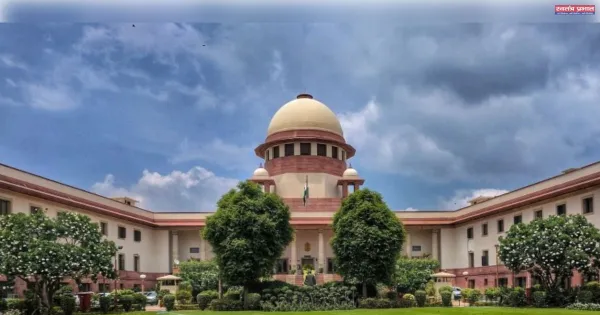

Bureau Prayagraj- The Supreme Court said that the existing laws in the country are sufficient to deal with hate speech and there is no legislative void which would require judicial intervention. The court said that according to the principle of separation of powers under the Constitution, the judiciary can work only within its limits. The Supreme Court has made it clear that determining the punishment for any crime is entirely the jurisdiction of the legislature.
The court reiterated that this power is reserved to the Parliament and the State Legislatures. The constitutional system based on the principle of separation of powers does not permit the judiciary to create new offenses or expand the scope of criminal liability through judicial directions.” At the most, the court can only draw the attention of the legislature and the executive to the need for reforms.
The Supreme Court said “The contention that the field of hate speech is legally void is misplaced. The existing criminal law framework—including the provisions of the IPC and related laws—is sufficient to deal with acts which promote enmity, outrage religious sentiments, or disturb public peace. Therefore, the field is not void.”
The court said that the complaint of the petitioners is not about the lack of law, but about the lack of its implementation. However, the judiciary cannot justify making laws on the basis of such concerns. The court said that the ‘Indian Civil Defense Code’ provides for registration of FIR in cognizable offences, and also provides a remedy to lodge a complaint before a magistrate in case of police negligence.
The bench said that the existing criminal laws are capable of dealing with cases like hate speech. Therefore, there is no need to issue any separate judicial guidelines on this issue. The court also clarified that constitutional courts can give directions for the interpretation of law and protection of fundamental rights, but they cannot make laws nor compel the legislature to do so.
The Supreme Court also said in its decision that if the need for any new policy or law is felt in the future, then it is entirely the job of the legislative authorities to decide on it. The court cannot interfere in this. The Court reiterated that the Indian Constitution is based on the principle of separation of powers, which prescribes separate roles for the judiciary, legislature and executive. All organizations have to work within these limits. The court also referred to the 267th report of the Law Commission, which suggested possible reforms.
The court also said: “Although we decline to issue the guidelines sought, we consider it appropriate to say that the issues relating to hate speech and rumor mongering are directly related to fraternity, dignity and maintenance of constitutional order. It is open to the Center and the States to consider in their own discretion what further legal steps are required to be taken in view of the changing social changes and challenges, or Law Commission Report 267 dated 23 March 2017 Appropriate amendments may be made as suggested in.”
Comments are closed.