
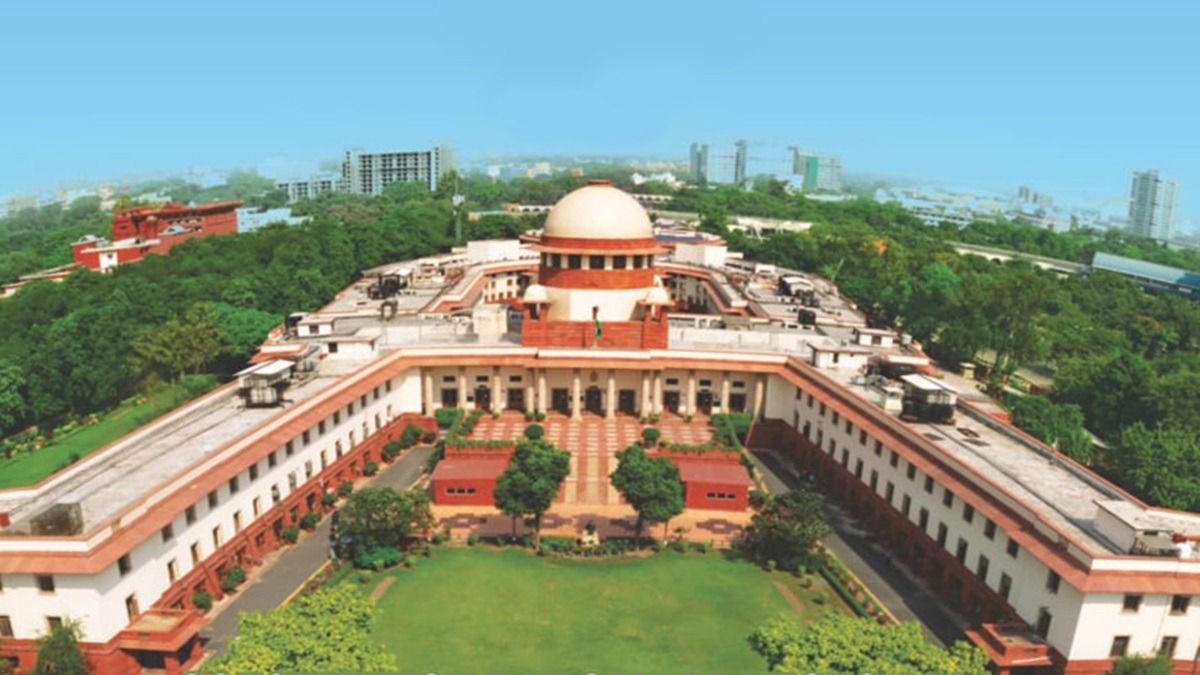
Supreme Court rejects the petition in the matter of ban on entry of priests and converted Christians in the villages of Bastar.

In some villages of Bastar region of Chhattisgarh, Gram Sabhas have appointed priests and religious conversion The Supreme Court (Chhattisgarh Religious Conversion) has rejected the petition challenging the ban imposed on the entry of Christians. The Supreme Court upheld the decision of the Chhattisgarh High Court, which had upheld the decision of the Gram Sabha and the ban on hoardings placed at the entrances of the village.
The division bench of Justice Vikram Nath and Justice Sandeep Mehta gave this decision after hearing the arguments of both the petitioner and the government during the hearing of the case. The Supreme Court said that the petitioner should have first sought available statutory remedies and presented his complaint before the competent authority. The court clarified that it is not appropriate to file a petition directly in the Supreme Court without following the statutory procedure.
In fact, the Gram Sabhas in the tribal dominated rural areas of Bastar had taken this decision (Chhattisgarh Religious Conversion) with the aim of stopping the alleged forced or induced religious conversions. Under this, it was announced to ban the entry of priests and people who have converted by placing boards at the entrances of the villages. This decision was first challenged in the Chhattisgarh High Court, where the High Court recognized the jurisdiction of the Gram Sabha and upheld its decision.
During the hearing in the Supreme Court, senior advocate Colin Gonsalves, appearing for the petitioner, argued that the High Court did not consider this ban unconstitutional and commented on missionary activities, while there is not enough evidence for conviction in cases related to conversion. Solicitor General Tushar Mehta told the court that the petition was filed in the High Court on limited issues and new facts have been presented in the Supreme Court, hence the petitioner should first contact the concerned authority.
The Supreme Court in its order said that the petitioner should have followed the proper procedure before the competent authority under the rules, where the case could have been investigated on the basis of documents and evidence (Chhattisgarh Religious Conversion). The court clarified that it is necessary to first exhaust the available statutory remedies and only then approach the High Court or the Supreme Court.

Comments are closed.